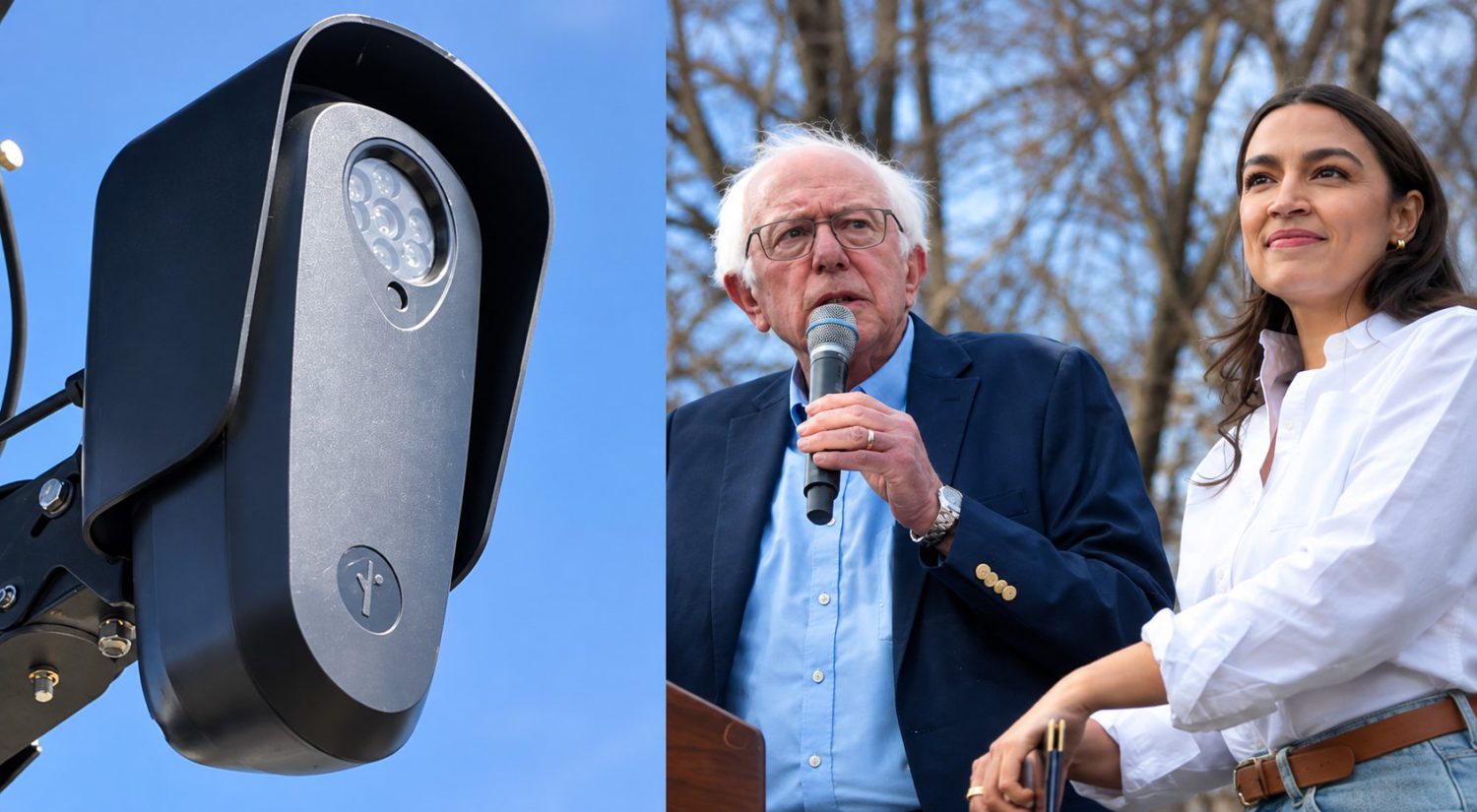
Every time your car passes one of those small cameras mounted on a pole or patrol car, it does not just register your plate. It logs your plate, your location, and the time, adding another data point to a searchable record. That record exists whether or not you have ever been suspected of anything.
Three separate bills aimed at that system have landed in Congress within five weeks of each other, sponsored by lawmakers ranging from Bernie Sanders to Thomas Massie to Josh Hawley.
What the Ban Flock Act Would Actually Do
Introduced on October 2, 2026, the Ban Flock Act targets both federal use of automated license plate readers and the federal money that sustains these systems at the local level.
Sen. Bernie Sanders, Sen. Jeff Merkley, and Rep. Alexandria Ocasio-Cortez introduced the legislation with three core provisions:
- Federal agencies would be barred from using automated license plate readers or accessing any data they collect.
- Federal grants to state and local governments would be cut off if those governments use ALPRs or contract with ALPR companies.
- Individuals would gain a private right of action, allowing them to sue the federal government over rights violations arising from federal ALPR use.
The grant condition is the provision with the broadest reach. It extends consequences beyond Washington by tying federal funding to compliance, affecting the many state and local agencies that rely on those dollars.
Three Bills, Three Different Theories
Not every lawmaker proposing limits agrees on how far those limits should go.
H.R. 10221, the Flock-Off Act, was introduced September 2, 2026, by Rep. Thomas Massie. It bars federal funds from purchasing, installing, maintaining, or upgrading both ALPRs and biometric surveillance cameras. Systems that received federal funding must go offline within 180 days as a condition of continued support. Cosponsors cross party lines, including Democrat Ro Khanna alongside Republicans Lauren Boebert, Chip Roy, and Paul Gosar.
Taking a different path, Sen. Josh Hawley’s Stop Flock Abuse Act targets the technology’s operation rather than its funding. Hawley’s office has described provisions including a 10-day data deletion requirement, a prohibition on facial recognition, and mandatory search logs. The full bill text was not available in the research, so those details should be confirmed against the primary text before being treated as final.
The practical distinction matters. Both the Ban Flock Act and the Flock-Off Act use the federal funding lever, but Massie’s bill extends to biometric cameras and requires covered systems to shut down. Hawley’s approach would regulate how data is handled, not whether the cameras stay on.
The Scale of the Network
The figures Flock Safety has put forward suggest a surveillance infrastructure that is already deeply embedded across the country.
According to Hawley’s office, Flock Safety claims to operate more than 120,000 cameras across 49 states and to process more than 20 billion vehicle scans each month. Those figures come from the company and have not been independently audited.
Scale is the core concern. A single camera sighting places your car at one location at one moment. Repeated sightings across a large network, retained over time, can allow investigators to reconstruct routine movement patterns for any vehicle, with no suspicion required to initiate the search.
What the Bill Does Not Do
The Ban Flock Act would leave locally funded ALPR programs untouched.
Cities and states that fund their own systems without federal grants could continue operating them. Based on the bill’s announced provisions, locally funded networks would not face a direct shutdown requirement under this legislation.
What Comes Next
None of these bills have cleared committee, and the central questions about scope and enforcement remain open.
The unresolved issues include whether Congress ultimately favors outright prohibition or operational guardrails, how existing contracts with vendors like Flock Safety would be handled, and whether local governments would sustain ALPR programs with their own funds if federal support ended. Those answers will determine how much of this network actually changes.