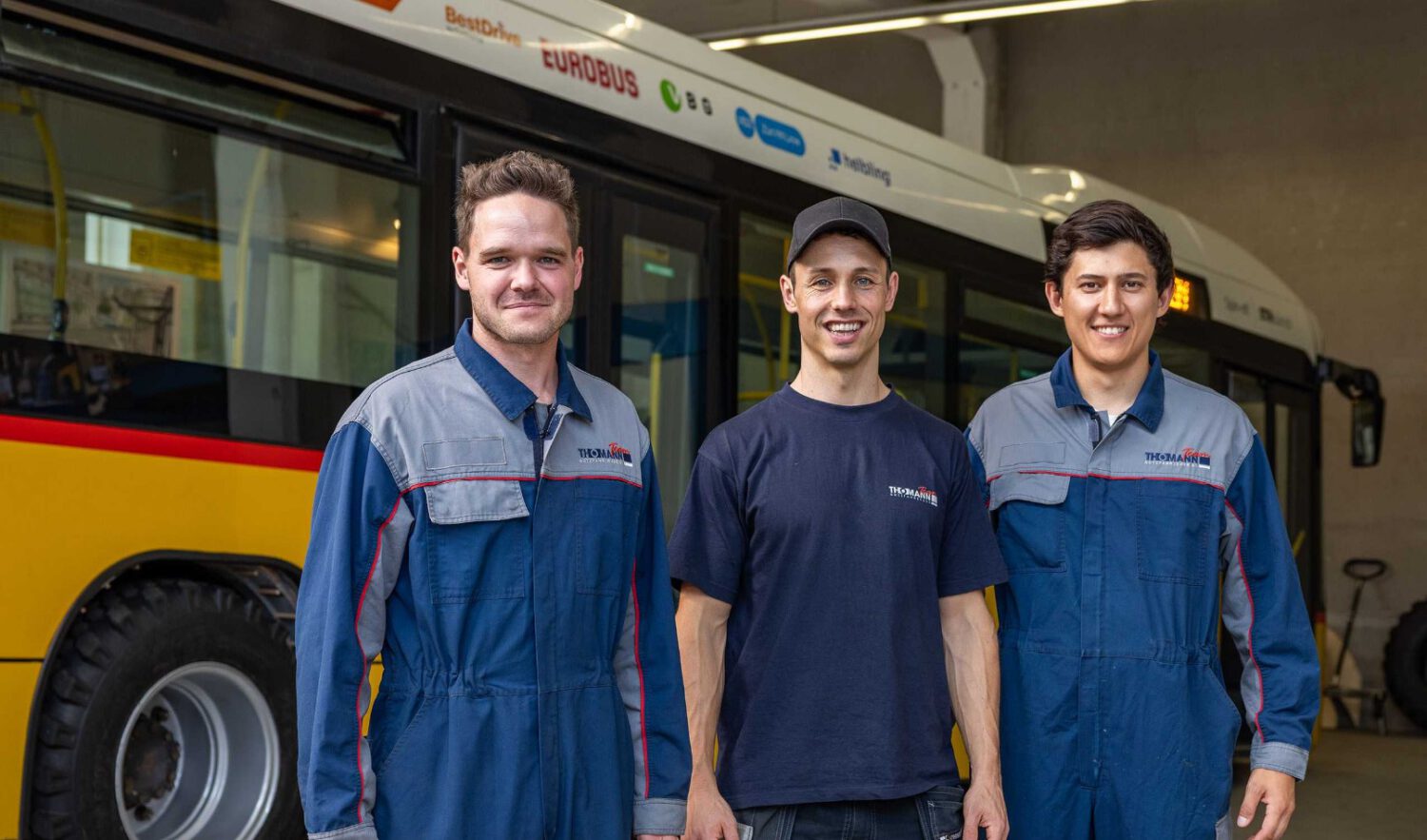
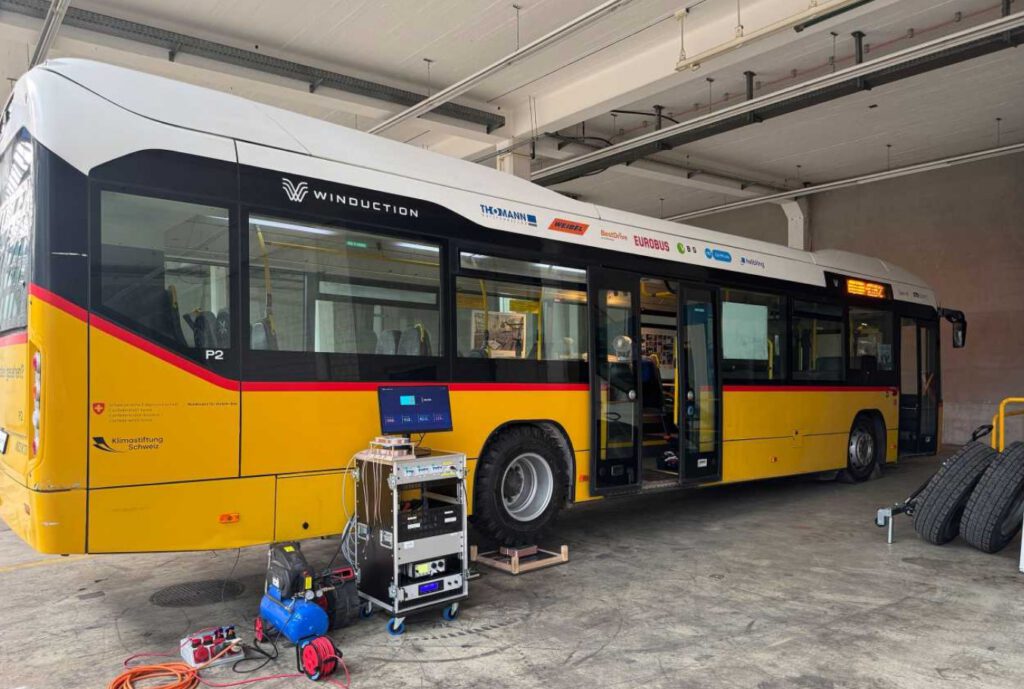
The part of a bus that spends its entire working life grinding against asphalt turns out to be a surprisingly good place to pull energy from the road. ETH Zurich spin-off Winduction has built a prototype system that charges electric buses wirelessly through coils embedded in specially engineered tires, and the company is targeting its first passenger-carrying pilot for 2028.
How the System Works
Receiver coils move from the underbody into the wheel itself, closing the gap that typically costs wireless charging systems efficiency.
A charging plate embedded in the road connects to the electricity grid and generates a magnetic field. Receiver coils built into the tire pick up that energy and route it to the bus battery, no cable required. Conventional wireless vehicle charging places the receiver coil beneath the chassis, leaving a variable gap between the road transmitter and the vehicle depending on design and ride height. Winduction moves that receiver into the wheel. As technology lead Sylvain Fricker put it, according to Interesting Engineering, “The only thing that always has contact with the ground on any vehicle is the wheel.”
Reading the Efficiency Figure Carefully
Winduction reports over 90% transfer efficiency, but that number describes one specific leg of the energy journey.
Winduction reports more than 90% efficiency from the road plate to the vehicle, meaning less than 10% of the energy supplied through the plate is lost before reaching the bus. That figure does not describe the complete chain from the electricity grid through to a charged battery. The distinction matters when comparing this system against cable charging or other wireless approaches, and no independent standardized test results were identified in the sources reviewed.
The Steel-Free Tire Problem
Winduction’s current design requires a steel-free tire because steel interacts with the magnetic field and can convert part of the transferred energy into heat.
Steel belts in a typical bus tire interact with the magnetic field and bleed off energy as heat, so Winduction’s current design cannot use conventional steel-belt construction. The company is developing a steel-free tire with manufacturing partners. CEO Laurin Schwitter said, according to Interesting Engineering, “To ensure our system works, we are collaborating with partners to develop a completely new, steel-free tire.” Whether those tires can survive heavy bus loads and repeated charging cycles under full commercial service has not been reported in the sources reviewed.
The Operational Case for Smaller Batteries
Opportunistic charging at equipped stops could shrink the battery packs buses carry all day, with downstream effects on weight and cost.
Frequent top-up charging during regular service stops could allow operators to install smaller, lighter batteries, freeing space and reducing vehicle weight and purchase cost. On the Zurich Airport-to-Oerlikon route, Winduction projects charging plates at two of 24 stops, accumulating roughly three hours of charging across a 16-hour operating day. Current electric buses on that route charge for approximately five hours overnight at a depot, according to Interesting Engineering. These are company projections based on a specific route, not independently verified fleet data. Plate count, required power output, and battery-size reductions will shift with route length, climate, passenger load, and schedule.
Where the Project Stands
A lab and test stop are under construction in Winterthur; the first public pilot is still two years away.
Winduction is building a laboratory and dedicated test stop in Winterthur, Switzerland, backed by the Swiss Federal Office of Transport and the Swiss Climate Foundation, according to ETH Zurich. The next phase moves toward a near-industrial configuration and testing beyond the company’s own facilities. Transport operators in the Zurich Airport region are in discussions about the planned 2028 pilot.
That pilot will be the real test. It will show whether steel-free tires hold up under daily bus service, whether buses can position accurately over charging plates across a working fleet, and whether the full operating economics beat overnight depot charging.