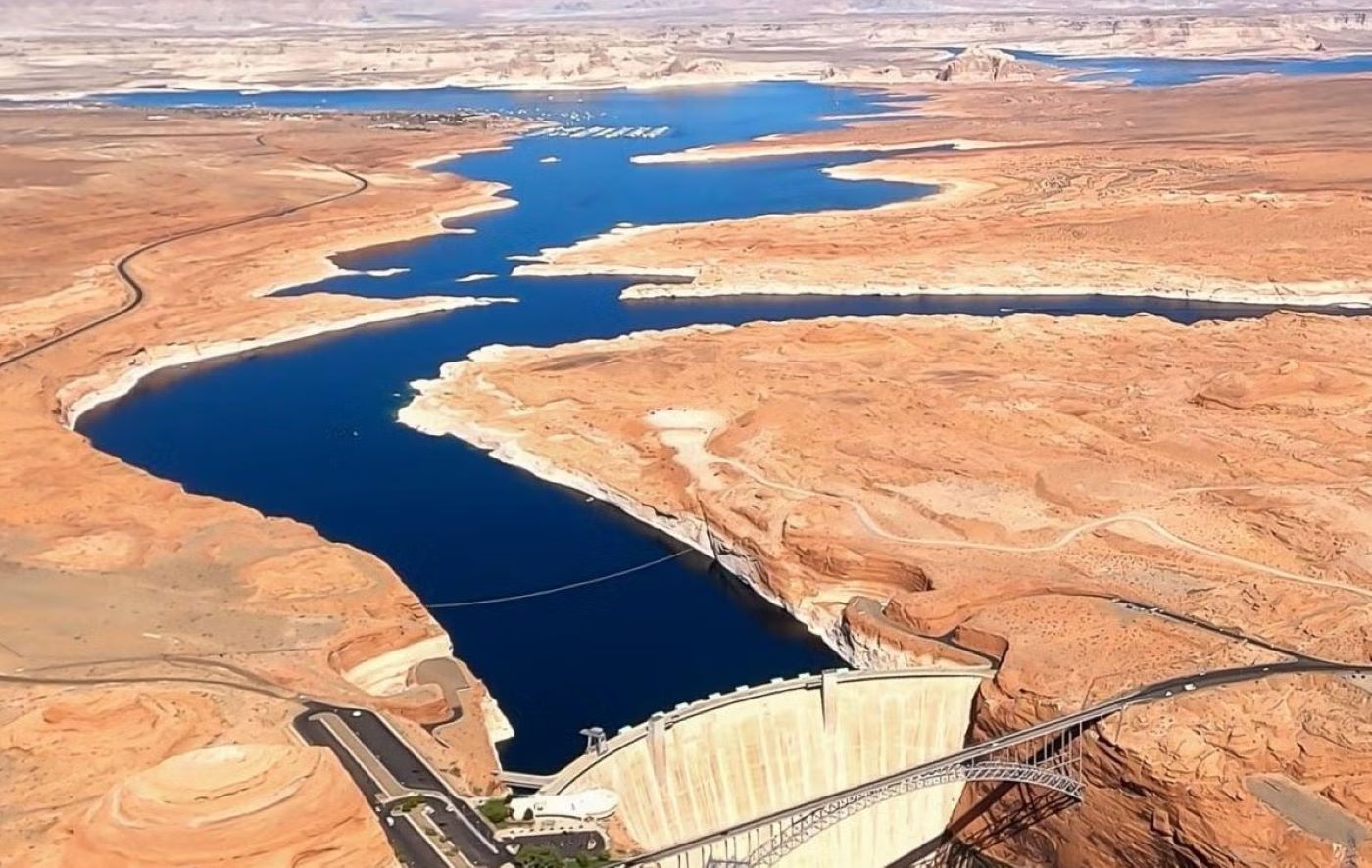
The developer behind California’s biggest planned AI data center publicly swore it would never touch Colorado River water. It would run on recycled wastewater — clean, virtuous, zero environmental impact. That pledge held right up until the cities of Imperial and El Centro said no thanks. Now Imperial Valley Computer Manufacturing (IVCM) has sued the Imperial Irrigation District (IID) for access to the very river it promised to leave alone. The facility would sit in a desert valley where 180,000 people share exactly one freshwater source.
The Farm-to-Cloud Gambit
IVCM’s legal strategy treats 160 acres of fallowed farmland as a water entitlement for a nearly million-square-foot AI campus.
The developer’s playbook relies on a tactic called “buy and dry” — purchasing irrigated farmland, retiring it from production, then claiming its water allocation for industrial use. Here’s how the numbers break down:
- The proposed facility: roughly 330 megawatts, nearly one million square feet, built exclusively for AI and machine learning workloads.
- Water demand: 287 million gallons per year, about 750,000 gallons daily, equivalent to roughly 880 acre-feet annually.
- That represents approximately 0.03% of IID’s 3.1 million acre-feet annual allocation — a small percentage carrying significant symbolic weight.
- IVCM leased or purchased 160 acres of farmland and argues the data center should receive that land’s existing water entitlement.
- IID denied the application on May 1, 2026. IVCM filed suit weeks later.
“There’s a lot of resistance in any agricultural community to ‘buy and dry’ because that’s jobs,” a Pacific Institute senior fellow told Business Insider.
Imperial County’s unemployment rate sat around 17% in May, making economic diversification genuinely appealing to local officials. IVCM promises 1,688 construction jobs, more than 100 permanent positions, and $2.95 billion in economic impact over 30 years. That sounds compelling — until you weigh roughly 100 permanent data center roles against the farmworkers, equipment suppliers, packers, and transport operators whose livelihoods depend on active farms. County Supervisors approved the project in April, then imposed a 45-day moratorium after sustained public backlash, CalMatters reported.
A Test Case for the Whole Basin
If courts validate this farm-to-data-center water transfer, every drought-stressed irrigation district with cheap land becomes a potential AI campus site.
This lawsuit is being closely watched as a test of whether AI infrastructure can systematically access agricultural water through land acquisition — a precedent the entire Colorado River Basin has reason to follow. More than 200 environmental groups have called for a nationwide pause on data center construction, according to KPBS. For context on scale: all U.S. data centers combined already consume electricity equivalent to New Jersey’s entire state usage. UC Berkeley researchers argue California needs mandatory water-use disclosure requirements and recycled-water incentives for these facilities before more projects reach this point.
The 0.03% figure is almost engineered to sound harmless. What’s actually on trial is whether a valley that has been rationing water for decades should quietly subsidize the cooling infrastructure behind your next AI query.