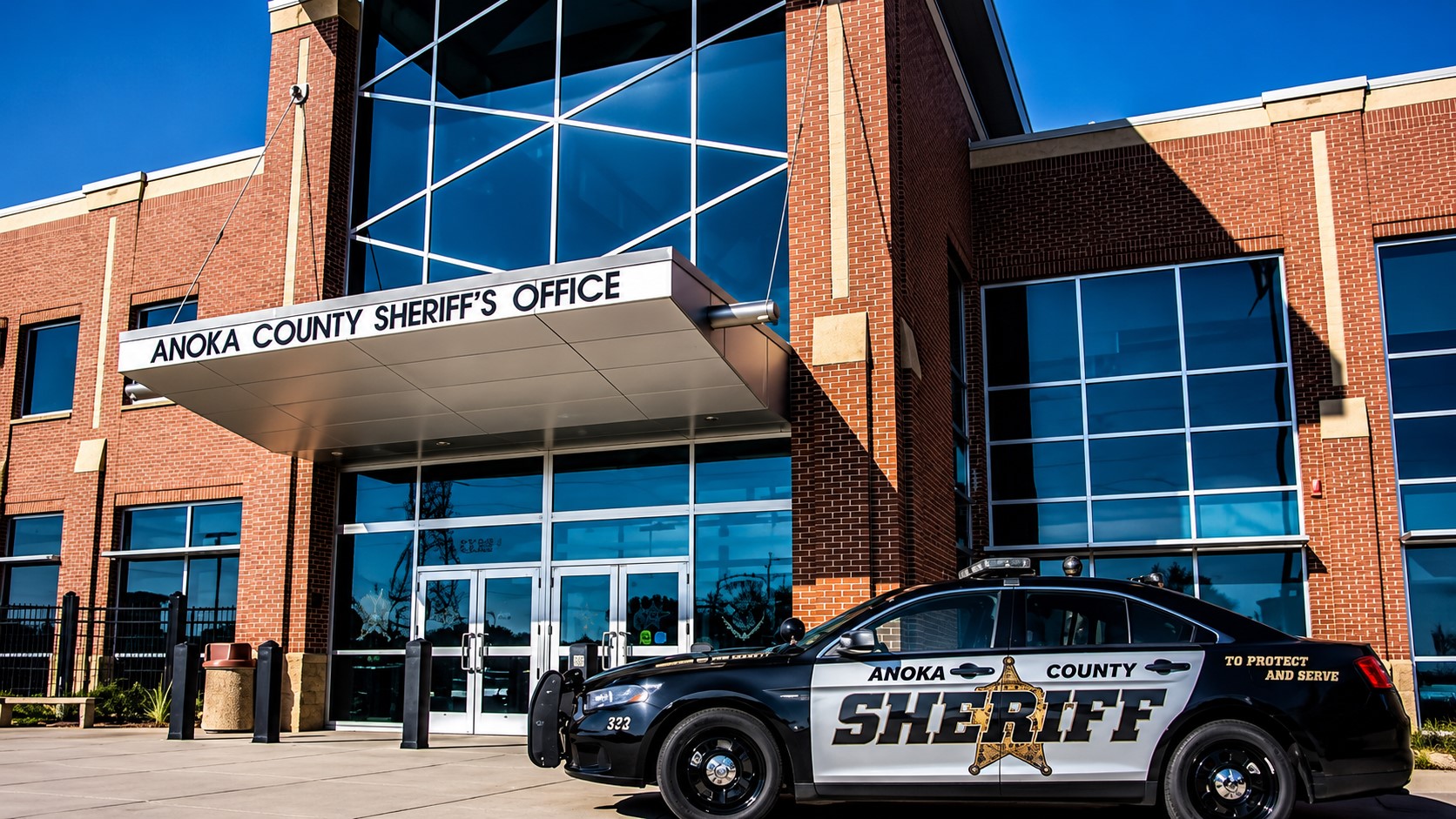
One dollar. That’s the gap between a county sheriff’s unilateral authority and the democratic review process in Anoka County, Minnesota. Sheriff Brad Wise signed a $174,999 pilot contract with Flock Safety for drones and automated license plate readers, structured precisely to stay beneath the $175,000 threshold requiring County Board approval. Wise told the Forest Lake Times the amount was “deliberately done to make sure there were no legal issues tied to the dollar amount.” No ambiguity there. The quiet part got said out loud.
What You’re Actually Getting for $174,999
The pilot bundles drone-assisted 911 response with expanded license plate surveillance across a county that already runs 75-plus Flock cameras.
The contract covers two technologies. Drones — branded “drone-assisted response” by the Sheriff’s Office — will launch in response to 911 dispatch calls, streaming situational awareness to deputies faster than current units allow. Flock’s ALPRs photograph the rear of every passing vehicle, extract the plate number, and cross-reference law-enforcement hotlists. A match triggers an alert. Your car gets photographed whether you’re on a hotlist or not. Flock stores those images for 30 days before automatic deletion.
This isn’t new infrastructure appearing from nowhere. Anoka County has operated Flock cameras at intersections like Viking Boulevard and Bunker Lake Boulevard for over a decade. The pilot expands capacity, not capability. A few facts worth keeping straight:
- Contract total: $174,999 — $1 below the $175,000 County Board review threshold
- Anoka County already operates 75-plus Flock ALPR cameras at county intersections
- Vehicle images are stored for 30 days before automatic deletion
- Cities can opt out — Columbia Heights already declined, and Wise confirmed no cameras will be installed there under this pilot
The Oversight Question Nobody Voted On
Commissioner Mandy Meisner wanted public review and policy development before deployment; the sheriff moved forward without either.
Meisner’s public statement made her position clear: she pushed to route the project through the Capital Improvement Plan process, where financial implications could be fully reviewed and the public “meaningfully engaged” — with usage policies developed before a single camera went live. Instead, Wise exercised his office’s independent contracting authority, citing national political pressure around surveillance tech as a reason for urgency. “We’re not trying to create a surveillance state,” he told the Forest Lake Times. “I live here too.”
That framing is worth noting — but so is the broader pattern Anoka County is now part of:
- Brooklyn Park, Minnesota terminated its Flock contract over data-sharing concerns (GovTech)
- Dane County, Wisconsin’s Board voted in April 2026 to pull Flock funding entirely and prohibit further expenditures on the system
- The ACLU has described Flock’s centralized cloud network as enabling nationwide plate searches — a reach that goes well beyond local crime-fighting (ACLU, Flock Roundup)
- The EFF has flagged potential connections between Flock hotlists and ICE enforcement activity (EFF, 2026)
Wise has offered transparency commitments: a public drone activity portal, camera placement data treated as public record. Those are meaningful gestures worth watching. But gestures aren’t governance. The precedent here isn’t really about drones or cameras. It’s about whether a single-dollar adjustment should be enough to route around the people whose plates are getting scanned.