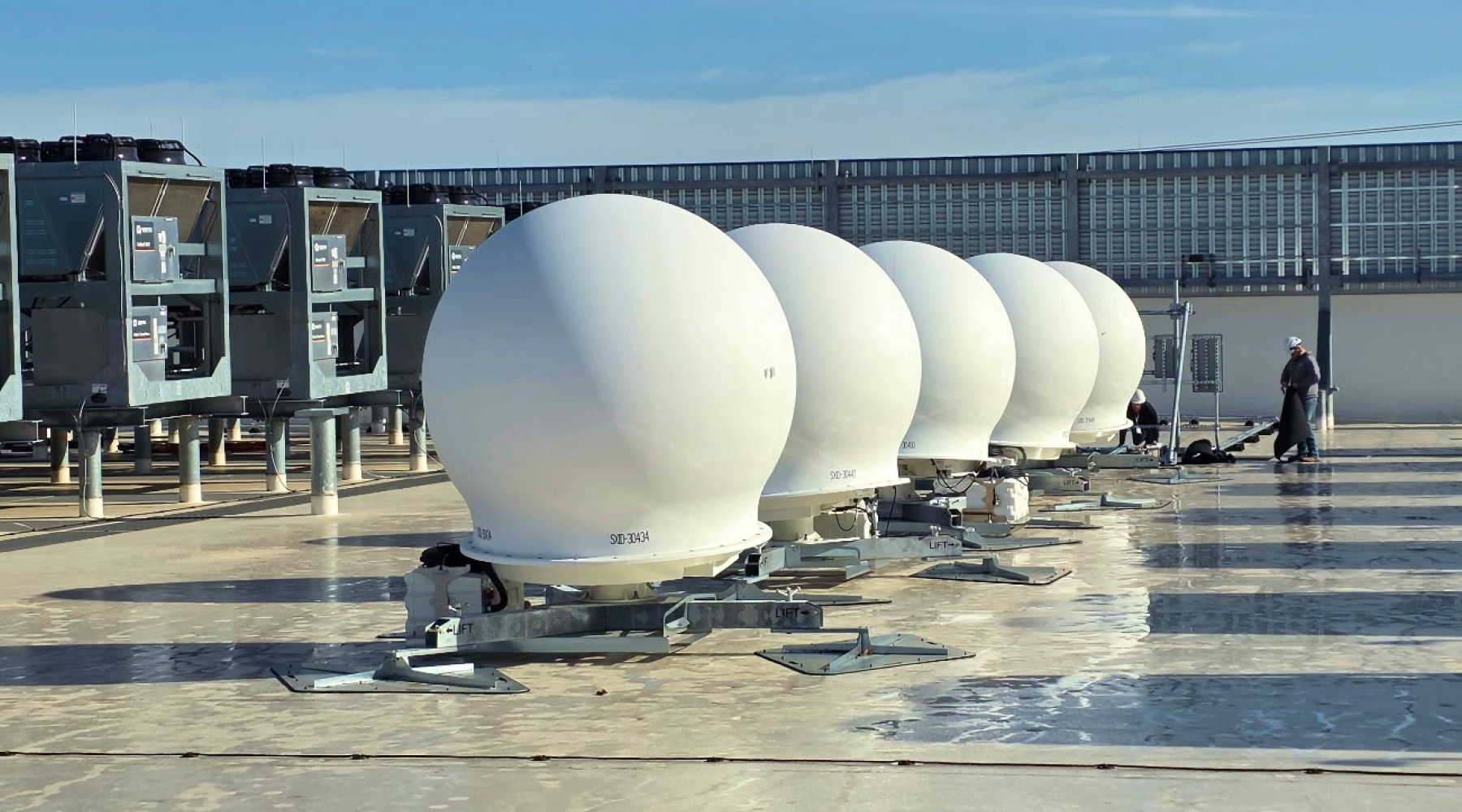
Your rooftop Starlink dish currently pulls down Netflix and handles Zoom calls. Soon, it might moonlight as a cell node for your entire neighborhood — and that shift could reshape what you pay for mobile service.
That’s the reported plan taking shape at SpaceX: attaching small cellular radios called femtocells to existing Starlink installations, Tesla Superchargers, and other host sites, creating a distributed mobile network without a single traditional tower. SpaceX is no longer just a satellite internet company with big talk. According to reporting from Reuters and Bloomberg, it’s positioning itself as a direct competitor to Verizon, AT&T, and T-Mobile.
The Plan Is Bigger Than Satellite Texting
SpaceX is building a hybrid terrestrial-satellite cellular network using hardware already sitting on your roof.
Here’s how it works. Your phone connects to the nearest femtocell — a low-power base station — exactly as it would to a normal cell site. The Starlink dish then handles backhaul through the satellite network. SpaceX president and COO Gwynne Shotwell confirmed the company’s plans to build a terrestrial mobile network alongside its satellite system, according to Fierce Wireless. This isn’t a satellite-only play. It’s hybrid architecture — think of it like Netflix building its own content delivery network instead of renting someone else’s pipes.
Spectrum is the real story. Bloomberg reported that SpaceX is in talks to acquire a block of spectrum from EchoStar, a move that could expand its usable mobile bandwidth from roughly 5 MHz to more than 65 MHz. Without spectrum, you don’t have a carrier. With it, SpaceX has the raw material to build one. The next-generation direct-to-cell system reportedly targets a 2027 launch, with approximately 1,200 satellites and speeds up to 150 Mbps, according to PCMag’s reporting on a Shotwell presentation.
Analysts Aren’t Convinced — And They Have a Point
Building a wireless network in America’s saturated mobile market is brutally difficult, no matter who’s attempting it.
SpaceX frames this as leapfrog technology. Shotwell reportedly told the audience, “We think we can be 100 times better than the service you get today.” Analysts quoted by Reuters are less enthusiastic, saying building a wireless network in saturated U.S. markets would be “incredibly hard.” Both things can be true. The distributed small-cell model sidesteps the punishing economics of macro tower construction, but spectrum capacity limits and country-by-country regulatory approvals remain serious friction points.
If you live somewhere rural — where your only real options are one carrier with spotty coverage and a Starlink dish — a SpaceX mobile product changes the math entirely.
The big three carriers spent decades building moats out of tower leases and spectrum licenses. SpaceX is betting it can route around all of that using hardware already bolted to rooftops across America. Whether it pulls it off or not, your phone bill just got a new competitor thinking hard about it — and like the Costco hot dog keeping food court prices honest, that pressure alone is worth watching.