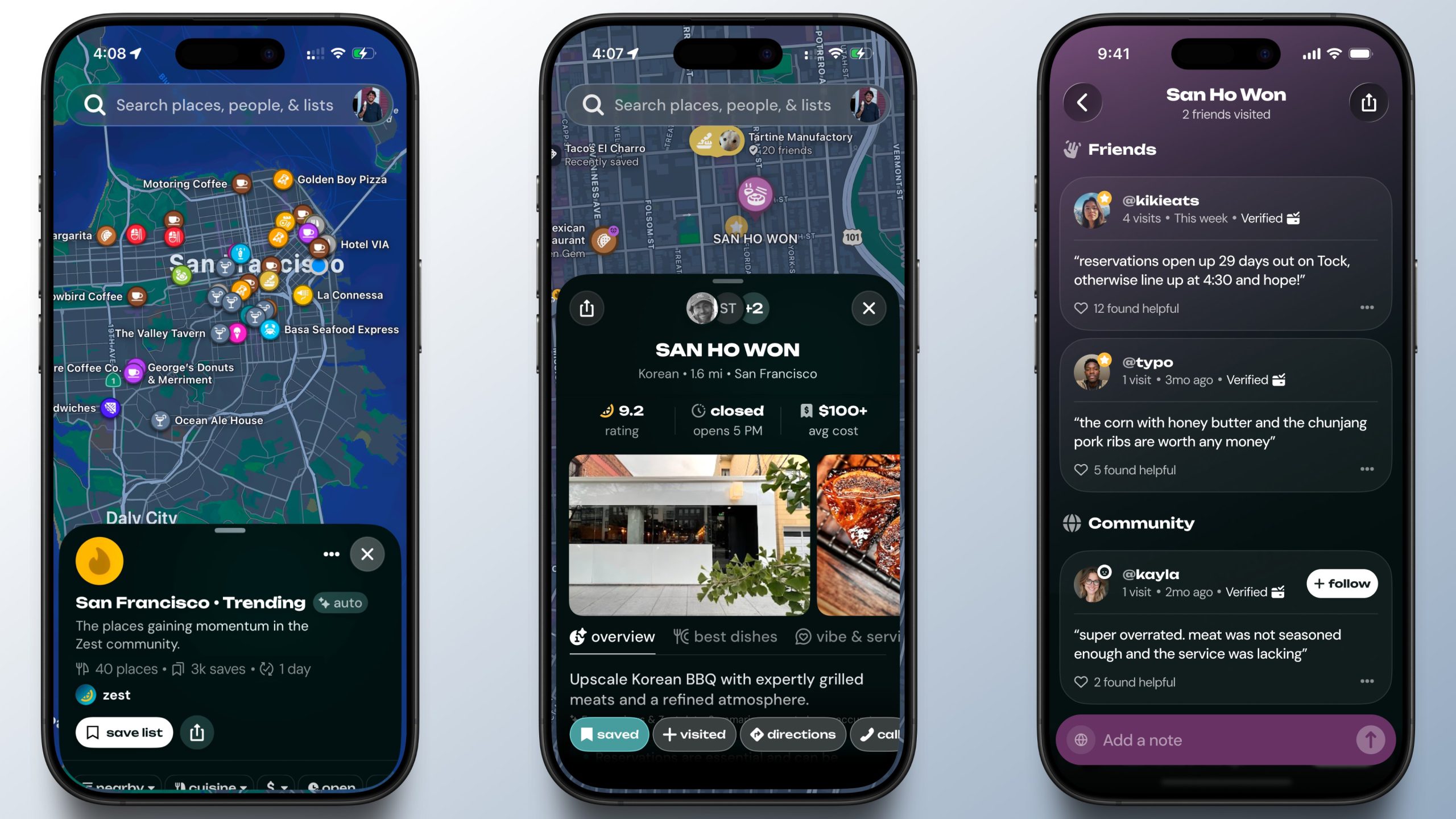
Your dining decisions are about to get a lot more intimate. Zest’s new restaurant discovery app bypasses the usual check-in theater by linking directly to your credit card, automatically logging every meal, and building an AI-powered taste profile from your actual spending habits. It’s the kind of data trade most people make without thinking twice—until they realize their burger-and-ramen patterns are now algorithmic input for where to eat next.
How Transaction Mining Meets Taste Mapping
Plaid integration turns every restaurant purchase into personalized recommendation fuel.
Here’s how it works: connect a debit or credit card through Plaid, and Zest automatically imports restaurant transactions while ignoring everything else. No manual check-ins, no forced reviews—just a growing map of everywhere you’ve actually spent money on food.
The app’s AI analyzes these patterns alongside social signals from TikTok, Reddit, and traditional reviews to suggest new spots that match your demonstrated preferences, not your aspirational ones. Early beta users report seeing their “regular rotation” mapped out with startling accuracy, including that sketchy taco truck they’d never admit to loving.
Fighting Yelp Fatigue With Verified Spending
Transaction data promises to cut through the noise of crowd-sourced restaurant opinions.
Unlike Yelp’s chaos of random reviewers or Beli’s manual logging requirements, Zest promises recommendations based on verified dining spend—where you actually eat, not where you Instagram. The social layer lets you follow friends’ real dining habits, while creators can share curated lists across cities.
Since launching publicly in early May 2026, the app has logged over 100,000 restaurant visits and raised $1.8 million from investors, including Reddit co-founder Alexis Ohanian’s 776 fund.
The Privacy Price of Perfect Recommendations
Card-linking convenience comes with philosophical questions about algorithmic taste-flattening.
Critics worry that transaction-based discovery could narrow rather than expand culinary horizons, feeding users more of what they already like instead of encouraging true exploration. There’s also the broader surveillance capitalism concern—your dining history becomes another data stream optimizing for engagement over serendipity.
Currently iOS-only and requiring card-linking for full functionality, Zest represents the latest evolution in data-for-convenience trades that started with location-sharing apps like Find My Friends. Whether mining your credit card for restaurant suggestions feels liberating or dystopian probably depends on how much you trust algorithms with your appetite.