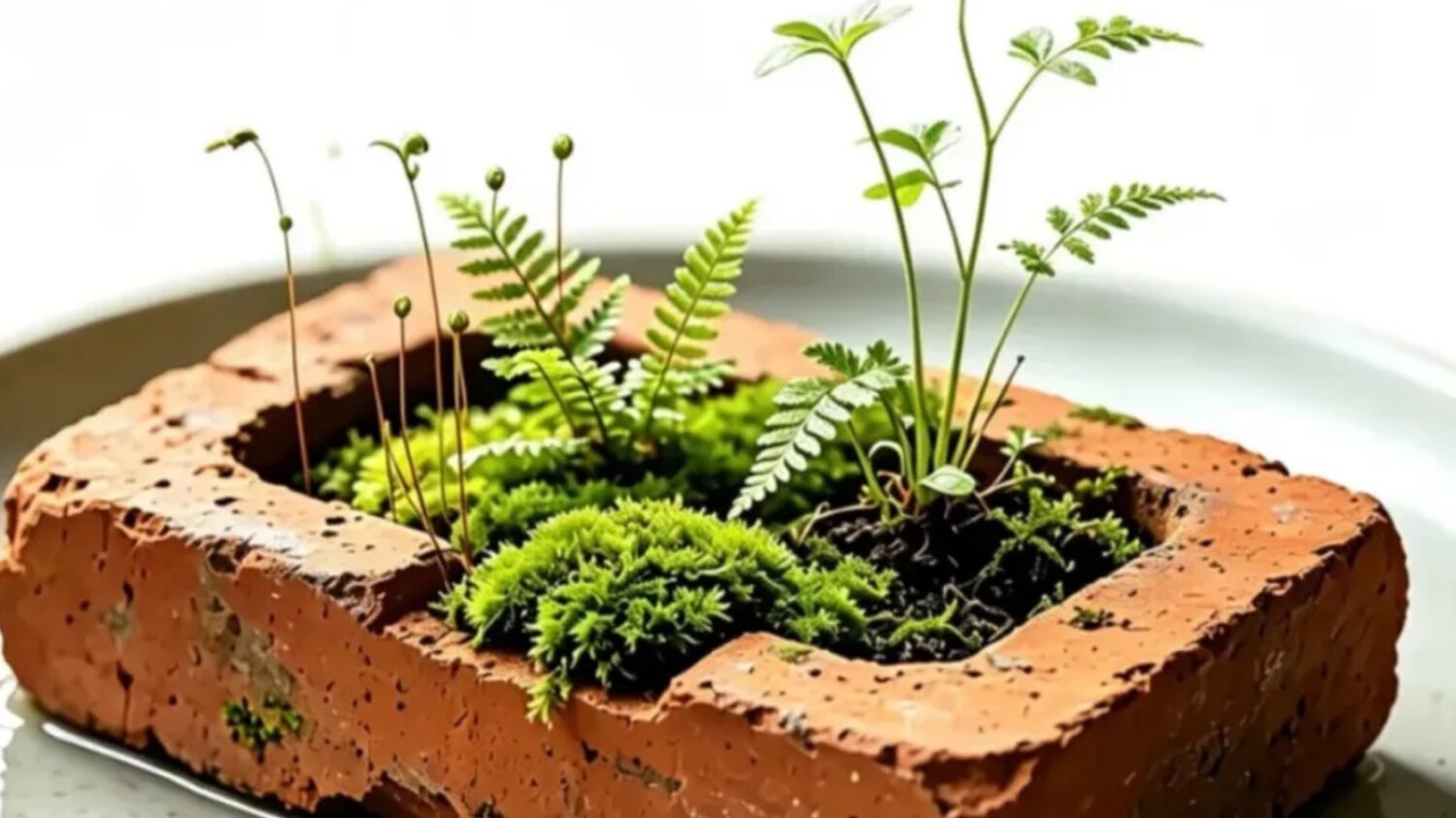
The trend, documented across Xiaohongshu (also known as Rednote) and Weibo, works like this: take an ordinary brick, place it on a tray or in a bowl, and spray it with water several times a day. Moss spores floating in the surrounding air settle on the surface and gradually turn the brick green over weeks or months.
A related hashtag surpassed 5 million views on Weibo, according to multiple secondary reports, with users photographing their bricks at intervals and tracking the slow creep of green across the surface. Per social-media posts described in those same reports, the brick has no performance targets, does not need to bloom on schedule, and will not make anyone feel inadequate about someone else’s brick.
The Most Logical Pet in Years
To understand why a brick works as a companion, it helps to understand “lying flat.”
“Lying flat” is the loose cultural philosophy that spread among some Chinese young people as a quiet refusal of relentless competition, grinding work hours, and the standard milestone checklist of career, marriage, and children. The brick, in that context, is lying flat’s logical mascot.
Secondary reports describe participants framing the hobby as “zero-energy emotional companionship”: something present, something slowly changing, something that asks nothing back. When the brick dries out, the moss goes dormant; water it again, and it revives. The same cannot be said for most relationships, which require considerably more maintenance and still offer no guarantees. That is not a joke at anyone’s expense. That is just the math.
The Pressure Behind the Spray Bottle
The brick is a punchline that contains a real story about structural stress.
Secondary reports link the trend to a difficult job market, intense educational competition, and declining enthusiasm among some young people for conventional adulthood. The brick offers something in return: a tiny act of care, a visible result, and a sense that something is growing, with none of the stakes.
Worth saying clearly: this describes a visible online subculture, not a generation-wide behavioral shift. The reporting covers people posting about bricks, not a representative survey of Chinese youth. Secondary reports frame the trend as a shareable symbol of constrained aspiration, a way to talk about stress and loneliness through something absurd enough to laugh at and real enough to mean something.
A Few Practical Cautions
A retired moss specialist offers straightforward advice for keeping the hobby from becoming a hazard.
Reports citing Xuedong Li, a retired moss specialist associated with Beijing’s Capital Normal University, advise keeping mossy bricks in an enclosed or semi-enclosed environment and using disposable gloves and a mask when handling them. Persistently damp bricks can encourage mould alongside moss, and secondary reports describe some participants complaining of itchy eyes, runny noses, or sneezing, though these accounts are not medically confirmed.
Separate reporting cautions that bricks sourced from roadsides, demolition sites, riverbanks, industrial areas may carry insects or chemical contamination. It is worth checking where the brick has been before bringing it indoors.
Still Just Sitting There, Going Green
The brick does not care about the promotion, the deadline, or the rent.
It just slowly, quietly turns green, on its own timeline, without complaint. For a growing number of people navigating a great deal of pressure, that turns out to be enough.