A buyer walking into an Apple Store ready to spend $3,400 on the flagship MacBook Pro finds something unexpected in the fine print: the cheaper model, the $1,999 one without the touchscreen, carries the newer custom silicon.
That is not a rumor. That is the product lineup.
Apple’s 2026 MacBook Pro splits into two distinct families. The entry-level 14-inch model uses the M6 processor and starts at $1,999.
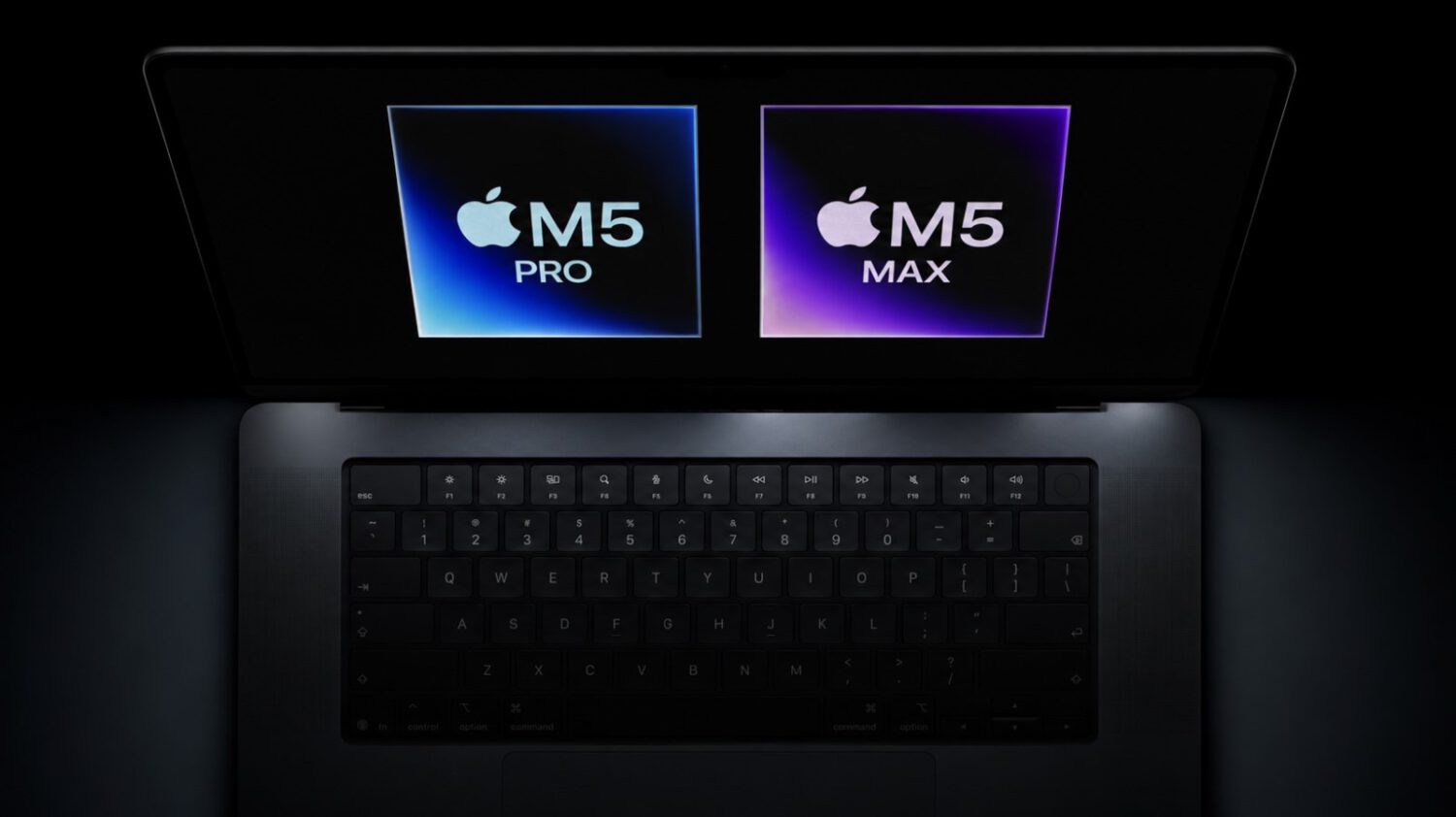
The premium 14-inch and 16-inch models, branded MacBook Pro with PROLED XDR display, introduce Apple’s first Mac touchscreen but pair it with M5 Pro and M5 Max chips, starting at $2,899 and $3,399, respectively. Both touchscreen models are available for preorder ahead of a November 6 ship date.
The performance picture is more complicated than a generation label suggests. M5 Pro and M5 Max are higher-tier chips, and in multicore, graphics-intensive, and memory-bandwidth workloads, a higher-tier previous-generation chip can outperform a newer base chip.
A video editor or 3D artist working on an M5 Max configuration is not taking a step backward. That chip does not represent a step backward for demanding professional workloads.
The premium models also scale up to 128GB of unified memory and 16TB of storage. Those are configurations the M6 model is not positioned to match.
The legitimate criticism sits elsewhere. Apple has separated its newest display architecture from its newest processor generation, and no explanation appears in Apple’s announcement or product materials.
The PROLED XDR panel is genuinely new. It uses OLED technology with the touch sensor integrated directly into the display rather than layered on top, a design Apple says reduces input latency.
Apple is shipping that display alongside M5-generation silicon. Whether that reflects manufacturing complexity, panel yield constraints, or release-schedule priorities remains unconfirmed industry speculation, not established fact.
What is not speculation is the position this puts buyers in. Choosing the premium MacBook Pro today means choosing between two different kinds of new: a newer display and input system, or a newer base processor generation.
For professionals whose workflows demand maximum parallel compute, the M5 Max remains a defensible pick. For buyers who want the latest silicon generation and do not need touch, the M6 model is the cleaner answer.
Neither machine is a trap. But Apple has built its reputation on removing exactly this kind of friction.
Asking its most demanding customers to parse chip-tier hierarchies against display-generation novelty is a real burden. A $3,400 laptop should not require a spreadsheet to justify.
Premium buyers deserve a straight answer. If the PROLED XDR display made pairing it with M6 Pro or M6 Max silicon impractical for this release, that is worth stating plainly. If this reflects a deliberate segmentation strategy, that is also worth owning publicly.
Professionals spending more than $3,000 on a laptop can handle an honest account of the tradeoffs. What they should not have to do is reverse-engineer Apple’s product logic from a marketing page.
When Apple’s most expensive laptop ships with an older processor generation than its cheaper sibling, the burden of explanation Apple, not the customer.