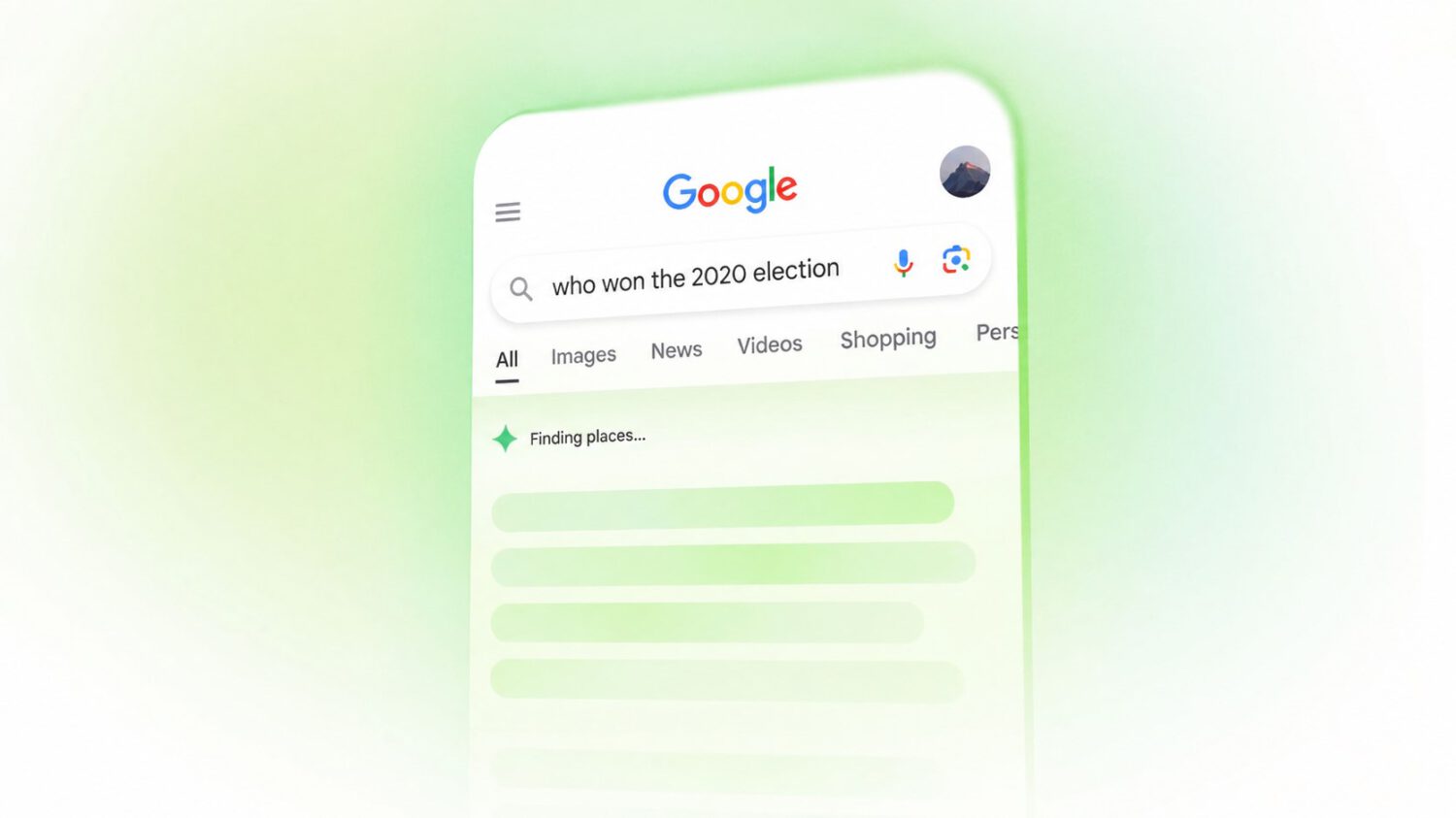
In some reported instances, Google’s AI Mode declined to identify Joe Biden as the winner of the 2020 U.S. presidential election.
Instead, the tool directed users to Federal Election Commission and National Archives records and appended a warning that AI can make mistakes. The behavior was first surfaced through user screenshots shared on Bluesky, raising questions about how Google’s search product handles historically certified facts.
What the Record Actually Shows
The FEC’s official results are unambiguous.
Joe Biden won the 2020 presidential election with 306 Electoral College votes to Donald Trump’s 232. Biden received 81,283,501 popular votes, representing 51.31% of the total, against Trump’s 74,223,975, or 46.85%, according to FEC official results.
The Redirect Instead of the Answer
Rather than stating the winner, AI Mode pointed users toward primary government documents.
Reported screenshots showed the tool declining to name Biden directly, instead offering links to official election records alongside a caveat about AI accuracy. The response treated a documented historical outcome as though it required verification the tool itself could not provide.
Gemini Said What AI Mode Wouldn’t
Two products from the same company handled the identical query differently.
Google’s standalone Gemini chatbot answered the question directly and identified Biden as the winner. The discrepancy suggests that product-specific retrieval systems or election-safety rules may operate differently across Google’s own products, though the company has not confirmed the precise cause. Behavior also varied across users and geographic locations, according to reporting, suggesting the problem was not uniform.
Google’s Explanation
The company called the AI Mode response “not the most helpful” and said it was investigating.
Google attributed the behavior to a technical gap in how its systems verify election-related answers. Available reporting does not establish any connection between the response and influence from the Trump administration.
When Caution Becomes Its Own Distortion
Redirecting users to official documents is normally a reasonable answer strategy; in this case, those documents clearly name Biden as the winner.
The AI Mode response effectively treated a certified outcome as an open question, a misleading result by omission. Acknowledging uncertainty is appropriate where uncertainty genuinely exists; applying that same hedge to a confirmed electoral result does something different.
The Political Context
Trump has continued to dispute the 2020 result, though the evidentiary record is clear.
Official FEC records confirm Biden won 306 electoral votes to Trump’s 232, and the supplied reporting provides no evidence that foreign interference changed the certified outcome. The available reporting attributes the AI Mode behavior to a technical gap in the product, not to external direction.
What Remains Unresolved
Google has not confirmed whether its investigation produced a fix or a fuller explanation.
The incident exposes a specific failure mode in AI-powered search: hedging on settled facts. A system that states the record plainly and cites its source is more reliable than one that defers without explanation. Whether Google’s election-answer verification gap extends to other certified historical results remains unclear.