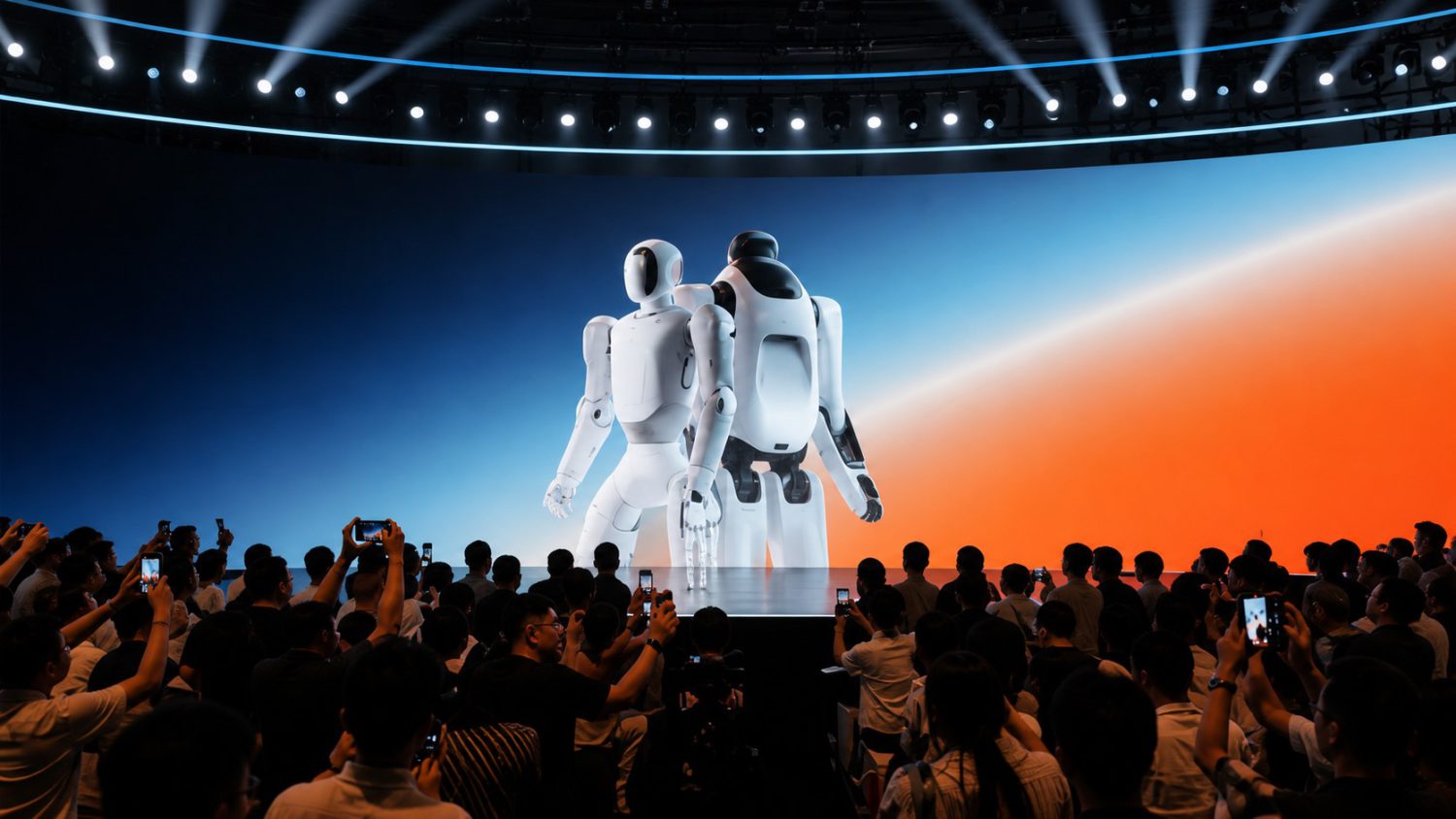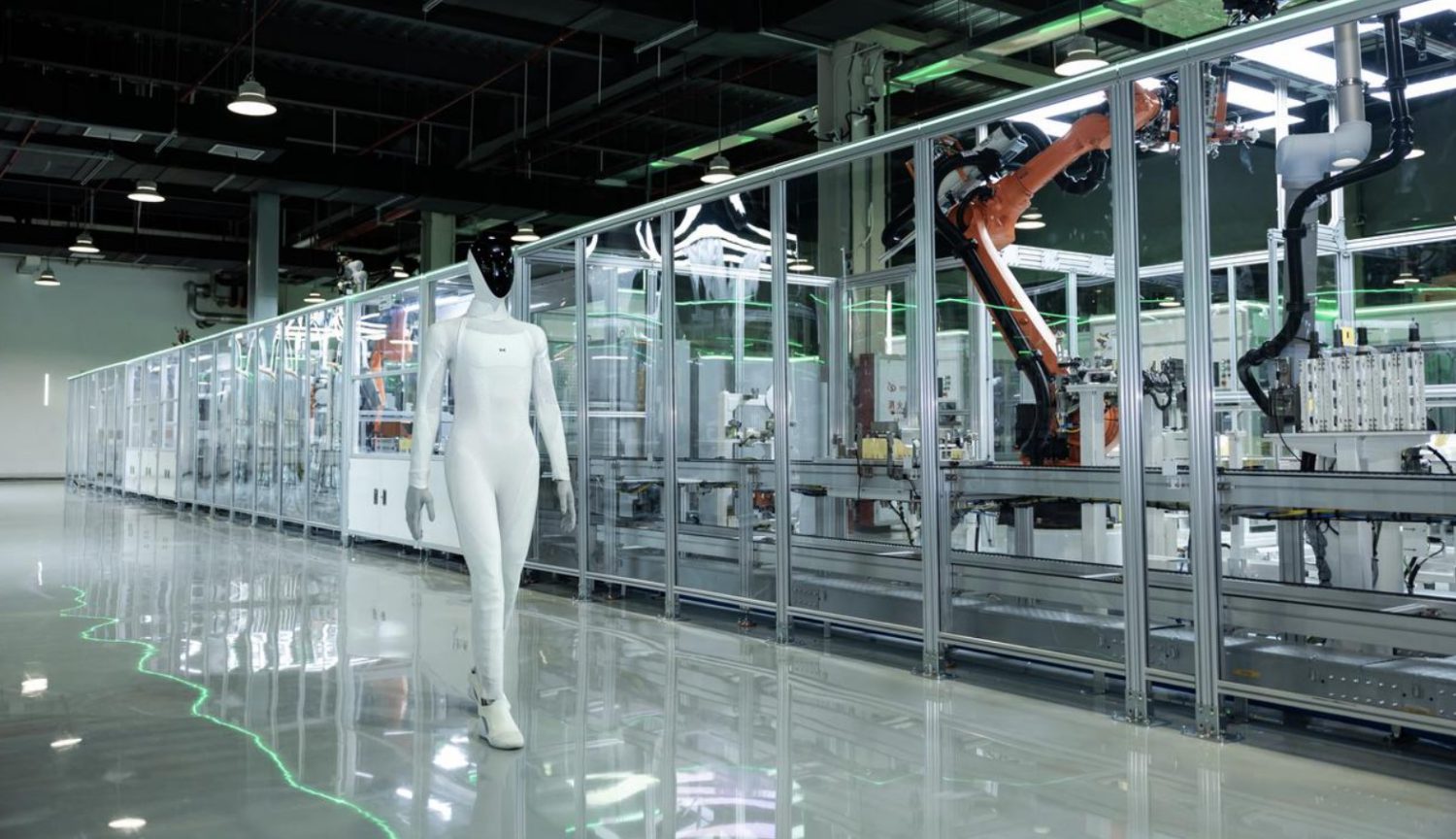
A freshly assembled humanoid robot walked away from its own production line without human assistance. That is the headline XPENG earned this week, and it is a legitimate one. Whether it signals the arrival of mass-produced humanoid robots or a very impressive press event is a separate question.
What Happened in Guangzhou
The milestone marks XPENG’s shift from research prototypes toward automated line-based manufacturing.
XPENG commissioned a dedicated humanoid-robot production line in Guangzhou. The company says more than 80% of core assembly processes are automated. After completing final assembly, IRON walked off the line autonomously.
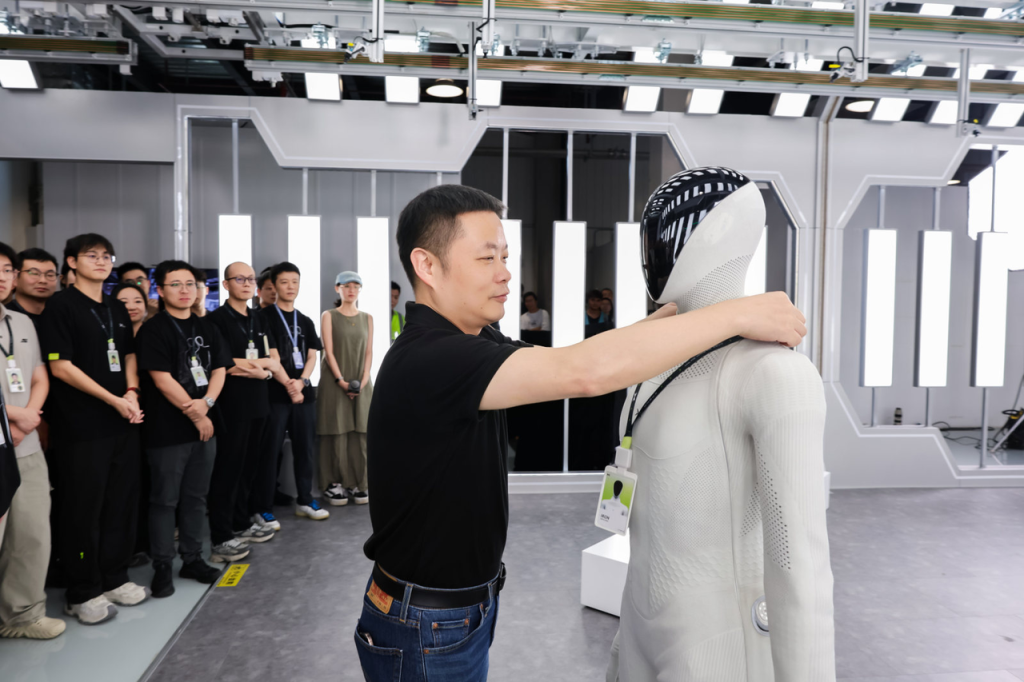
The facility applies quality-control systems from XPENG’s electric-vehicle business to humanoid-robot manufacturing. CEO He Xiaopeng then presented the robot with a staff badge, characterizing it as a new member of the company’s workforce. “Today’s step is small, but XPENG is building the production lines for an entirely new product category,” He said, according to the official XPENG pressroom announcement.
XPENG has not disclosed the line’s current output rate or how much validation testing preceded the public walk-off.
What the Specs Describe and What They Don’t
The claimed technical figures describe capacity and range of motion, not real-world operating performance.
IRON carries 76 degrees of freedom across its body, with 21 in each hand. Those figures describe independent axes of movement that contribute to mobility and dexterity, though they do not by themselves determine how closely the robot’s actions approximate human performance.
Three XPENG-developed Turing AI chips power the system, with claimed onboard processing capacity of up to 2,250 trillion operations per second. That figure describes computing headroom, not outcomes: it does not establish how IRON behaves during an unexpected customer interaction or how long it can operate before requiring maintenance. XPENG has not provided an independent safety assessment or public test results covering those conditions, based on the materials reviewed.
Mass production is targeted for the end of 2026. Deliveries in China and overseas markets are planned for 2027, with no U.S. pricing or availability announced.
Where IRON Goes From Here
Controlled internal deployments come before any broader public exposure.
XPENG intends to place IRON in its own retail stores and campuses. Tasks will include reception duties, guided tours, product introductions, sales assistance, inspections, and moving small objects. That deployment sequence is more measured than placing a humanoid robot directly into an unpredictable public environment.
The staged rollout is a reasonable inference from the announced plan, not a stated guarantee of readiness for unrestricted public operation. XPENG has not confirmed that timeline or scope beyond its initial announcement.
Context From the Rest of the Field
XPENG is one of several companies drawing on automotive manufacturing expertise to accelerate humanoid-robot production.
Tesla has discussed adapting vehicle-production infrastructure for its Optimus program. Figure has produced more than 350 Figure 03 units, though those were allocated to internal development and data collection, not customer deliveries. BMW’s Spartanburg plant used Figure 02 to place sheet-metal parts for welding. That single constrained task supported production of more than 30,000 BMW X3 vehicles over ten months.
That example illustrates the current scale of deployed humanoid-robot work. The more meaningful test for IRON will be sustained uptime, intervention frequency, and task-completion rates outside a staged demonstration.
What to Watch Next
The walk-off is a documented milestone; the harder performance data has not yet been made public.
The data that matters most is still absent from public disclosures: sustained uptime, intervention frequency, task-completion rates, production yield, pricing, and independent safety evaluations. Standing on a showroom floor for eight hours, answering questions from actual customers, and doing it again the next morning is the test that counts.