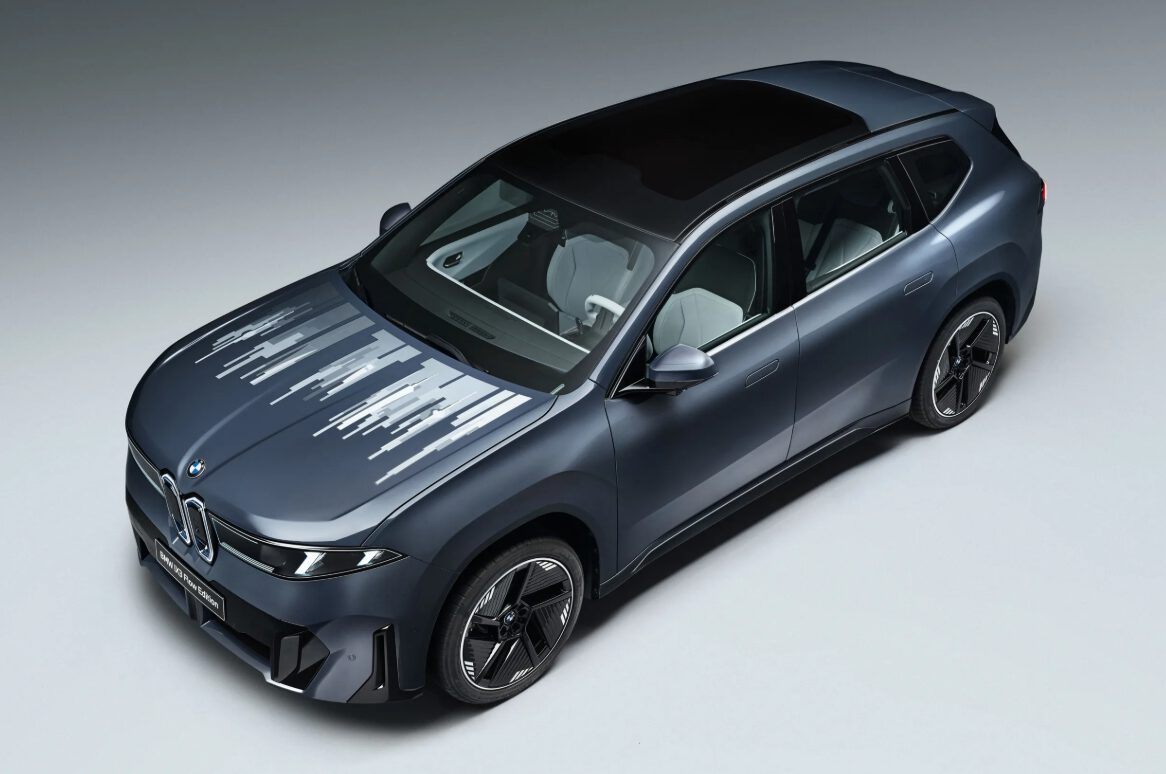
Color-changing car concepts used to be manufacturing nightmares, requiring hundreds of fragile segments that made production nearly impossible. BMW’s iX3 Flow Edition, unveiled at the 2026 Beijing Auto Show, solves that complexity puzzle by integrating electric Ink technology directly into the vehicle’s hood structure.
The breakthrough represents a dramatic shift from BMW’s earlier attempts. The 2022 iX Flow concept wrapped an entire SUV in segmented E Ink panels—impressive for a show car, but a warranty nightmare for dealerships. The 2023 i Vision Dee added 32 colors but doubled down on the segmented approach. The iX3 Flow Edition ditches that complexity entirely, embedding electrophoretic technology into a single hood panel like embedding circuits into a smartphone screen.
This isn’t just aesthetic trickery with practical benefits. BMW also hints at thermal management possibilities: lighter surfaces reflecting summer heat or darker tones absorbing winter warmth, potentially reducing climate control demands. The electrophoretic system operates through pigment particles moving within microcapsules when electric charge is applied, enabling dynamic pattern changes.
The current iteration offers preset animations, reflecting both the Beijing debut and BMW’s cultural integration strategy. You’re limited to grayscale patterns for now, but that constraint actually enabled the production breakthrough. Full-color displays would require exponentially more complex manufacturing processes.
BMW’s messaging suggests this isn’t another concept car tease, positioning the technology as demonstrating production readiness. The company has spent four years iterating from flashy demonstrations toward manufacturable reality. If the iX3 Flow Edition reaches production—likely in Chinese markets first—it would establish programmable vehicle surfaces as an actual luxury feature rather than trade show theater.
Your car matching your outfit might still sound like Instagram-level vanity, but BMW has proven the tech works in real-world manufacturing constraints. That’s the difference between concept car dreams and dealer lot reality.