Bone repair surgery relies on collagen scaffolds that cost thousands, degrade quickly, and often fail to integrate properly. Enter wool keratin—yes, the stuff from your sweater—which just outperformed medicine’s gold standard in living animals.
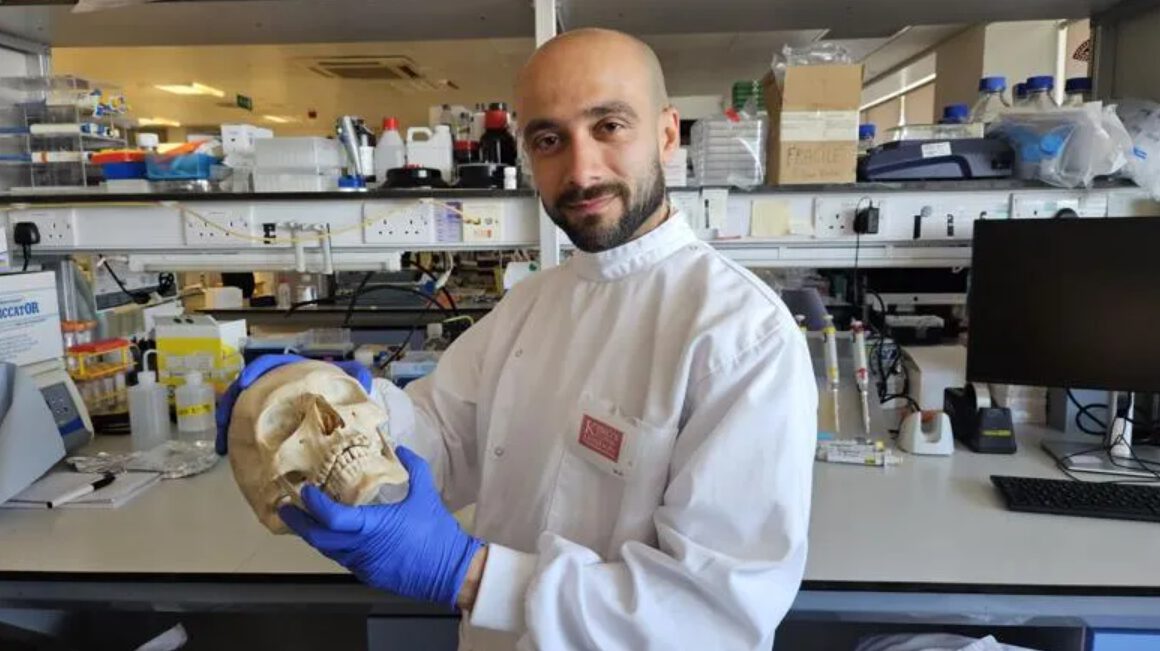
Researchers at King’s College London chemically treated wool-derived membranes and watched them guide superior bone regrowth in rats with skull defects. “We are really excited to show for the first time how a wool-based material has been successfully tested in a living animal to repair bones,” said Dr. Sherif Elsharkawy from the university’s Faculty of Dentistry.
Quality Over Quantity Performance
Keratin produces more organized, structurally secure bone than traditional collagen.
The wool membranes didn’t just work—they excelled. While collagen generated more bone volume, keratin created better-aligned fibers resembling healthy natural bone structure. Think of it like the difference between hastily poured concrete and carefully engineered architecture.
The keratin scaffolds remained stable throughout healing, integrating smoothly with surrounding tissue instead of breaking down prematurely like their collagen counterparts.
Sustainability Meets Superior Results
Renewable farming waste challenges costly animal extraction methods.
Here’s where things get interesting for anyone tired of healthcare’s environmental footprint. Wool keratin comes from farming waste that would otherwise burn or rot. Collagen requires expensive extraction from animal sources, creating supply chain headaches and sustainability concerns.
This breakthrough positions keratin as what Dr. Elsharkawy calls “a potential new class of regenerative biomaterial that could challenge the long-standing reliance on collagen.” Previous sheep studies showed wool keratin achieving 58.1% bone-implant contact versus 34.4% for controls.
Market Disruption Ahead
Two-billion-dollar bone regeneration industry faces renewable challenger.
The implications ripple through dental offices and orthopedic device manufacturers worldwide. If human trials succeed, your next bone repair surgery could use materials derived from last season’s wool sweaters instead of expensive medical-grade collagen.
Dr. Elsharkawy confirmed they’ve “effectively demonstrated the technology in an animal model, bringing the technology significantly closer to use in real patients.” The research team now aims for human trials in dentistry and maxillofacial applications, requiring FDA approval but armed with compelling animal data showing both sustainability and superior performance.