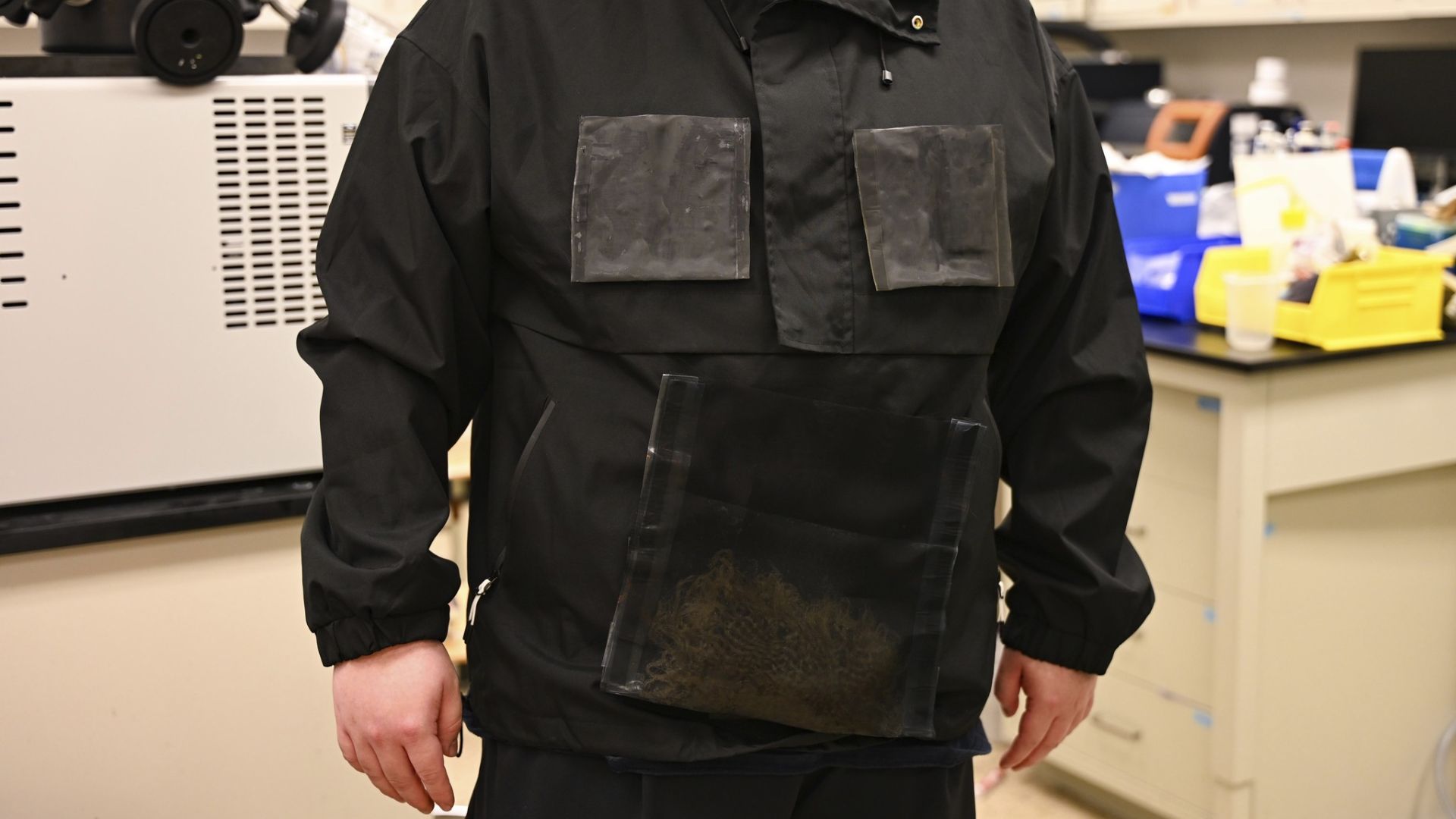
Up to 900 milliliters of drinkable water per day — from a jacket. Not from a filter, not from a stream, but from the humid air around you. Engineers at The University of Texas at Austin have built a prototype wearable that uses a biomass-derived hydrogel textile to capture atmospheric moisture and convert it into potable water, according to the university’s June 2026 announcement. Every Dune fan will recognize the premise, but unlike Frank Herbert’s stillsuit, this jacket harvests moisture from the atmosphere rather than reclaiming body sweat. The team has filed a patent. Before you add it to your ultralight packing list, though, the caveats are worth your full attention.
How Engineered Fibers Turn Humidity Into Hydration
The real advance here isn’t a thirstier material — it’s a smarter pathway for moving water from air into your bottle.
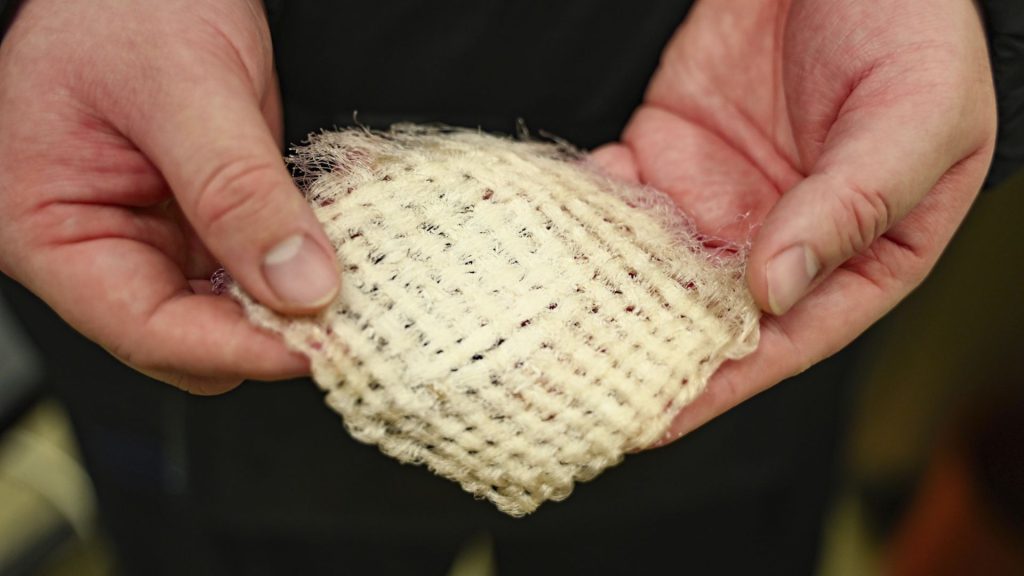
The textile combines hydroxypropyl cellulose with lithium chloride (LiCl), a hygroscopic salt that aggressively pulls moisture from ambient air. Four detachable capture units are built into the jacket — two large panels and two smaller ones — each removable for water extraction via a foldable collector and heat source. Daily output ranges from 400 to 900 ml, depending on humidity, running in batch cycles of roughly 1.5 hours absorbing, followed by one hour releasing. UT Austin reports 3–10× better performance at scale than conventional sorbent materials used in atmospheric water harvesting. A related non-wearable device using the same hydrogel fabric hit 4.3 liters per kilogram of capture material daily in both Chihuahuan Desert and semi-humid Austin field tests.
Co-author Keith Johnston emphasized that the real advance is a designed transport pathway — hierarchical open porous fibers that accelerate vapor condensation on the surface and capillary movement inward simultaneously. Think of it as Gore-Tex running in reverse: instead of pushing moisture out, the textile actively pulls water in through engineered channels. That structural difference is reportedly what makes wearable-scale harvesting possible at all, rather than limiting the chemistry to small lab samples.
This is not a tap sewn into your sleeve. You wear the jacket during the capture phase, then detach the units, place them in a collapsible collector, and apply solar or low-grade thermal energy. The current prototype still requires a DC power source and a cooling system — external hardware that keeps this firmly in field-tool territory. At peak output under favorable humidity, you’re covering roughly a third of daily hydration needs, since a healthy adult typically requires 2–3 liters per day.
Who Actually Needs a Water-Harvesting Jacket
The target users are specific, and so are the remaining engineering hurdles standing between this prototype and any store shelf.
Target users are specific:
- disaster responders
- Agricultural workers in arid regions
- military personnel seeking workplace safety solutions
- Backcountry hikers where resupply genuinely doesn’t exist
The same hydrogel textile could eventually extend to tents, backpacks, and emergency shelters — the jacket is the proof-of-concept vehicle, not the ceiling of what’s possible. Community discussions have raised concerns about LiCl potentially leaching into harvested water; official sources maintain the salt stays locked within the sorbent material. Regulatory and consumer-perception hurdles on that front remain real, and independent peer-reviewed validation has not yet been publicly cited alongside the university’s announcement.
No retail timeline exists. But the proof-of-concept matters — not because your next jacket will brew water by 2028, but because it demonstrates that gear could eventually generate a resource instead of just carrying one.