Between JD.com’s 700,000 delivery couriers and the 600,000-plus hires Amazon plans to simply never make, roughly 1.3 million jobs now have expiration dates written in corporate strategy documents. Not think-tank speculation. Not conference-keynote hand-waving. Internal roadmaps with dollar amounts attached. The rise of the humanoid robot is accelerating this timeline beyond what most workers — or policymakers — are prepared for.
When two of the planet’s biggest logistics operations announce automation plans simultaneously, every competitor from Walmart to UPS starts doing the same math. The central question isn’t whether robots are coming. It’s whether retraining can keep pace with replacement.
The Plans Are Already Written
Hard numbers from boardrooms in Beijing and Seattle tell the story press releases won’t.
Here’s what’s already on paper:
- JD.com founder Richard Liu told the APEC China CEO Forum that 700,000 delivery couriers will be replaced by robots “sooner or later,” according to the Financial Times.
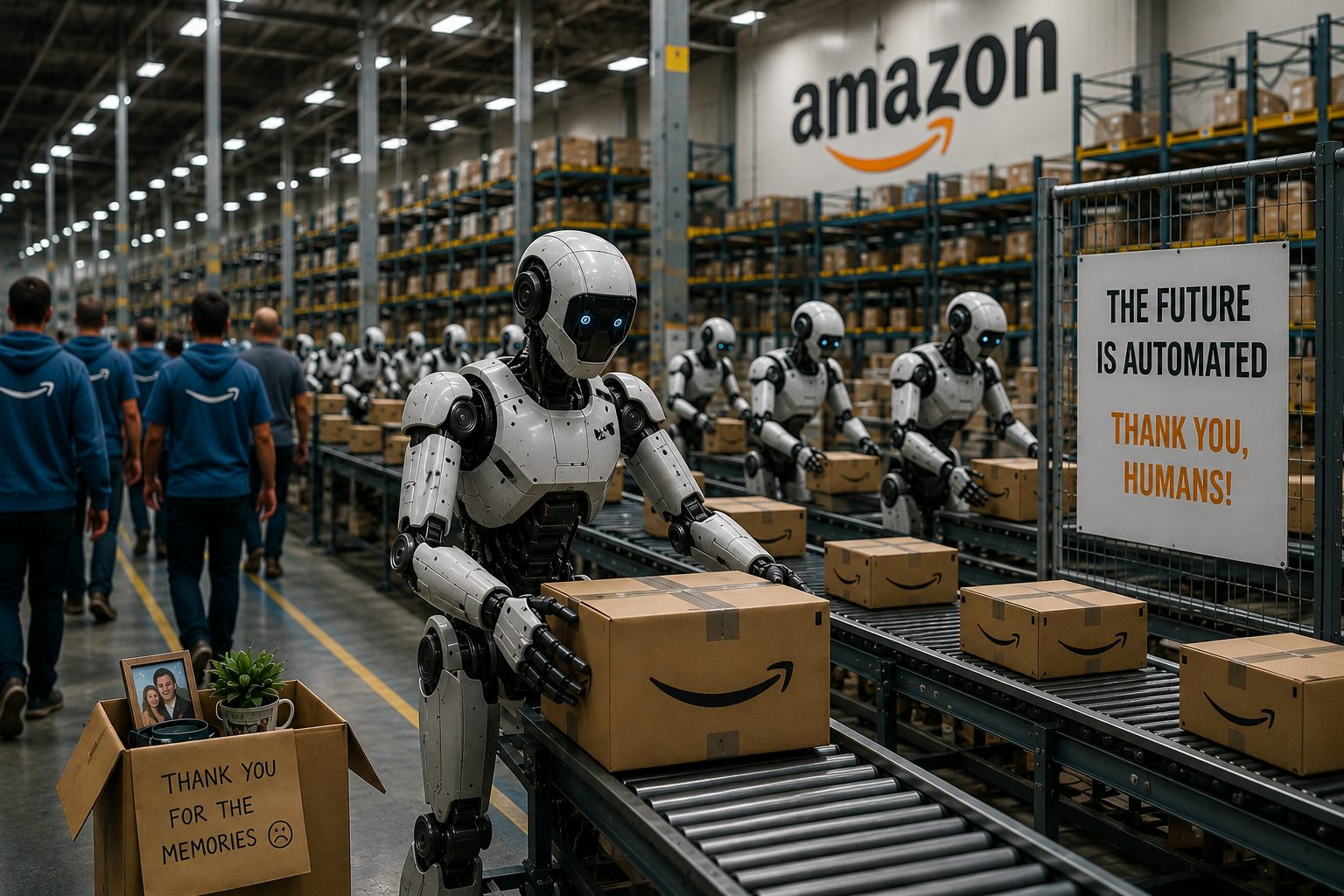
- Amazon’s internal documents, reviewed by The New York Times, target automating roughly 75% of operations.
- By 2027, Amazon projects avoiding 160,000 additional U.S. hires; by 2033, that number climbs past 600,000.
- Automation saves Amazon an estimated 30 cents per item — projecting $12.6 billion in savings from 2025 to 2027, according to Gizmodo.
- At one Shreveport facility, automation already runs operations with about 25% fewer workers.
JD.com launched “Project Nirvana,” partnering with 120 schools across China to retrain couriers — teaching them to repair the very robots replacing them. Liu reportedly told the APEC forum, “There will be a day when couriers are basically no longer needed.” Amazon’s framing is subtler: not firing workers, just never hiring the ones growth would otherwise demand. Workers know the difference between a layoff and a callback that never comes. The outcome is identical. This kind of corporate-backed retraining program is emerging as the standard industry response to displacement at scale.
NVIDIA CEO Jensen Huang has been evangelizing “physical AI” — declaring that “every industrial company will become a robotics company.” Amazon already operates around one million robots worldwide. Think less Terminator, more the Blockbuster-to-streaming shift: gradual, then sudden.
Who Actually Gets Hurt
Economists warn the ripple effects extend far beyond warehouse floors.
Economist Daron Acemoglu warned in New York Times reporting that Amazon risks flipping from one of America’s largest job creators to a net job destroyer. Walmart and UPS face identical logic, raising fresh questions about workplace safety as robots and remaining human workers share the same floors. And this isn’t limited to blue-collar roles — entry-level white-collar and junior software positions face similar AI erosion as routine cognitive tasks get automated away.
Past automation waves destroyed specific jobs and eventually created new ones. But the pace and breadth here are different. JD.com’s retraining program covers 120 schools for 700,000 workers. Whether that math actually works is the only question worth asking.