





Most dash cams do one thing: record what happened after it was too late to do anything about it. They are evidence tools, not safety tools. The footage is useful for insurance claims and parking lot disputes. It does not help you when a deer steps onto a dark highway 150 feet ahead of your headlights, or when a cyclist rolls through fog without lights, or when a pedestrian appears at the exact spot where your low beams give out.
Every major car manufacturer knows this. Cadillac put thermal night vision in the Escalade IQ and Vistiq to solve it. Those vehicles start above $100,000. The technology has existed for years and stayed locked inside vehicles almost nobody buys.
The Vantrue Pilot 2 is the first attempt to bring that same capability to any car, at a price that starts at $499 on Kickstarter. It is not a modest upgrade to the dash cam formula. It is a different category of product entirely.
What the Pilot 2 Actually Is
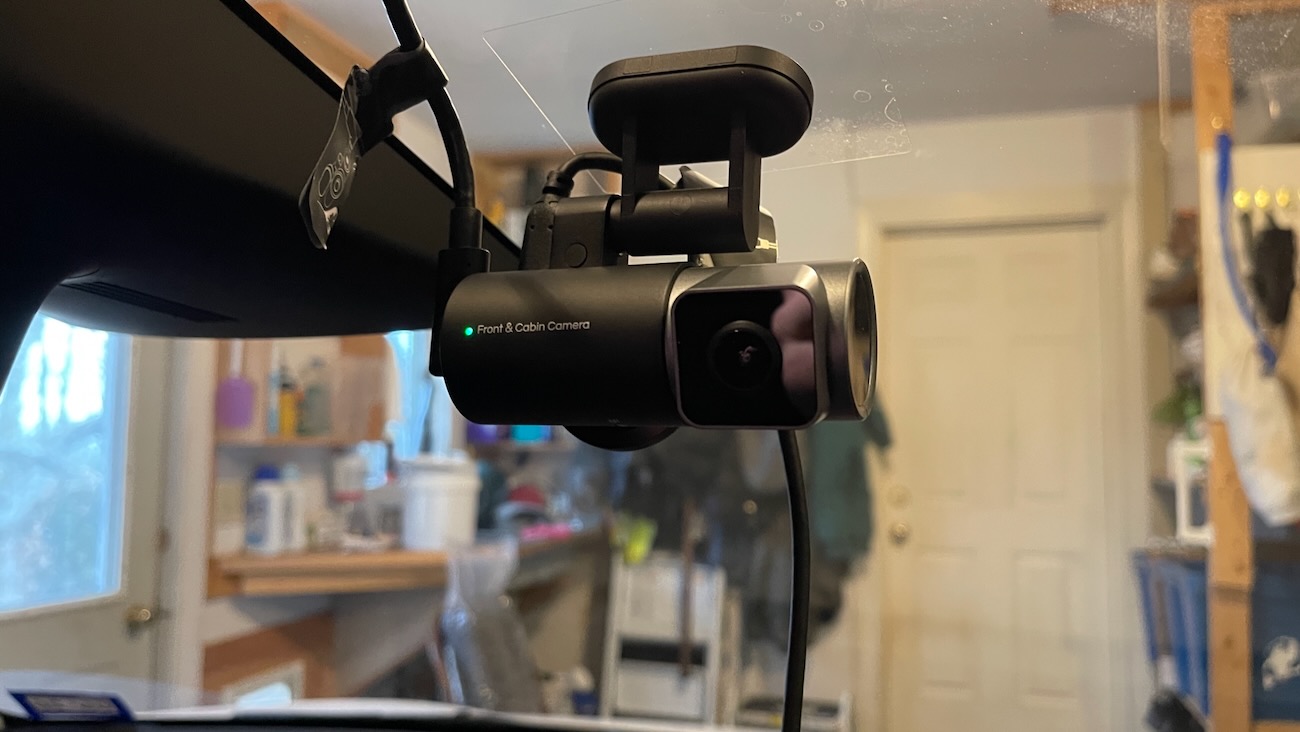
The system ships as four physical components. A combined front-and-cabin camera unit mounts to the windshield. A rear camera goes on the back windshield. A 6.25-inch touchscreen display sits on the dashboard and serves as the brain of the whole operation. And a compact external thermal module — roughly matchbox-sized and IP67 waterproof rated — mounts on the hood just below the windshield or tucks into the front grille.
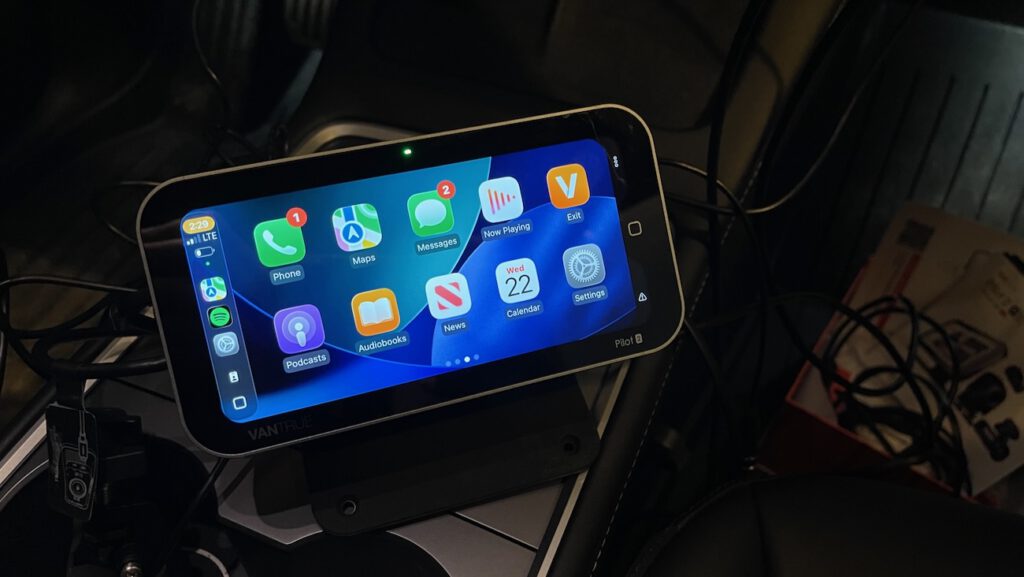
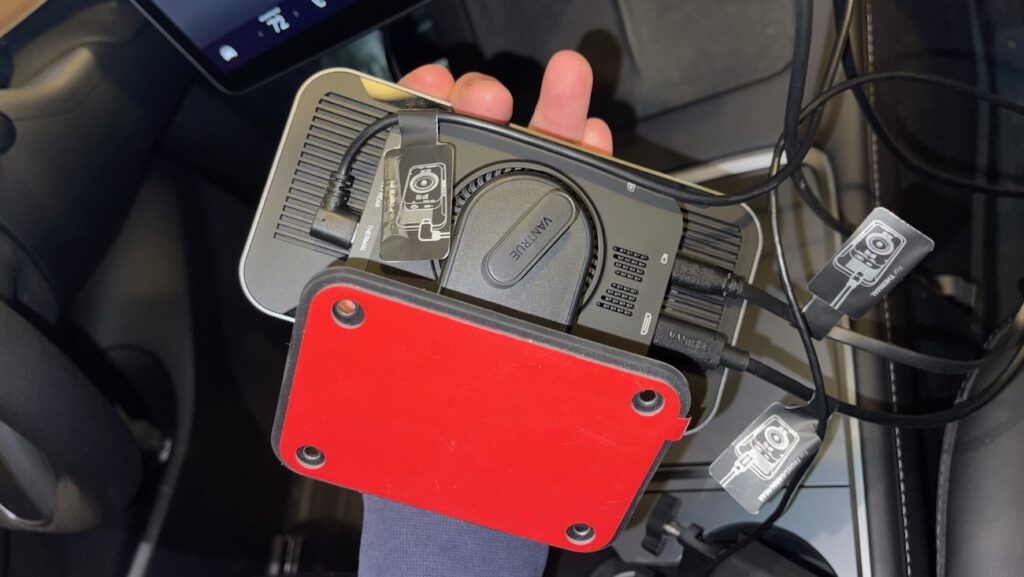
Three cable runs connect everything to the display. The front and cabin cameras daisy-chain together on one cable. The rear camera runs its own cable the length of the vehicle. The thermal module runs a separate cable from the grille to the display. There is also an aux input on the display and a car charger that plugs into your 12V outlet or USB-C power source.
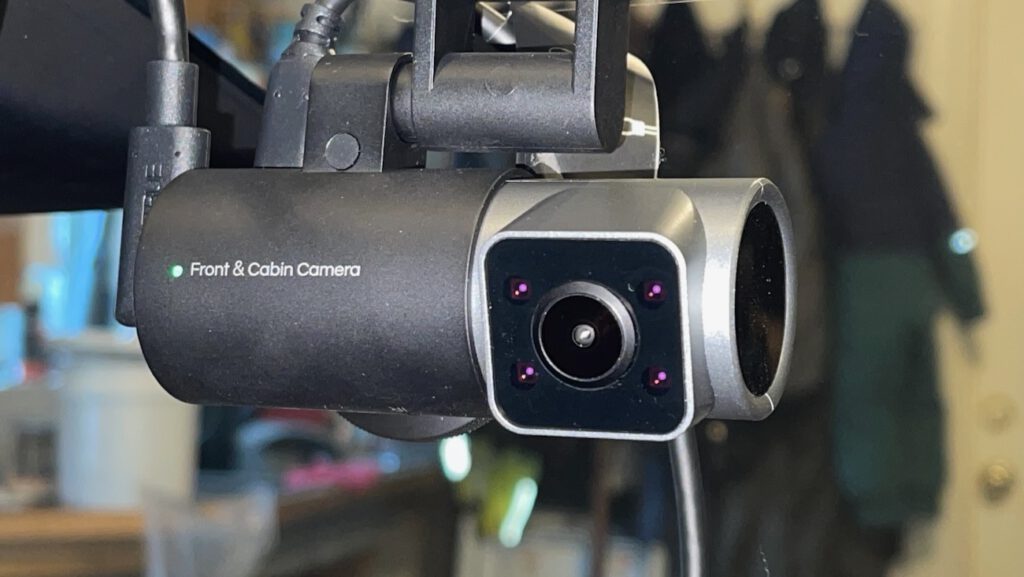
What you end up with is a four-channel recording system that captures the road ahead at 1440p, the cabin at 1080p with four infrared lights for night visibility, the road behind at 1440p, and a thermal feed from the front of the vehicle simultaneously. All four feeds are synchronized, time-stamped, and stored to a single microSD card that supports up to 1TB. The display shows all four views in a configurable quadrant layout. Tap any quadrant to expand it. Swipe to cycle through individual feeds.
The Thermal Module: What It Actually Does
This is the part worth understanding properly before the marketing language takes over.
A standard dash cam sees light. In complete darkness, it sees nothing useful. The Pilot 2’s thermal module does not see light. It sees heat. People, animals, and vehicles are warmer than their surroundings, and that temperature difference is visible to a thermal sensor regardless of whether there is any light at all. The module uses a 12-micron vanadium oxide uncooled infrared detector — the same sensor category used in professional thermal cameras, miniaturized to a housing smaller than most key fobs.
The AI layer processes that thermal feed in real time. When it identifies a heat signature matching a person or animal, it highlights it on the display and issues an audio alert. Detection range is up to 200 feet. For context, at 60 mph you are covering 88 feet per second. Two hundred feet of early warning is roughly two seconds of additional reaction time before a hazard reaches your headlight range. In the dark, that is meaningful.
I tested the thermal camera in limited conditions — a clear day, pointing it at known subjects rather than the scenario it is actually designed for. Even in those controlled circumstances, it identified heat signatures clearly and without hesitation. People and objects registered distinctly against their backgrounds on the display. The detection works as advertised. What I cannot yet tell you is how it performs in the conditions that matter most: actual fog, actual rain, an actual dark rural road with a deer at the edge of the frame. That testing will come with a full install. What I can tell you is that the underlying capability is real.
Tom’s Guide called this the coolest thing at CES 2026, noting that a thermal camera they had previously installed on their own car required a chunky roof-mounted unit. The Pilot 2’s module is dramatically more compact and integrates directly with the display rather than requiring a separate system. TechRadar described the footage as giving drivers a view that road conditions cannot compromise — the same capability regardless of darkness, fog, heavy rain, or smoke.
One important caveat the DashCamTalk forum community raised: like Vantrue’s TS2 thermal add-on for phones, the Pilot 2 includes burn protection that activates when the thermal sensor is pointed directly at the sun. This is standard for uncooled infrared detectors and is not a flaw, but it is worth knowing if you regularly drive into direct sun with a hood-mounted camera.
The Thermal Camera Mounting Problem
Here is the honest version of the install story for the thermal module specifically, because the press coverage has largely glossed over it.
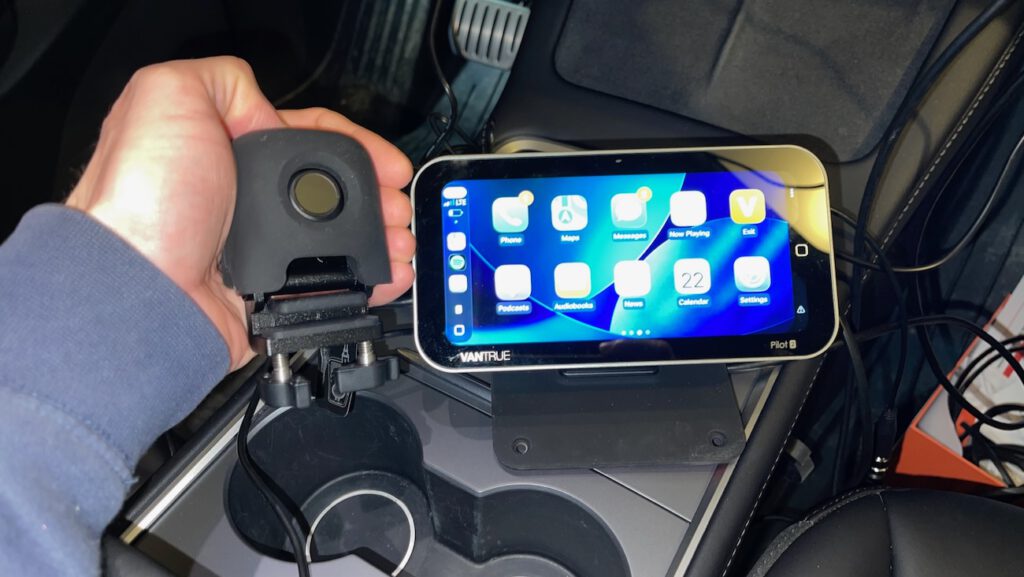
Vantrue gives you two mounting options: on the hood just in front of the windshield, or on the front grille. Each position requires a different casing configuration, which means you have to decide where it is going before you commit, and switching later means swapping hardware. I did not complete a full thermal install — I tested the camera separately rather than mounting it on the vehicle — and that decision came directly from the mounting challenge. Finding the right position, routing a cable from the front of the hood back through the firewall or around the engine bay to the display, and doing it cleanly is a real project. It is not a Saturday afternoon job for most people, and it is probably not a job for anyone without some experience routing automotive wiring.
This is a genuine concern worth flagging before purchase. The front-and-cabin camera and rear camera installations are straightforward. The thermal module is the part that will push most buyers toward professional installation, and at a $799 retail price that is a real additional cost to factor in. Autoevolution, who has experience with grille-mounted cameras, also noted that the grille position collects mud and road debris quickly — something to consider for anyone in regions with winter road conditions.
The capability is worth the effort for the right driver. Just go in with realistic expectations about what the thermal install actually involves.
Installing the Rest of It
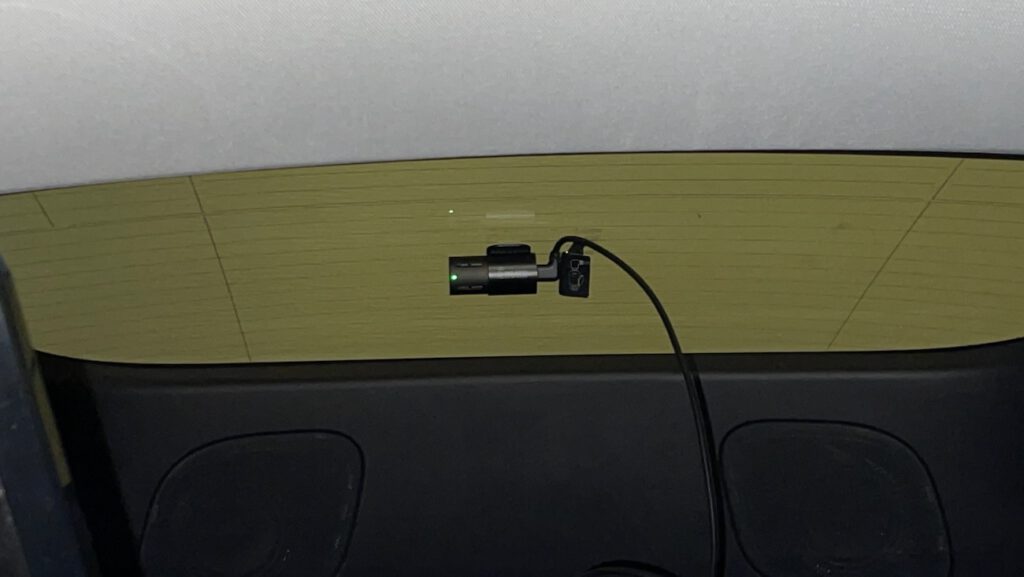
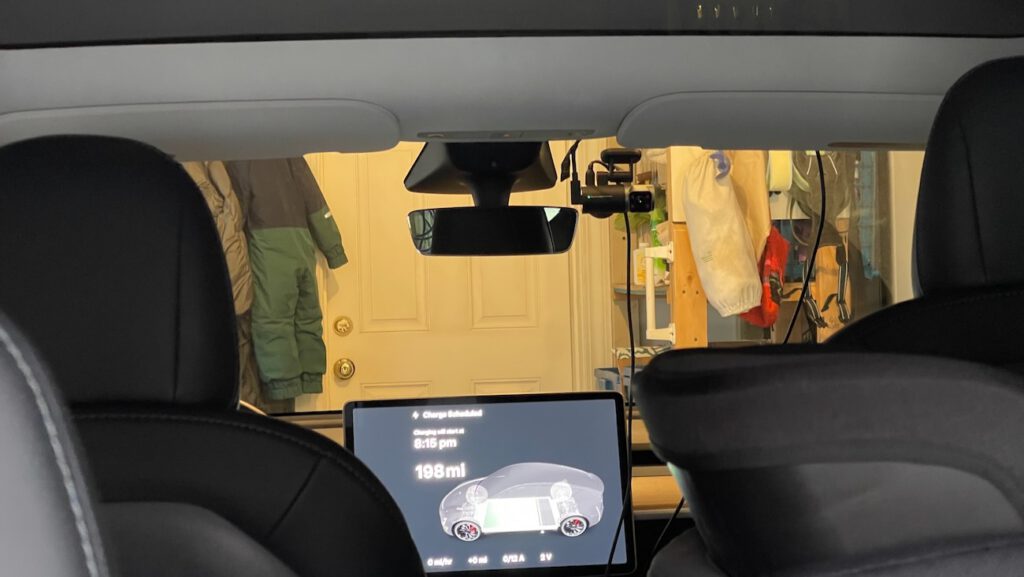
I tested the Pilot 2 on a 2022 Tesla Model Y, which already has built-in cameras, so this was an evaluation of the system rather than a primary install. The front-and-cabin camera and rear camera setup was straightforward — roughly 25 minutes to get both positioned and connected. The center console 12V outlet handles power without issue.
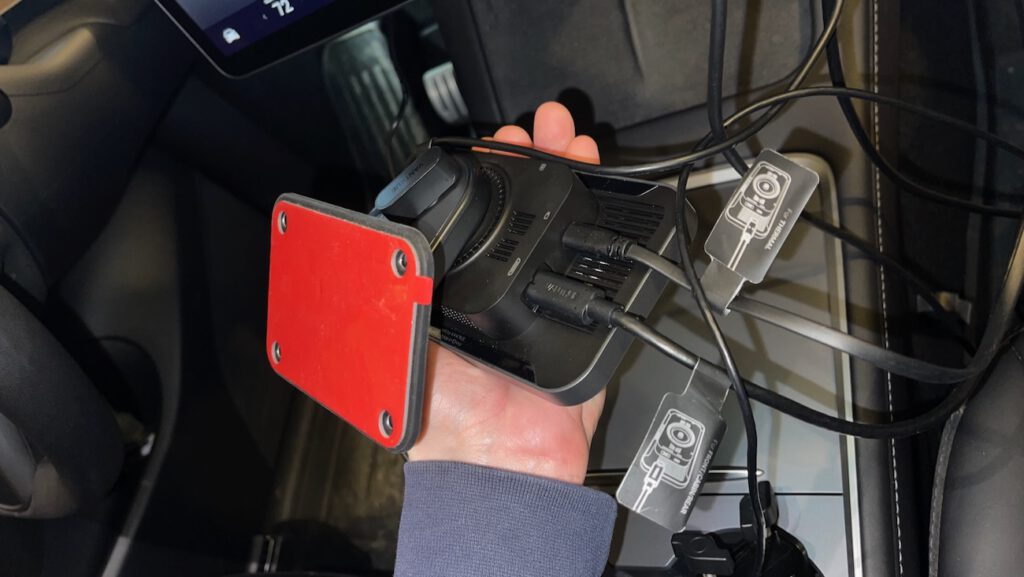
One thing to flag before you install: the labels on the back of the display unit itself are incorrect. The printed diagram that comes in the box is accurate. Use that, not the labels on the device, to identify which port is which. Vantrue will presumably address this before retail units ship, but for Kickstarter backers it is worth knowing upfront.
The front camera cable is foolproof by design. It has a physical groove and tab system — like teeth — that only allows it to connect to the front camera unit in the correct orientation. You cannot accidentally use the wrong cable. The rear cable is a standard connection. A small pry tool is included for routing cables into the headliner. How clean the final installation looks depends on your patience and your vehicle’s trim accessibility.
The Display and CarPlay
The 6.25-inch IPS touchscreen is bright, crisp, and readable in most sunlight conditions. In direct sunlight it can wash out, as it is not a matte display, but in normal driving scenarios including bright ambient light it holds up well. The interface works like a smartphone: swipe up to exit, tap a camera quadrant to expand it full screen, swipe left or right to cycle through individual feeds.
CarPlay connects wirelessly and works well. The connection process uses Bluetooth for the initial handshake — the devices authenticate and exchange Wi-Fi credentials — then immediately switches to the Pilot 2’s own Wi-Fi 6 network for everything you see and hear. Once that handshake is done, your phone’s Bluetooth is free. That means you can keep your phone paired to your car’s audio system via Bluetooth while CarPlay runs independently over the Pilot 2’s Wi-Fi network. Both connections coexist. In practice this means music plays through your car’s speakers as normal, navigation and app control run through the Pilot 2 display, and nothing needs to be rerouted or reconfigured each time you get in. It is a clean setup once the initial pairing is done.
In use, navigation, music, and app switching all work smoothly. There is a slight lag when switching between apps — noticeable but not disruptive. For a vehicle that has no CarPlay at all, this is a meaningful upgrade. The display handles the interaction while your existing audio system handles the sound.
Android Auto is listed in the menu but marked as coming soon.
Camera Specs and What They Mean
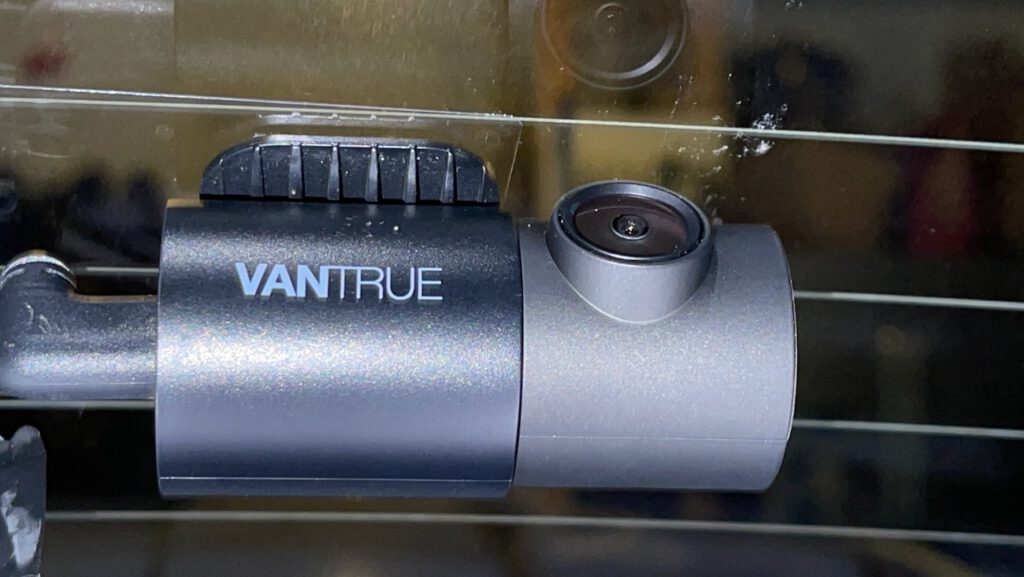
The front camera uses a Sony IMX675 sensor at 5 megapixels with a 158-degree field of view and an F1.8 aperture. The wide aperture matters in low light — more light hits the sensor, which means less noise and better detail in dark conditions. The cabin camera is a Sony IMX662 at 2 megapixels with four infrared lights built in for night recording and a 165-degree field of view. The rear camera covers 160 degrees at 1440p.
PlatePix technology processes license plate footage to improve legibility at speed. HDR is supported across channels. GPS logs location and speed data with every recording and supports automatic timing sync.
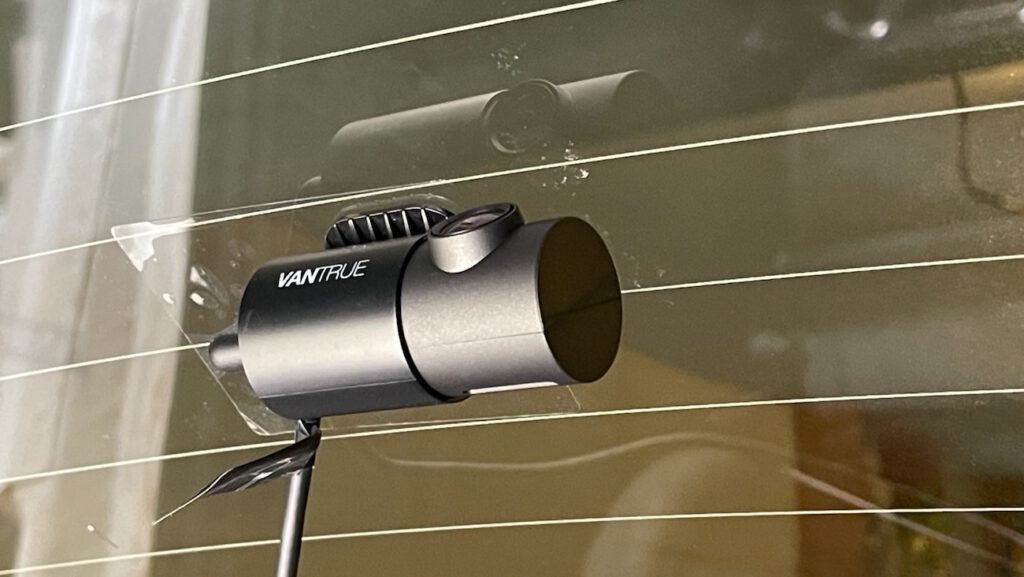
The rear camera required more angle adjustment than expected to get a clean view directly behind the vehicle. The rear window angle on the Model Y sits higher than a typical sedan, which affects optimal mounting. Test the angle on the display before finalizing the mount and plan for more adjustment time than the instructions suggest.
What Is Still Unknown
Every piece of thermal footage shown publicly so far has been CES demo footage in controlled conditions, and my own testing was limited to a clear day with known subjects. Nobody has yet published results from driving with this system through actual fog on a rural highway, through heavy rain, or on an unlit road with wildlife. Those are exactly the scenarios the thermal module is designed for.
The DashCamTalk community has been tracking this product since its SEMA appearance in November 2025. The forum consensus is genuine enthusiasm about the thermal concept paired with sensible caution about first-generation technology. Questions about how the AI detection handles false positives from warm pavement, engine exhaust heat, and other ambient heat sources in the real world are ones only extended real-world testing will answer. A full review will address all of this once units ship in June.
Who Should Back It Now
The Pilot 2 is the right purchase for drivers who regularly cover rural roads, mountain routes, or unlit highways at night and have wanted thermal detection without spending six figures on a luxury vehicle. It is also a strong option for rideshare drivers who want comprehensive cabin-plus-road coverage and for owners of older vehicles who want to add CarPlay without replacing the head unit.
It is not the right purchase for drivers whose primary use case is urban commuting on well-lit roads, where a standard dash cam covers most scenarios at a fraction of the price. If you do not need thermal, you are paying a significant premium for a feature that will not change your daily experience.
The Kickstarter campaign launched April 22 with early bird pricing starting at $499, which includes the full system, a 128GB microSD card, and a CPL filter. Retail MSRP is $799. Shipments are expected June 2026. The campaign is live at Kickstarter.