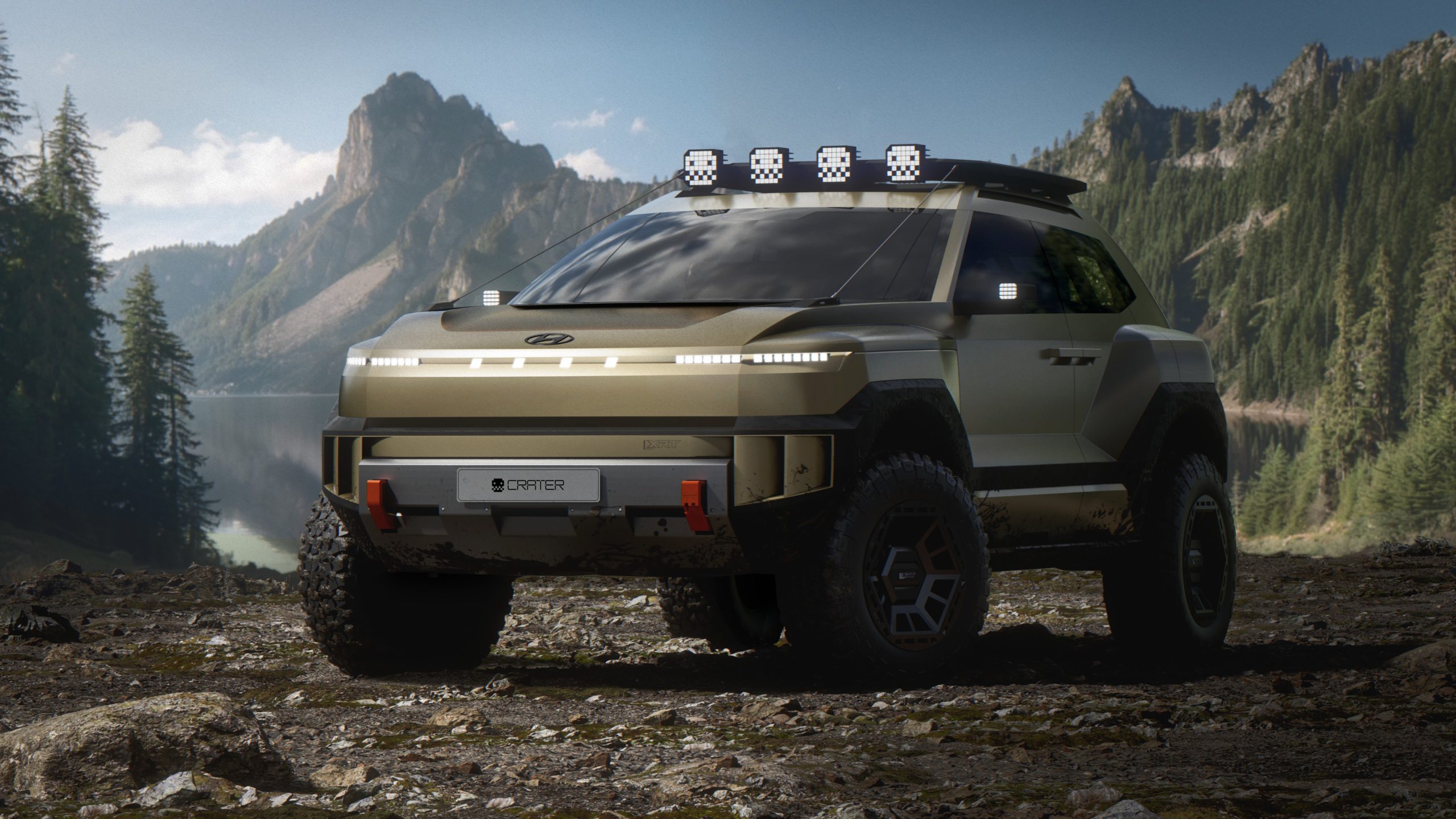
Dead phone batteries and forgotten bottle openers shouldn’t ruin your desert escape, but they do. The Hyundai CRATER Concept eliminates that anxiety with recovery hooks that double as bottle openers and side-mirror cameras that detach as emergency flashlights. Unlike typical concept cars, this is Hyundai asking “What does freedom look like?” and delivering answers that actually matter to weekend warriors tired of choosing between capability and style.
California Dreaming Meets Korean Engineering
The Art of Steel philosophy transforms rugged utility into sculptural beauty.
The CRATER ditches traditional military-surplus aesthetics for something you’d actually want parked in your driveway. Built at Hyundai’s California design center, the concept channels Dune Gold Matte paint inspired by coastal terrain and 18-inch hexagonal wheels that look like asteroid impacts.
Limb risers stretch from hood to roof—practical protection that doubles as visual drama. This is Patagonia-level design thinking applied to SUV architecture, where every element serves dual purposes without sacrificing visual appeal.
Interior Solves Real Adventure Problems
Curve of Upholstery concept prioritizes function-first flexibility over showroom flash.
The CRATER’s cabin abandons traditional bucket seats for wraparound forms with three-dimensional padding that keeps you stable during serious off-roading. A removable Bluetooth speaker lives in the center console while first aid kits and fire extinguishers occupy dedicated mounts.
The full-width head-up display includes rearview camera feeds, and terrain buttons let you switch between:
- Snow
- Sand
- Mud
- Auto
- XRT modes
Every surface expects actual use, not just Instagram photos.
XRT Brand Expansion Targets Lifestyle Market
Hyundai challenges established adventure vehicle dominance with design-conscious approach.
The CRATER joins existing XRT models like the IONIQ 5 XRT and SANTA CRUZ XRT, signaling Hyundai’s serious push into adventure vehicles territory. But where competitors lean into heritage and ruggedness, Hyundai targets consumers who rejected traditional off-roaders for being too utilitarian.
The CRATER’s BYOD (Bring Your Own Device) integration and parametric pixel lighting appeal to tech-savvy adventurers who want their vehicles as sophisticated as their gear.
Freedom, according to Hyundai, looks like genuine capability wrapped in California cool. Whether that philosophy transitions from concept to production remains unclear, but the CRATER proves adventure vehicles don’t have to sacrifice style for substance—or vice versa.