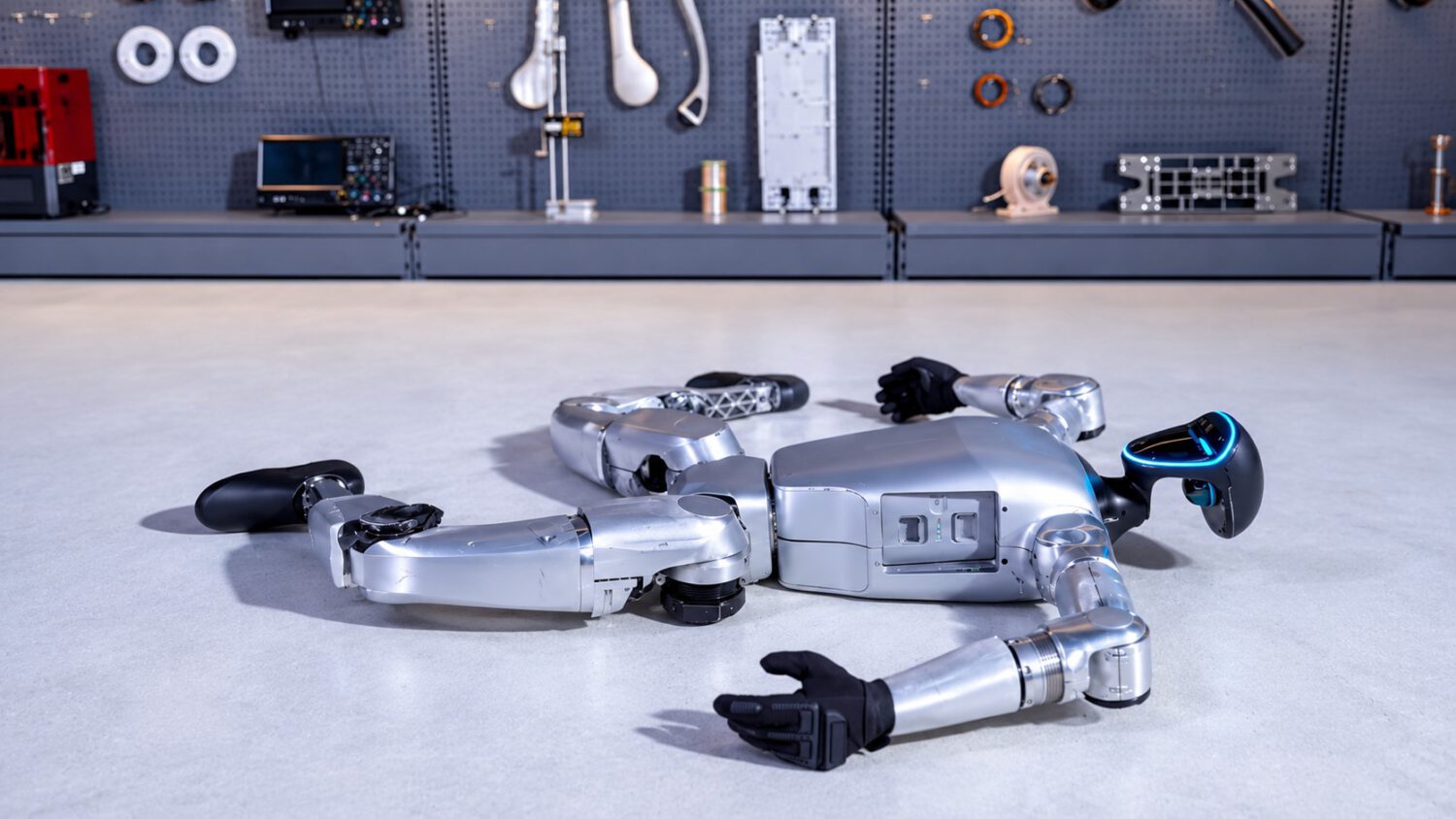
On November 2, 2026, event staff carried down Mount Tai a humanoid robot on a stretcher after it overheated during the inaugural CMG World Robot Mount Tai Climbing Competition in Tai’an, Shandong Province. The operator withdrew the machine before completing the course, citing safety concerns.
The Course Was Not a Controlled Demo
Roughly 3.9 kilometers of uneven mountain terrain defined the competition route, and nothing about it resembled a prepared demo floor.
The route included more than 3,100 steps and required approximately 600 to 640 meters of elevation gain. That is a sustained physical workload, not a showcase sprint.
Uneven stone steps, continuous incline changes, and irregular footholds demanded constant adjustments to posture, foot placement, and balance. Sources describe difficult terrain throughout, though competition rules regarding permitted pauses or assistance were not detailed in available reporting.
Heat Built Up; The Cause Stayed Vague
Available reporting attributes the failure to internal heat accumulation, not to outdoor ambient temperature, but the precise source remains unconfirmed.
Motors, actuators, batteries, power electronics, and onboard computing can all generate heat during sustained movement. A demanding climb extends the duration and intensity of that workload, though no source confirmed which of the G1’s subsystems was primarily responsible.
Unitree suggested the development-version unit may not have received competition-specific tuning before the event. The company did not identify which component failed, and no public technical diagnosis has confirmed whether the heat originated in the actuators, battery system, motor drivers, or elsewhere.
That uncertainty is material. Without a confirmed cause, the incident is a credible field-test failure, not a diagnosed defect.
Context on the Machine and the Team
The participating robot was a G1 development version, and that distinction matters when reading the result.
One report identified the entry as belonging to the Yongda Zhicheng team rather than representing an official Unitree factory submission, though that team attribution has not been corroborated by a second independent source. The G1 had previously drawn wide attention for a performance at China’s Spring Festival Gala.
That prior visibility makes this failure newsworthy. It does not make it representative of every G1 unit operating under different conditions with different preparation.
What the Industry Should Take From This
Demonstrating that a robot can perform a movement is not the same as proving it can sustain that movement across a full mission.
The Mount Tai course compressed several real-world demands into one test: sustained exertion, uneven terrain, elevation gain, and limited opportunity for recovery. For humanoids targeting logistics, inspection, construction, or emergency response, endurance metrics may matter as much as peak dexterity or speed.
Useful measures include continuous operating time, elevation and distance completed, thermal recovery time, and failure rate under varied terrain. The incident illustrates why deployment readiness requires testing over complete missions, not isolated demonstrations. Ensuring workplace safety standards extend to robotic systems operating in demanding physical environments will be an equally important part of that equation.