Roughly one-third of Africans live more than two hours from health services. For a pregnant woman in Narok County, Kenya, that distance isn’t an inconvenience — it’s a wall. The nearest clinic might exist, but without grid electricity, it can’t run an ultrasound. That’s the problem Stella Juva just drove 800 kilometers to address.
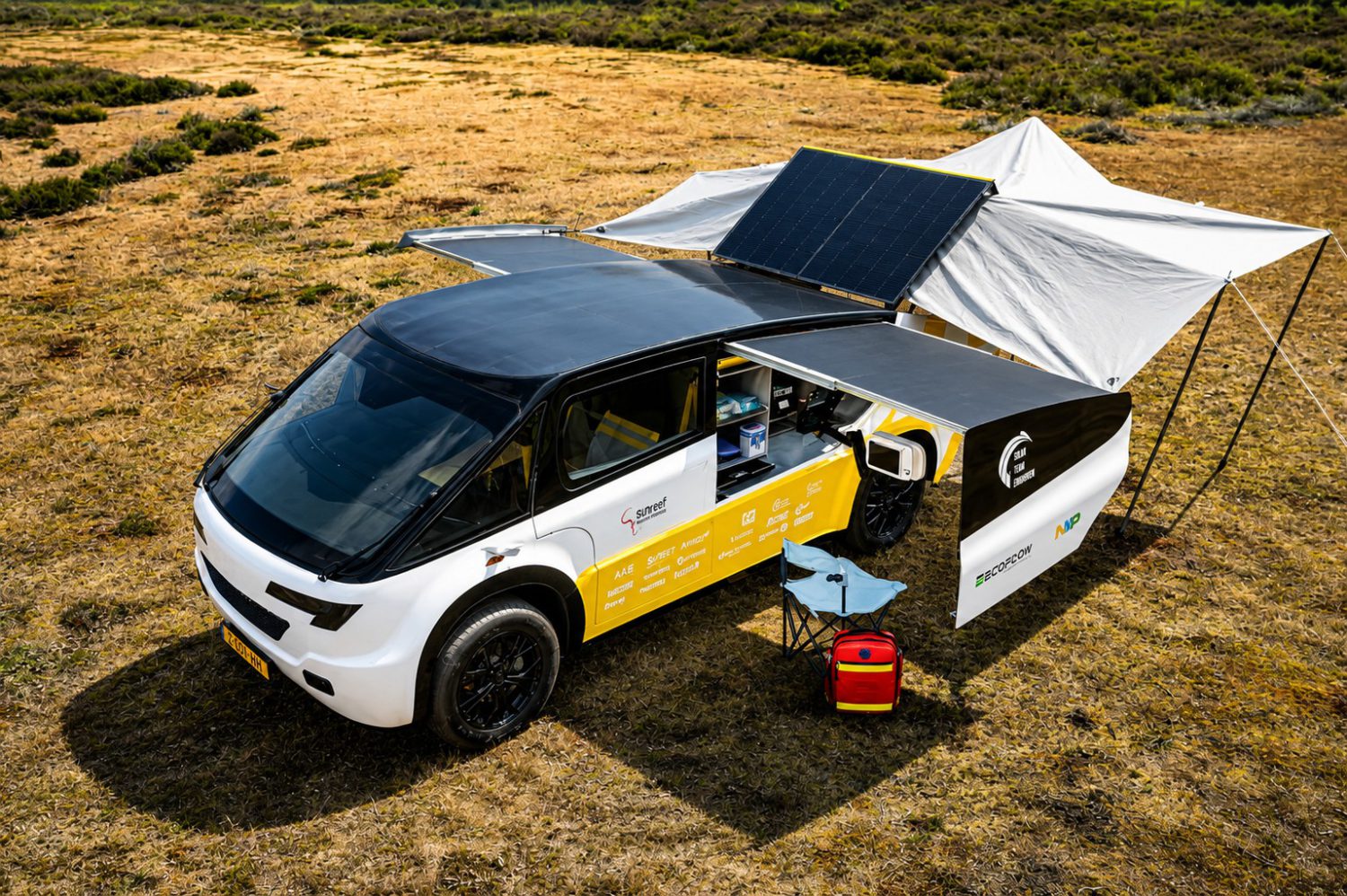
Built by 23 students from Eindhoven University of Technology and developed with Amref Health Africa, Stella Juva is described as the world’s first solar-powered ambulance — though “ambulance” undersells it. This is a mobile clinic that, like snake robots and other field-deployed technologies, brings care to the patient, not the other way around.
The specs matter here. Each community visit includes the following equipment:
- 542 solar cells paired with a 50-kWh battery
- Onboard: X-ray machine, ultrasound scanner, vaccine cold storage, AED, TB diagnostic kits
- Range: up to 715 km on paved roads, around 360 km off-road (self-reported by the team — no independent verification yet)
- Extendable roof panels that fold out to increase solar collection during stationary clinic sessions
- Primary focus: maternal health and antenatal diagnostics
“When we are stationary, the car generates more energy than all the medical equipment inside it uses at the same time.” — Mathijs van Gerven, Solar Team Eindhoven project leader
In August 2026, the team tested that claim across Nakuru, Narok, and Kajiado counties — hours on dusty clay roads that would make a standard ambulance driver nervous. They visited Mosiro clinic in Narok, a facility with zero grid electricity. The vehicle held up. The energy math held up. No real patients were treated during trials, but throughput simulations suggested roughly 200 people could be seen over two days.
That energy self-sufficiency finding is the headline buried inside the headline.
One Working Prototype Isn’t a Health System
The harder challenge now is turning a successful proof-of-concept into something a health ministry can actually buy, maintain, and deploy at scale.
Stella Juva ships back to the Netherlands after trials — no commercial rollout announced. The range figures come from the team and its partners. Funding remains a real barrier in Kenya’s health sector, where capital-intensive innovations still require maintenance plans and trained operators that current budgets struggle to support.
Amref’s Kennedy Wakoli put it plainly: “Solar energy is everywhere.” He sees Stella Juva as a catalyst for broader renewable adoption in Kenya’s health sector — and that’s not an unreasonable read. Amref program manager John Kutna echoes the sentiment, noting the vehicle would be “quite useful” for expectant mothers in areas where clinics lack both electricity and ultrasound access.
Solar Team Eindhoven previously built Stella Vita, a solar campervan, and Stella Terra, an off-road solar vehicle. Team alumni co-founded Lightyear, a solar-EV venture. For readers weighing gas vs electric trade-offs, Stella Juva’s range figures offer a striking real-world data point. This team has a track record of building solar vehicles that perform. The harder problem — converting one working prototype into a deployable fleet — requires manufacturing partners, procurement commitments, and sustained funding that haven’t materialized yet. That gap is where the real story continues.