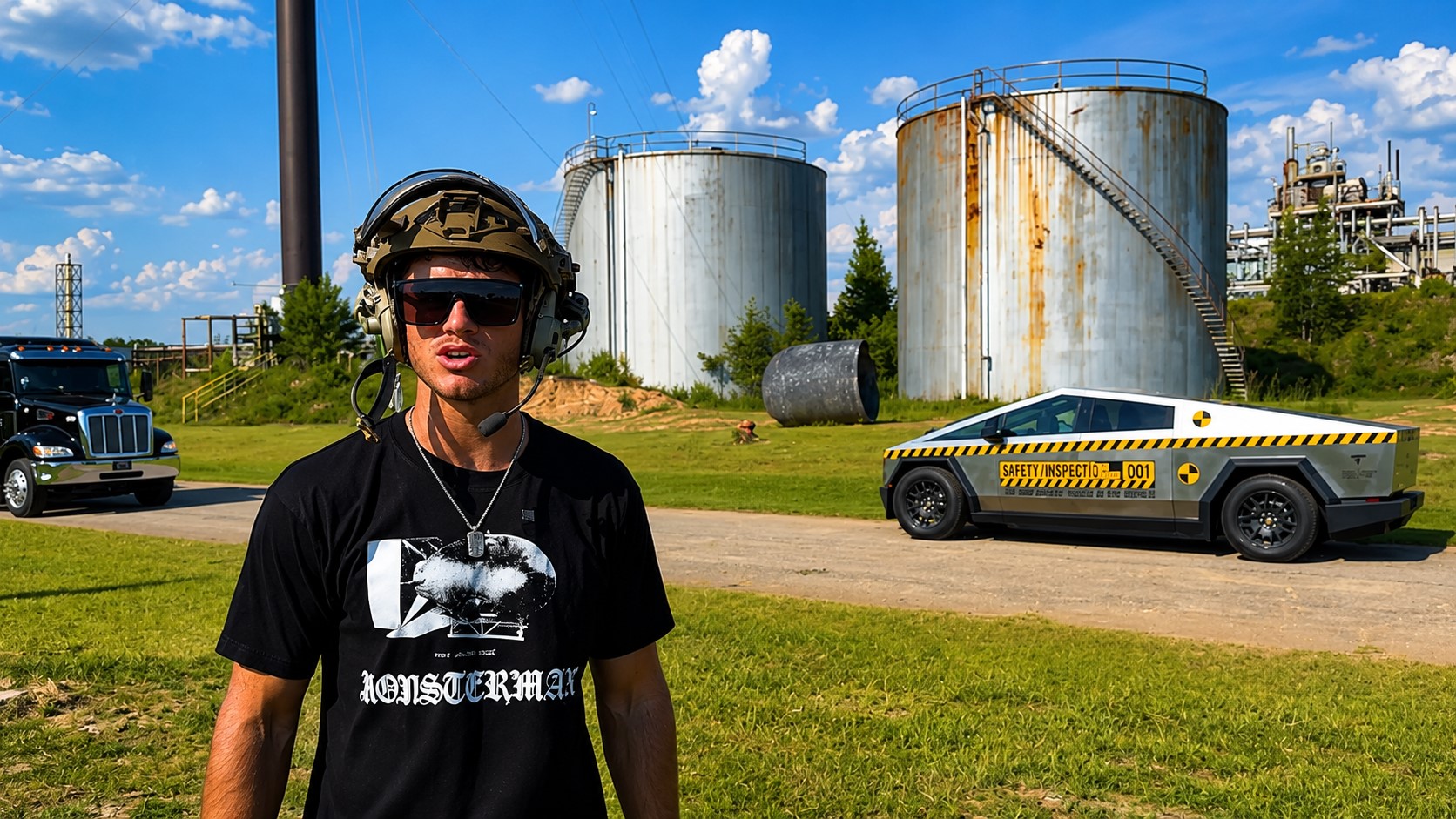
At 111 mph, a remotely controlled Cybertruck T-boned a stationary Ford F-150 on a drag strip. The Ford’s cab reportedly separated from its chassis — “comprehensively mangled,” according to automotive reporting on the event. The Cybertruck? Still recognizable. A fireball erupted, but reports indicate no battery thermal runaway from the Tesla. But here’s the part most commenters are skipping: this was a YouTube stunt by creator Cody Detwiler, not a crash test. No dummies. No sensors. No standardized protocol. That distinction matters more than the clip’s view count.
Key Details Worth Separating From the Hype
Before you share the clip as proof of anything, here’s what the stunt actually established — and what it didn’t.
- Speed was approximately 111 mph (180 km/h), and the Cybertruck was remotely controlled with no occupant inside.
- No crash-test dummy or injury measurement equipment was present in either vehicle.
- The Ford F-150’s cab reportedly separated from the chassis entirely.
- No Cybertruck battery thermal runaway was reported despite the fireball.
These are the verified facts. Everything else — particularly any claim about what this means for the person sitting in the driver’s seat — is extrapolation.
What the Stunt Can’t Tell You — And What Certified Tests Can
What does a crumpled door actually tell you about occupant survival? Less than you’d think.
A cabin that looks intact after impact is not the same as a cabin that protects you. Occupant safety depends on deceleration forces, airbag deployment, restraint performance, and crash pulse — none of which were measured here. Think of it like judging a restaurant by its Instagram photos instead of actually eating there. The presentation might be flawless, but you have zero information about what matters.
The Cybertruck’s structural reputation does hold up where it counts — just not because of this video. Official agency ratings provide the more meaningful benchmark for anyone making a real purchase decision. A one-off drag strip spectacle, however visually striking, cannot substitute for calibrated testing with validated injury metrics. The stunt shows visual structural resilience in one extreme scenario. It cannot confirm whether you’d walk away.
Watch the Video, Trust the Ratings
The spectacle is real; the safety conclusions most people are drawing from it are not.
The WhistlinDiesel footage is worth your time as entertainment. Certified safety data from standardized agency testing is worth your trust as a buyer. Confusing the two is where things get genuinely dangerous — and not in the fun, 111 mph kind of way. Watch the clip, share the clip, enjoy the clip. Just don’t let a drag strip stunt do the job that crash-test engineers spent years designing protocols to handle.