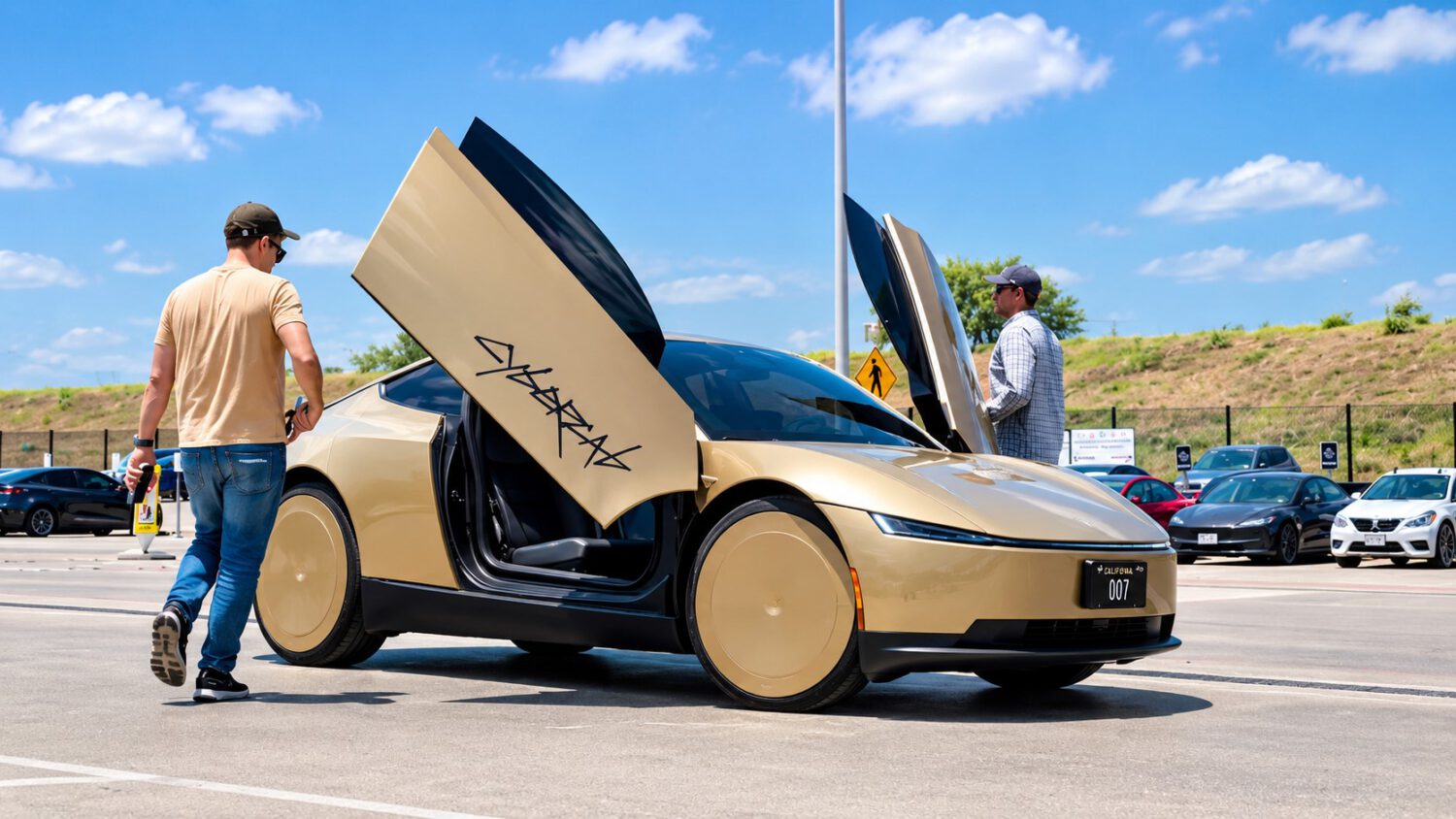
Tesla extended Austin Tesla Robotaxi operating hours to 11 p.m. on Oct. 3, 2026, one hour later than before. On the same day, CEO Elon Musk disclosed on X why the service cannot push much further into the night.
The constraint is not software complexity in the abstract. It is the specific, unglamorous challenge of spotting a small animal on dark pavement before the vehicle reaches it.
What Musk Actually Said
Musk’s post named the engineering obstacle directly, using an example that is harder to dismiss than it sounds.
Posting on X, Musk described the remaining challenge as “literally trying to avoid grey kittens on grey tarmac in the dark.” The cited sources do not report a confirmed pet collision involving the Austin pilot; Musk’s statement describes a detection and safety concern Tesla says it is working to address.
The phrase is vivid, but the underlying problem is real. Camera-based computer-vision systems depend on contrast and reflected light to detect and classify objects. A small animal whose color closely matches the road surface, moving unpredictably across an unlit street, provides very little of either.
Musk argued that artificial intelligence analyzing the photons captured by Tesla’s cameras can compensate for low-light conditions, according to Business Insider. That is his stated position; independent verification of how well it performs at the edge cases he described is not yet publicly available.
What It Means for the Service
A one-hour extension signals incremental progress, not open-ended nighttime operation.
Tesla has not publicly quantified the performance thresholds or incident counts that would determine when further expansion is warranted, based on the sources reviewed. The Austin move from 10 p.m. to 11 p.m. is the documented change; Tesla has offered no public timeline for extending service deeper into the night.
Nighttime perception has also renewed attention on a long-running industry disagreement. Competitors such as Waymo combine cameras with lidar and radar, sensors that measure distance and detect objects using methods that do not rely solely on visible-light contrast. Reporting has characterized those additional sensors as potentially useful in exactly the low-contrast conditions Musk described, though the available sources do not establish a controlled safety comparison between the two approaches.
NHTSA is investigating Tesla’s camera system, according to Business Insider. The inquiry focuses on the system’s ability to identify road hazards in reduced-visibility conditions. That investigation is a parallel regulatory development and does not confirm that the Robotaxi system is unsafe.
What Riders Should Understand
For now, Austin’s Robotaxi remains a limited pilot with a firm nightly cutoff.
Austin’s Robotaxi service operates within a geofenced area, and Tesla has given no public timeline for extending service through the rest of the night. Nighttime perception is a stated constraint on expansion, and regulatory scrutiny of low-light hazard detection is unlikely to ease until Tesla demonstrates consistent real-world performance on the problem Musk himself described.