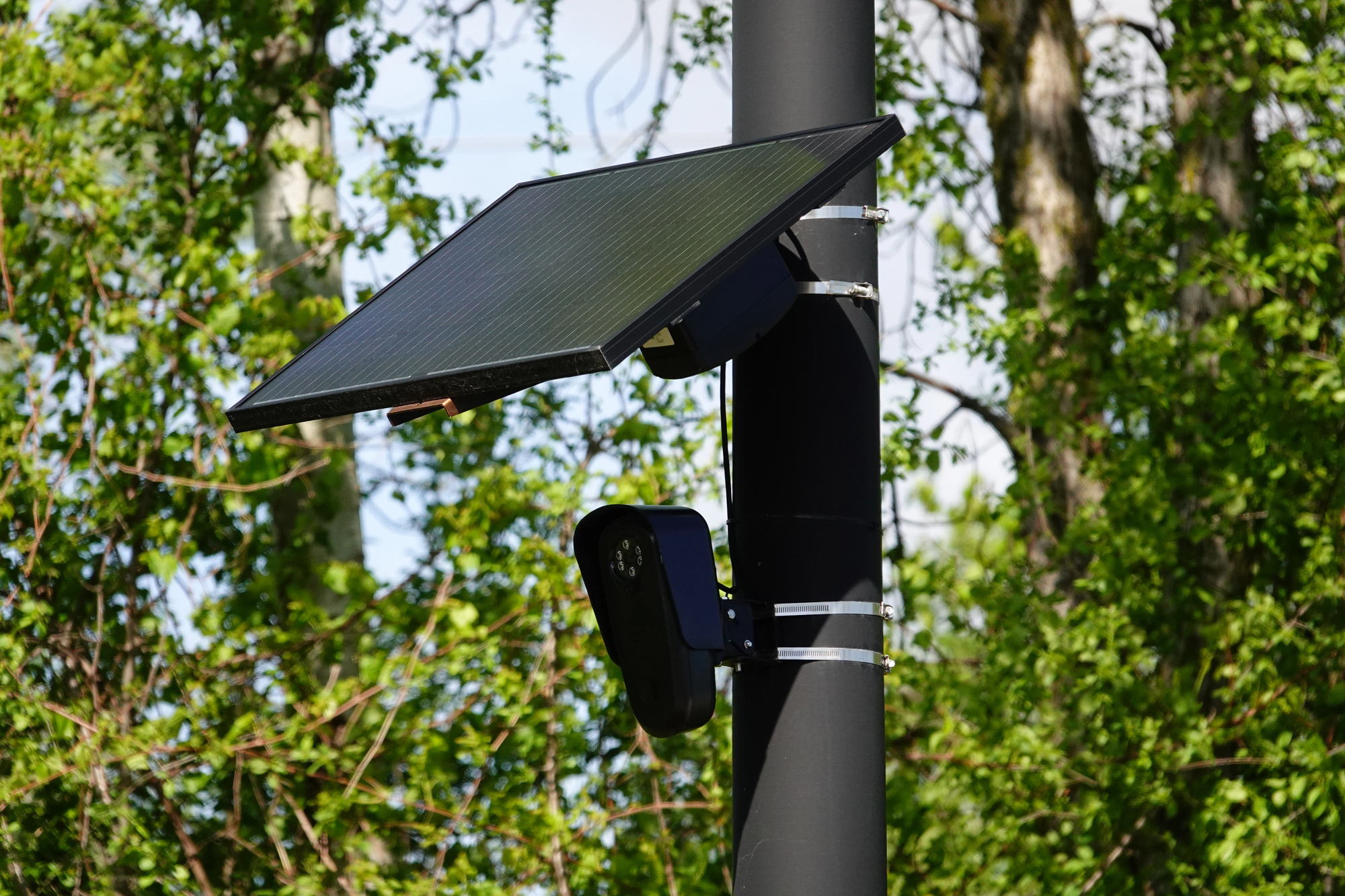
In Sherwood, Arkansas, a Flock Safety camera misread a single digit on an SUV’s plate. Within minutes, officers had an innocent couple out of their vehicle at gunpoint — a six-week-old baby alone in the back seat. The responding officer’s explanation, according to Business Insider: “Those cameras are placed everywhere … I’m not gonna say they’re completely perfect.” That undersells it considerably. Flock’s systems process roughly 20 billion plate reads monthly. Even at the company’s claimed 99% accuracy, that’s approximately 200 million misreads every single month.
One Wrong Digit. Guns Drawn.
The documented cases read like autocorrect errors – except the consequences involve drawn weapons.
The pattern repeats across the country:
- Toledo, Ohio (April 2024): Flock misread a “7” as a “2.” Brandon Upchurch was pulled over at gunpoint, attacked by a police dog, and jailed for hours.
- Morristown, Tennessee (June 2024): An “O” became a “0.” Two grandparents were stopped at gunpoint with their three-year-old granddaughter in the car.
- Aurora, Colorado (August 2020): A plate reader matched a minivan to a stolen motorcycle from another state. A woman and four children were forced face-down in a parking lot.
- San Diego, California (November 2025): Officers used Flock’s “vehicle signature” AI — no plate match at all — and arrested the wrong Alfa Romeo’s occupants. One passenger spent nearly a month in jail over the holidays.
Roughly one-third of cataloged incidents stem from machine misreads: character confusion between 0 and O, 2 and 7, dirt-obscured plates, non-standard press tags. The rest are human failures — wrong plates entered into hotlists, recovered vehicles never cleared, officers who skip full verification before drawing a weapon. “The Constitution requires real suspicion before the government can seize someone at gunpoint, and a computer hit that no one bothered to confirm doesn’t come close,” according to Institute for Justice attorney Michael Soyfer, as reported by the EFF.
“No one should have to prove their innocence on the side of the road because a camera couldn’t tell a zero from an O.” — Michael Soyfer, Institute for Justice attorney, according to the EFF.
The Scale Makes It Worse
When a surveillance network functions less like a targeted investigative tool and more like a dragnet flagging anyone vaguely matching a partial string, the math turns dangerous fast.
Field studies suggest more than 25% of ALPR alerts relayed to officers are erroneous. Oak Park, Illinois — one of the only jurisdictions that regularly publishes error reports — found roughly 40% of ALPR-triggered stops were mistakes. Its oversight board found no evidence the cameras played a meaningful role in local crime investigations since installation in 2022. The city ended its Flock contract in August 2025.
The ACLU describes Flock’s network not as a localized hit-and-flush system but as a searchable, cross-jurisdictional movement history database — which means every bad read and every stale hotlist entry follows drivers across state lines. The EFF’s 2025 review documented the system used to track protesters, monitor specific communities, and surveil women seeking reproductive healthcare. In Georgia, multiple officers faced criminal charges for using ALPR databases to track ex-partners and personal acquaintances, according to the Atlanta Journal-Constitution and USA Today. In Norfolk, Virginia, a circuit court ruled in 2024 that collecting Flock ALPR location data constitutes a Fourth Amendment search — a precedent that could reshape how these surveillance app-enabled networks operate nationwide.
Flock claims its cameras help solve over 700,000 crimes annually. That number may be real. But Oak Park’s data, the EFF’s documentation, and every innocent family ordered out of their car at gunpoint make one thing clear: the burden of accuracy belongs to the companies and agencies deploying these systems — not to the drivers caught in their errors.