A customer email arrives. It needs a CRM lookup, a record update, a drafted reply routed through Claude, and a final paste back into your email client. Every handoff happens manually — copy, switch, paste, repeat — while your AI assistant sits helplessly in its browser tab, blind to everything happening next door.
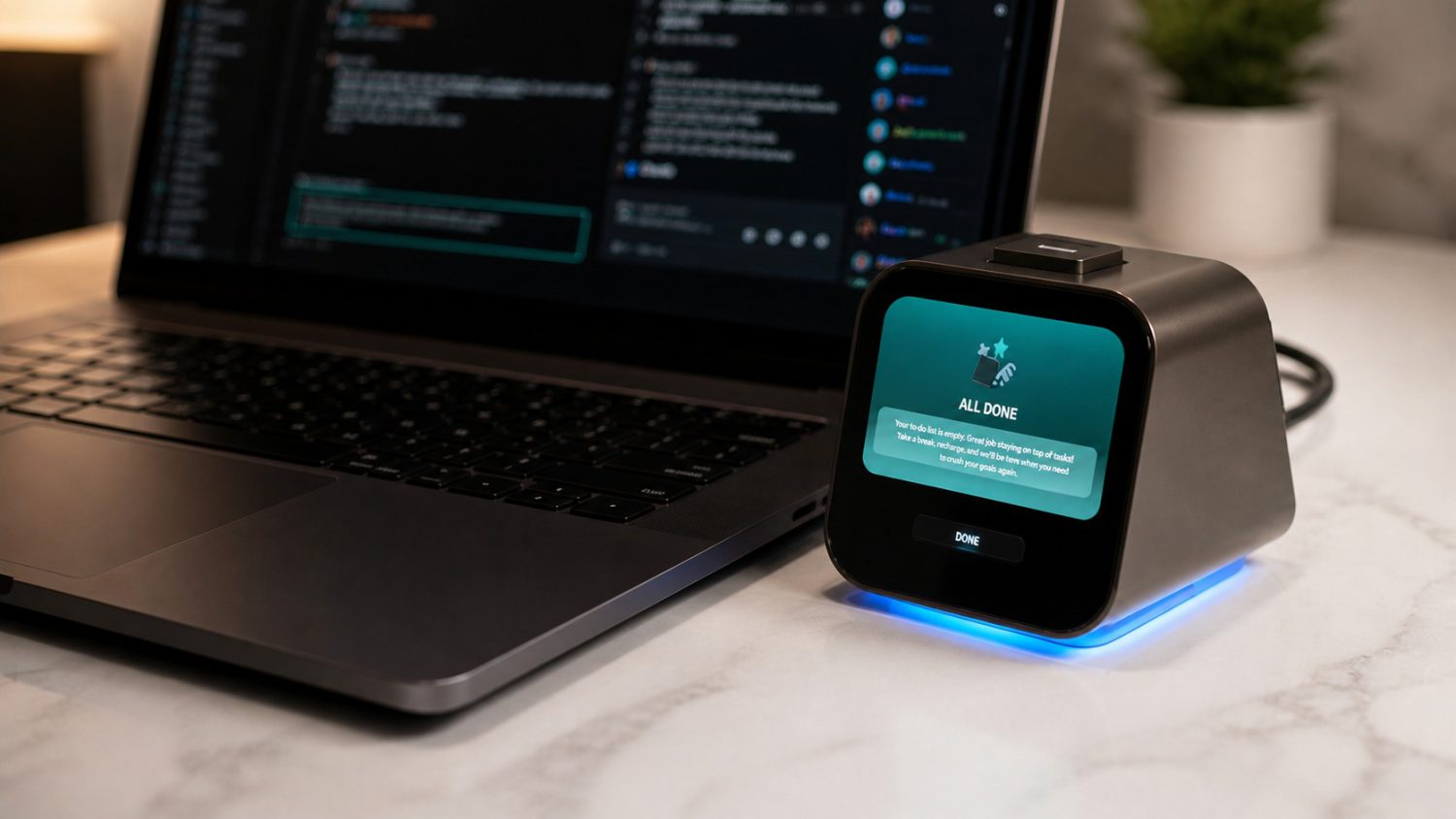
BVIO Technology unveiled Violoop at IFA Berlin 2026 to eliminate exactly that friction. The device is palm-sized, sits beside your monitor, and connects via HDMI input and USB-HID — capturing your screen locally and sending keyboard and mouse commands back to your PC. Think of every AI chatbot you’ve used as a brilliant tourist who understands the destination perfectly but can’t drive the car. Violoop hands AI the keys.
What the Device Can Actually Do for You
Trained on 200 apps and 10,000 real-world screens, Violoop operates as a genuine second participant on your computer.
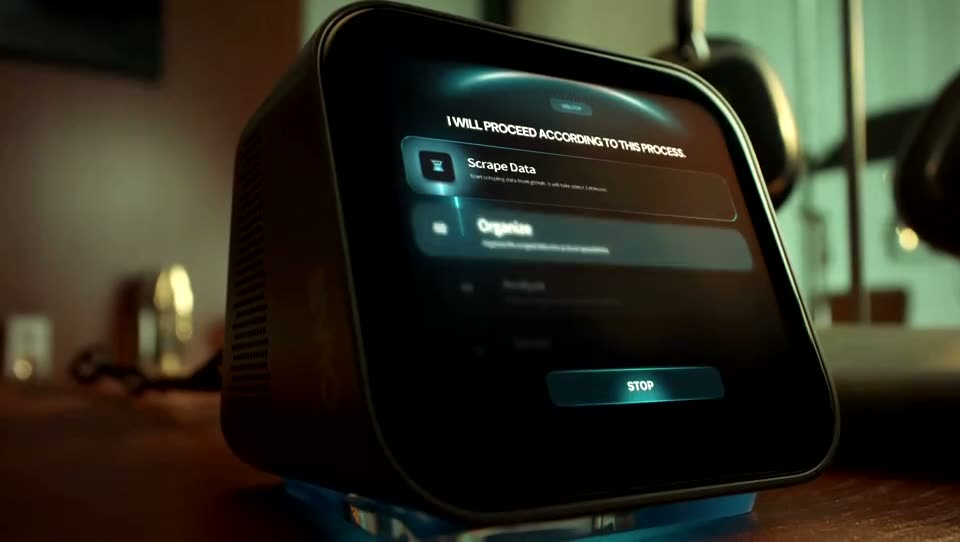
BVIO describes Violoop as a “second participant” on your PC — navigating browsers, CRMs, code editors, and legacy tools that were never designed for AI. The architecture is genuinely thoughtful:
- Routes tasks between an on-device Qwen 8B Q4 model (53 tokens/sec, fully local) and external LLMs via your own API keys — ChatGPT, Claude, Gemini, Codex — choosing whichever fits the task
- Processes screen visuals entirely on-device; the screen itself is never streamed, only minimal task-specific data leaves the box
- A dedicated STM32H563 security MCU controls a physical confirmation key, so protected actions require your explicit sign-off
- Away Mode keeps workflows running while you’re away from the desk, pausing at anything sensitive and pinging your phone for approval
One number worth holding onto: BVIO’s own developer blog puts GUI automation success at roughly 70% for click-based paths, with approximately 200ms per action. That’s an honest ceiling — and it matters when you’re deciding whether $699 fits your workflow.
The Price, the Catch, and the Question Worth Asking
At $699 retail, Violoop is a serious bet on a product category that hasn’t shipped yet.
Think of Violoop as what Zapier would be if it could actually read your screen in real time — and that’s also where the price deserves scrutiny. Retail sits at $699. The Kickstarter campaign launches September 15, 2026, dropping that to $399 for early backers, with a $10 refundable deposit to hold the tier. Shipping is targeted for October 2026. BVIO reportedly closed a $20 million seed round ahead of the campaign, per allclaw.org.
For the hardware-curious:
- RK3576 octa-core processor
- 26 TOPS AI accelerator
- 13 GB RAM
- 128 GB storage
- AMOLED touchscreen
- Dual-band Wi-Fi
- Bluetooth 5.2
- Dual-monitor support via a bundled HDMI splitter
Windows and macOS are supported now; Linux is in active development. The unit is roughly alarm-clock-sized — 90 × 92 × 80 mm at 450g — connecting via three cables: HDMI, USB-C, and power. For those evaluating companion hardware, there are plenty of useful desk gadgets worth considering alongside a device like this.
BVIO frames its long-term vision as “artificial intuition” — AI that anticipates needs rather than waits for prompts. That’s aspirational language for a device that hasn’t shipped yet.
If Violoop delivers on its autonomy and privacy promises, it quietly redefines what a peripheral can be. If that 70% GUI success rate proves optimistic under real-world conditions, it becomes a $399 lesson in why agentic AI hardware is harder than a press release makes it sound. October shipping will settle that question.