Your fuel gauge is dropping. You open a crowdsourced app that says the station three blocks away has gas. You drive there. It’s bone dry. The app lied — and someone 800 miles away, sitting behind a free VPN, made it lie on purpose. That’s the reality reportedly facing Russian drivers in mid-2026, as Ukrainian-aligned activists use consumer VPNs to flood fuel-tracking platforms with false data, turning a civic tool into a quiet information weapon. The real-world impact, though, remains murky.
How the Operation Actually Works
A crowdsourced Russian fuel map with no login requirement became the perfect target for coordinated manipulation.
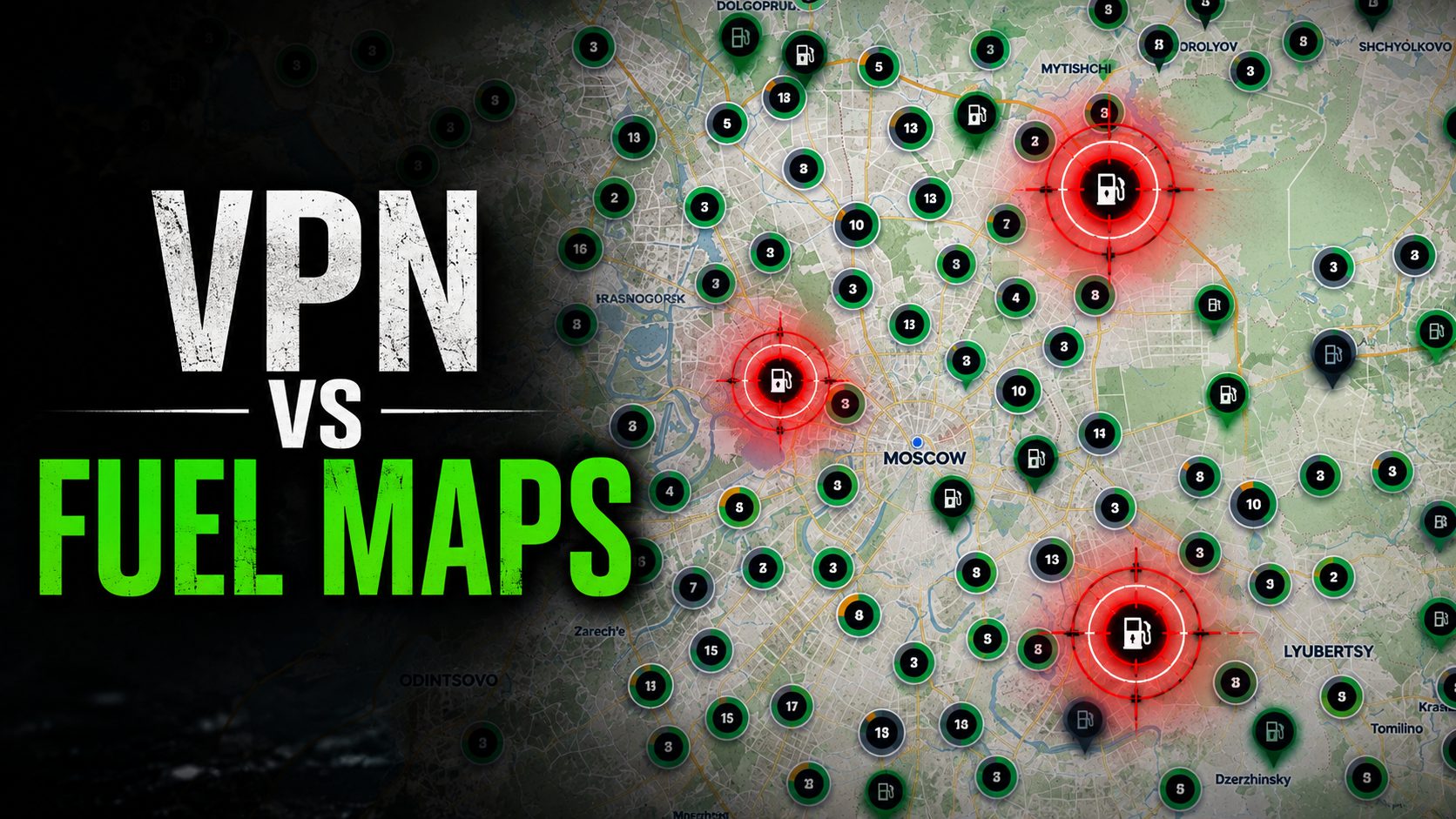
GdeBenz launched in late June 2026, built by Russian programmer Evgeny Chudov to help drivers navigate a brutal fuel crisis partly triggered by Ukrainian strikes on refineries. No registration. No verification. Users mark stations as stocked or empty, flag queue lengths, note payment options. Within 48 hours, according to Russian regional outlet Vedomosti Ural, the site logged 812,500 unique visitors and over 100,000 station marks. It became essential infrastructure almost overnight — which painted a target on it the size of a billboard.
The manipulation playbook, shared openly on Reddit’s r/ukraine and Ukrainian-language Substack posts, is straightforward:
- Activists connect via a consumer VPN set to a Russian server location
- The platform reads them as Russian users, granting full edit access
- Stations with fuel get marked empty; closed stations get marked open
- Instructions circulated openly across Reddit’s r/ukraine community and Ukrainian-language Substack posts
- Pro-Ukraine activist network NAFO reportedly built a dedicated coordination tool to streamline the process, per a widely circulated Reddit post
This is not a cyberattack in any traditional sense. No servers were breached. No code was exploited. The operation runs entirely through GdeBenz’s own front door — think filing false Yelp reviews, except the stakes involve real fuel during an active shortage. Analysts quoted in reporting by TechRadar and MeteoraWeb describe it as a crowdsourced information disruption operation. The weapon is trust. The ammunition is bad data entered through the front door.
Russia’s Energy Ministry Flagged Bad Data but Stopped Short of Naming Culprits
Russia’s Energy Ministry acknowledged manipulated fuel-tracking data publicly — then pivoted toward surveillance concerns.
Russia’s Energy Ministry publicly warned that fuel-tracking apps and driver chats contain manipulated, unreliable data, according to reporting by Meduza. The ministry didn’t name GdeBenz or foreign actors directly. It did, however, flag potential illegal personal data collection in these services — a familiar pivot toward surveillance dressed as consumer protection, and a signal that cracking down on the platforms themselves may be the next move.
What remains genuinely unclear is how much of the bad data came from Ukrainian activists versus domestic scammers. Fraudulent GdeBenz clones appeared almost immediately after launch, luring Russian users into downloading suspicious files. TechRadar explicitly notes the scale of disruption and number of affected stations has not been independently verified. Claims of Moscow traffic jams and altercations at pumps trace back to activist communities and LinkedIn commentary posts — not verified reporting. Separating coordinated VPN trolling from homegrown scams and ordinary crowdsourcing noise is, right now, essentially impossible.
Every Crowdsourced Map You Use Has the Same Problem
The vulnerability exposed here isn’t uniquely Russian — it’s structural to any platform built on real-time user trust.
Every app built on real-time user contributions — Waze, Google Maps, any platform where strangers report live conditions — carries this identical weakness. GdeBenz simply demonstrated what happens when a platform’s greatest feature meets coordinated bad faith at scale. It’s the Wikipedia vandalism problem, except people are making real-world driving decisions on the data. The fix likely means verification layers, edit restrictions, and reputation systems — all of which erode the spontaneity that made these tools useful in the first place. That tradeoff isn’t Russia’s problem to solve. It’s every platform’s.