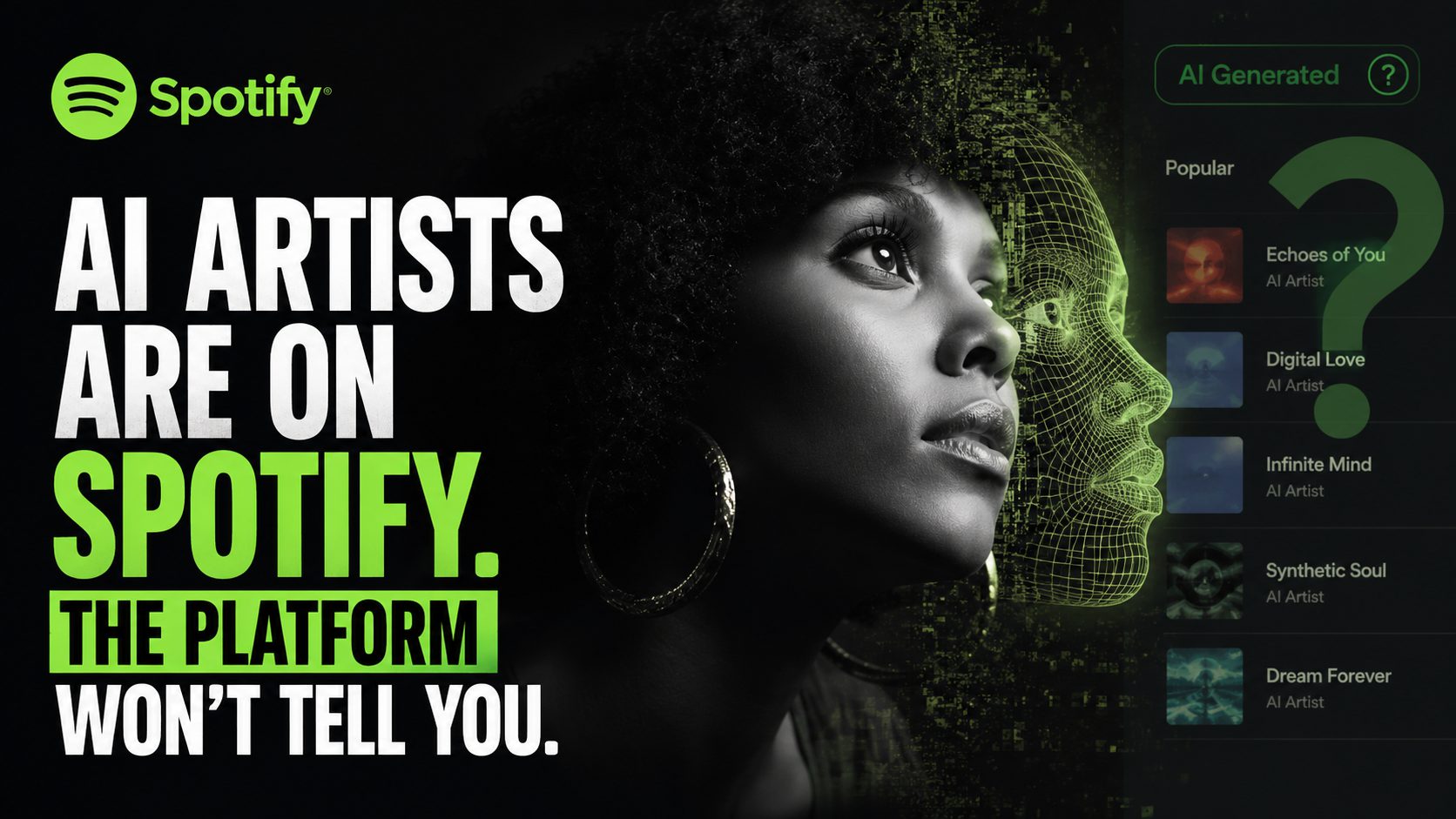
Open your Spotify homepage. An artist appears with three million monthly listeners. No Instagram. No interviews. No tour dates. No evidence of human existence beyond a profile photo and an endless catalog. That’s not some reclusive genius pulling a Frank Ocean. That might be a machine wearing a name tag, raising urgent questions about AI age laws and platform accountability.
Sienna Rose fits the description. Deezer flagged many of her tracks as AI-generated, according to reporting from TechRadar. Spotify? Silence. No label. No disclosure. The music kept streaming, the royalties kept flowing, and you kept listening without knowing what — not who — was singing to you.
The Numbers Are Not Small
The scale of AI music uploads has already outpaced most listeners’ ability to detect it.
The data, drawn from Deezer’s own research and a Deezer/Ipsos survey, paints an uncomfortable picture:
- Roughly 34% of all music submissions on Deezer were flagged as AI-generated.
- More than 50,000 AI tracks get uploaded daily across streaming services, a volume made possible by the kind of AI infrastructure investment reshaping the industry.
- 97% of survey respondents could not reliably tell AI music from human-made music.
When nearly everyone fails the listening test and platforms won’t label, the algorithm decides for you. Sienna Rose and Velvet Sundown — another synthetic act that reached major chart visibility — aren’t edge cases. They’re the new ghost artists, filling playlist slots the way session musicians once filled studio rosters, except these ones don’t need sleep, health insurance, or a publishing deal.
Deezer called transparency “vitally important” and began removing fully AI-generated tracks from algorithmic recommendations and editorial playlists, per TechRadar’s reporting of the company’s position.
Spotify’s Position Is a Choice
Allowing unlabeled AI content isn’t a neutral technical policy — it’s a business decision about whose art matters.
Spotify permits AI content if it’s licensed and uploaded through third parties. That policy treats a human songwriter who spent years learning craft identically to a system that generated 500 tracks overnight. Tools like Suno and Udio have faced criticism for training on existing works without adequately compensating the artists whose music built those models, a concern familiar to users of AI-Powered Websites navigating similar ethical questions. Music-rights advocates argue the broader system is tilted — and Spotify hasn’t moved to correct it. Deezer acted. Spotify hasn’t.
The question isn’t whether AI music belongs on streaming platforms. It’s whether you get to know you’re hearing it. Right now, the answer is no. Knowing that question exists is the first step toward demanding a better answer from the platforms that shape what the world hears.