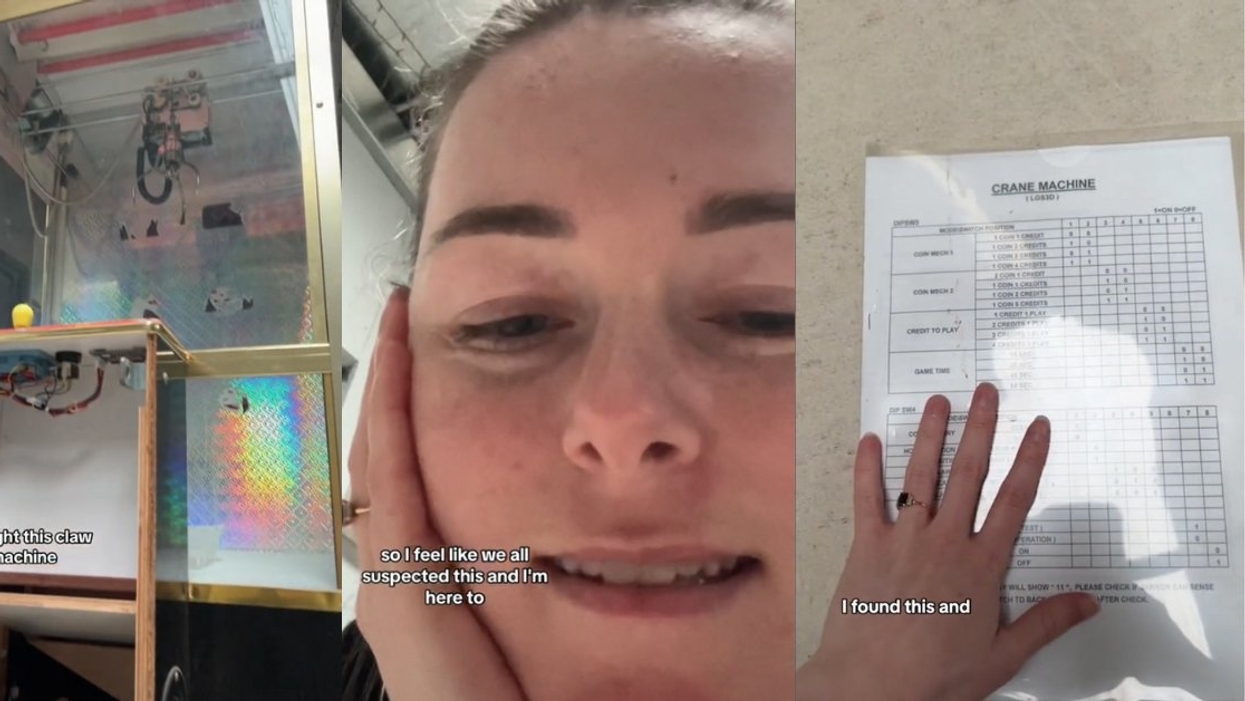
Katie Clark (@katieclarkcreates) bought a used claw machine off Facebook Marketplace. She cracked it open to fix a motor issue and found something more revealing than any stuffed animal inside: an operator’s manual describing exactly how the machine decides when you win. Spoiler — it’s not when you nail the joystick placement. The manual detailed difficulty settings controlling how often the claw grips with full strength, reportedly configurable from every single play down to once every 50 attempts. None of this should shock anyone who has spent $20 chasing a stuffed Pikachu. But seeing the receipts is something else entirely.
Inside the Settings Menu You Were Never Meant to See
Operators configure win frequency, grip strength, and near-miss psychology through hidden control boards — all before you insert a dollar.
Every commercial claw machine runs on a control board with a settings menu. Operators access it through button combinations or internal switches, then adjust parameters that determine your fate long before you touch the joystick.
According to operator guides from Bleegame and manufacturer documentation from Candymachines.com, typical configurations include:
- Full-strength grip cycles set to once every 8–12 plays for standard prizes
- Once every 15–20 plays for premium items
- Multiple grip strengths applied within a single play — one intensity for the initial grab, another for the lift, another for the carry phase — each tuned independently
The result: a claw that closes firmly, lifts convincingly, then mysteriously loosens right above the prize chute.
That “almost had it” feeling? Deliberately engineered. Operator-facing advice from Bleegame explicitly recommends that a well-balanced machine should “make a player feel like they ‘almost had it,’” framing near-misses as a retention tool, not bad luck. It’s the same psychological architecture behind loot boxes and gacha mechanics in video games — just wrapped in plush fabric and fluorescent lighting.
Legal Amusement, Questionable Fairness
Most jurisdictions classify claw machines as amusement devices, not gambling — which means payout ratios stay completely hidden from players.
In most regions, claw machines sidestep gambling regulations as long as a non-zero chance of winning exists and prize values stay under local caps, according to industry resource TRCLawMachine.com. Operators frame adjustable difficulty as a practical necessity — covering prize and maintenance costs at low per-play prices. That argument holds up, on paper. Until you realize nobody is required to disclose the actual odds.
The machines work exactly as designed. They’re just not designed to work for you.
Not every machine runs this way. Skill-only units with consistent full-strength grips exist, mostly in specialty arcades. Some kid-oriented venues activate a “winner every time” mode via internal switches. Clark’s plan for her home machine: full power on every grab. Turns out the only honest claw machine you’re ever likely to play is probably sitting in someone’s living room.