While people posted aurora photos to Instagram last November, something quietly broke underneath all that beauty. The GPS in your car, your drone, your tractor — it was lying to you. By up to 33 feet. Across a coast-to-coast band of the continental US. Space physicist Endawoke Yizengaw and colleagues at The Aerospace Corporation analyzed the November 12–13, 2025 geomagnetic superstorm and documented something they’d never seen before, publishing findings in Geophysical Research Letters: a continent-spanning ionospheric disruption that threw precision navigation into chaos on an unprecedented scale.
What Actually Broke: The Ionosphere as Cracked Glass
The physics here are surprisingly simple — and surprisingly alarming.
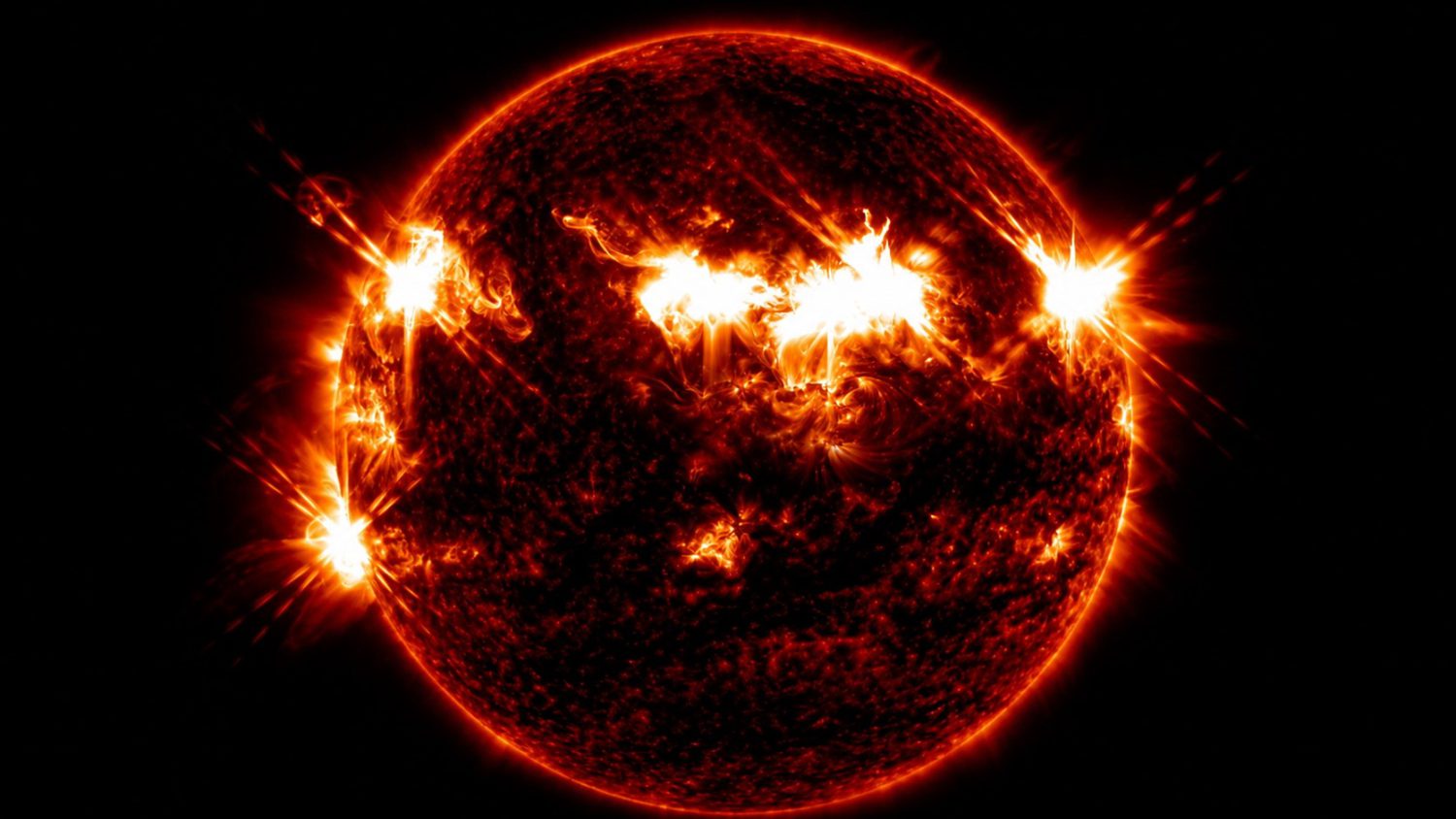
Active solar region AR 14274 fired multiple X-class flares and coronal mass ejections that struck Earth November 12–13, driving a geomagnetic storm with intensity indices (Kp 9–, Dst ≈ −217 nT) among the strongest of the current solar cycle. The auroral oval expanded dramatically southward, dragging polar-level GPS disruption into mid-latitude America. Yizengaw’s own analogy captures it well: the ionosphere during this storm acted like old, warped window glass. GPS signals passing through it bent, scattered, and arrived late — translating directly into position errors your receiver had no reliable way to correct for.
What made this event scientifically unprecedented:
- Strong amplitude scintillation — rapid GPS signal-strength fluctuations — observed across roughly 80°–120° West longitude, a band spanning the central continental US
- Horizontal GPS position errors exceeding 10 meters (~33 feet) in affected regions
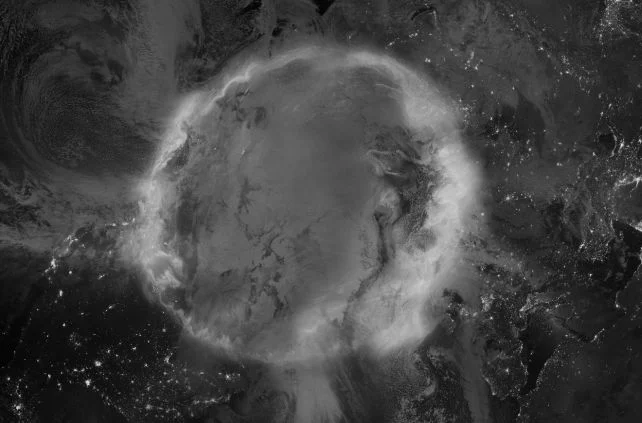
- A broad east-west band of enhanced electron density over North America, never previously documented at this geographic scale
- Mid-latitude scintillation of this magnitude had only been recorded at isolated points before, never across such a wide longitudinal range
Your Devices, Your Risk: What This Means Beyond the Farm
The November 2025 storm didn’t cause a half-billion-dollar disaster — but only because of timing, not preparation.
Here’s where the calendar saved everyone. During the May 2024 “Gannon” storm, GPS errors reached up to approximately 70 meters in some central US states, and precision agriculture losses hit an estimated $500 million, according to a detailed economic study reported by Space.com. Auto-steer tractors went off-row. Planting stopped. November 2025 produced comparable ionospheric disruption, but struck outside the US farming season. According to Yizengaw and colleagues, as reported by ScienceAlert, had this storm occurred during farming season in the American sector, losses for US farming and transportation industries could have been severe. That’s not resilience. That’s luck.
The risks extend well beyond farms:
- Autonomous vehicles relying on high-precision GNSS for localization can see their computed position shift by an entire lane — or miss an intersection entirely — during a 10–30-meter error event
- Aviation precision approaches may face temporary restrictions
- Power grids and telecom networks depend on GNSS for timing synchronization; disruptions stress whatever redundancies exist
Yizengaw’s team describes the widespread band of scintillation as something never before observed on this scale, per their analysis in Geophysical Research Letters.
Researchers are calling for:
- Physics-based modeling
- Space-weather alerts integrated into industrial workflows
- Multi-frequency GNSS receivers capable of correcting ionospheric errors in real time
The sun remains near solar maximum. The calendar won’t always cooperate.