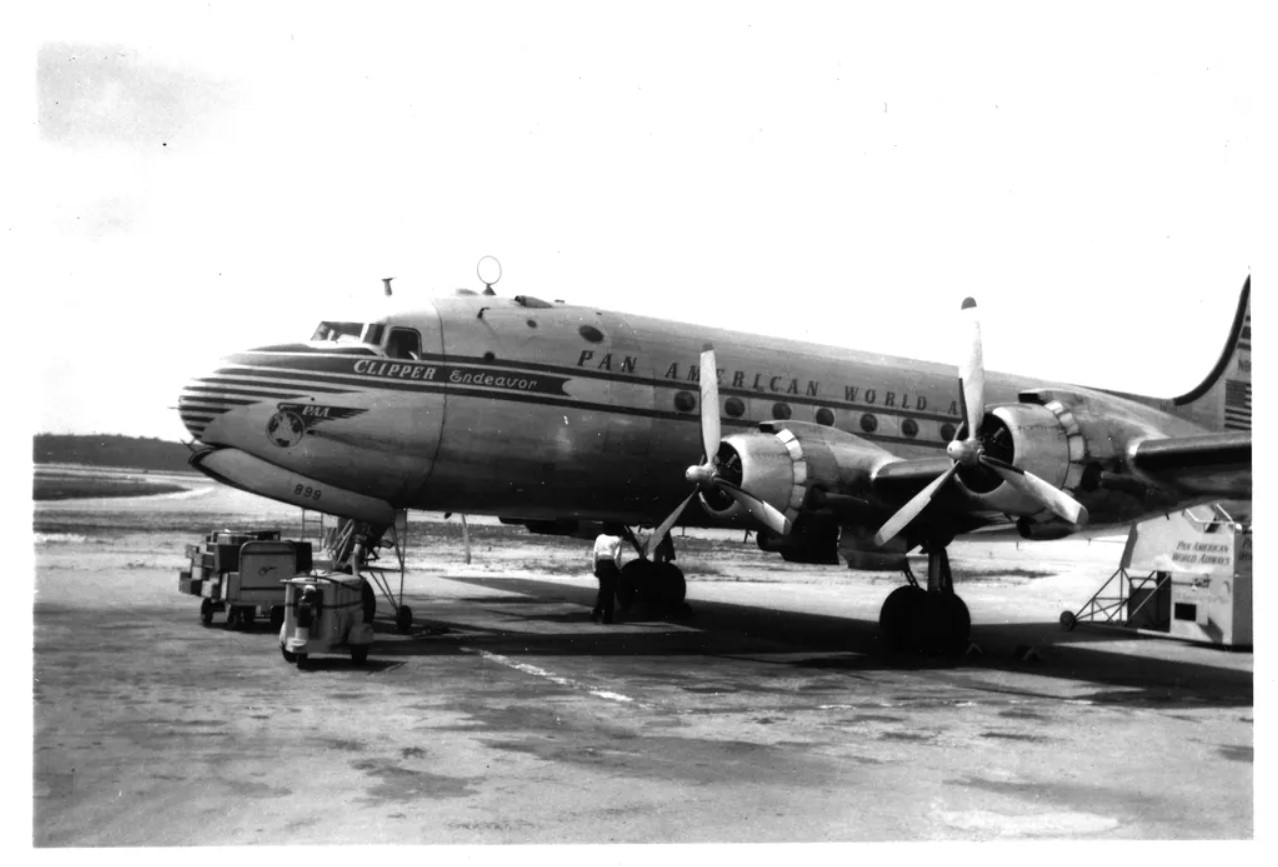
On July 21, 2026, a search team announced the discovery of Pan Am’s Clipper Endeavor — a Douglas DC-4 that crashed into the Atlantic on April 11, 1952, killing 52 of 69 people aboard. The wreckage had rested 2,000 feet below the surface off Puerto Rico for 74 years. Now it’s been found, and the story behind it still matters.
A Crash That Rewrote the Rules
Everyone survived the initial impact — then the cabin flooded, and no one knew what to do.
Flight 526A departed San Juan‘s Isla Grande Airport at 12:11 p.m. AST, bound for New York’s Idlewild (now JFK), carrying 64 passengers and five crew. Shortly after takeoff, engine number 3 failed, followed by engine number 4. The crew ditched in rough seas approximately 18 kilometers northwest of San Juan. The tail sheared off on impact, but the cabin held.
Every single person survived the landing.
Then the plane began to flood. Passengers — panicked, never briefed on exits or life vests, many facing language barriers — stayed in their seats. The aircraft sank in under three minutes. The Coast Guard and Air Force pulled out 17 survivors. Thirty-nine bodies were never recovered.
- Date and route: April 11, 1952, San Juan Isla Grande Airport to New York Idlewild
- Aircraft: Douglas DC-4, 64 passengers, 5 crew (69 total)
- Casualties: 52 dead, 17 survived; 39 bodies never recovered
- Cause: Engine failures attributed to inadequate maintenance
- Legacy: Preflight safety briefings became mandatory on all commercial flights
The Civil Aeronautics Board blamed faulty maintenance for the engine failures and recommended something that didn’t yet exist: mandatory preflight safety demonstrations on commercial flights. That recommendation became the ritual millions perform from memory — and most ignore entirely.
“That is the only grave marker they are likely to ever have.” — Russ Mathews, exploration team member, on the 39 unrecovered victims
30 Hours of Sonar, 350,000 Images, One Answer
An autonomous underwater vehicle found the wreck on its first pass — think Google Street View, but at crushing depth.
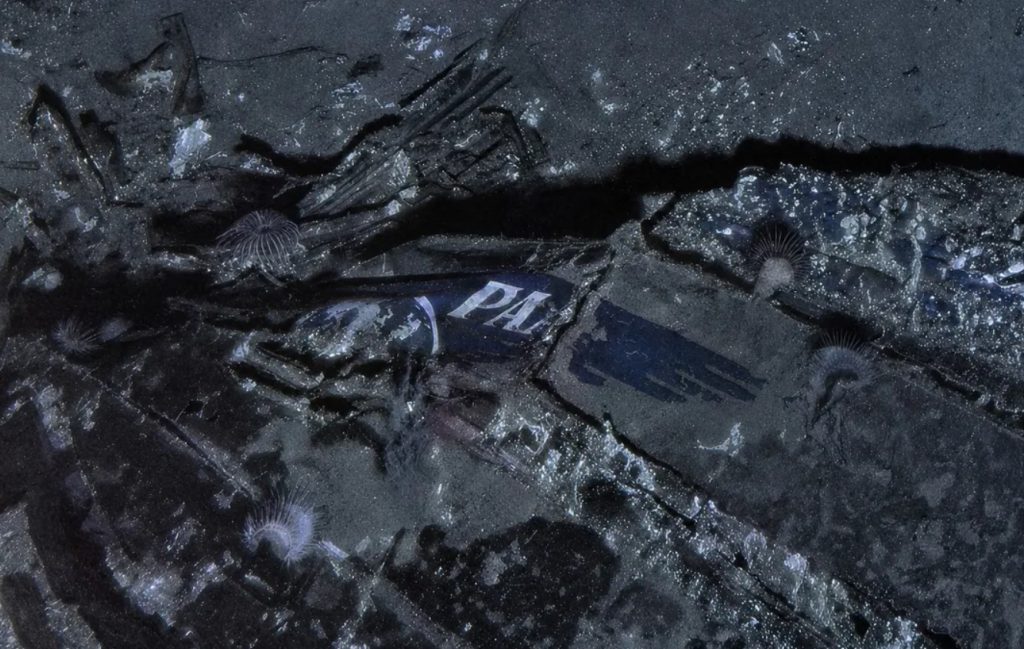
The Air/Sea Heritage Foundation, Deep Sea Vision (an Eco Minerals company), and Discovery Channel’s Expedition Unknown deployed an autonomous underwater vehicle across a defined search zone off Puerto Rico’s northern coast in June 2026. Thirty hours of high-resolution sonar scanning. The first pass returned a hit. A follow-up photographic survey captured more than 350,000 images, revealing the fuselage and tail resting in two sections — battered but largely intact after more than seven decades on the seabed. The white letters “PAA” against the Pan Am globe logo were clearly visible, as were the letters “VOR” from “Endeavor” — enough for conclusive identification.
Expedition Unknown host Josh Gates called it “incredible breaking news,” noting the accident “changed aviation forever.” A dedicated special episode covering the full expedition is planned for later in the year.
No recovery is planned. The site is treated as a maritime grave. The Air/Sea Heritage Foundation is now working with Puerto Rico’s government on legal protections and a memorial honoring the 52 victims.
For 74 years, the families of those 39 unrecovered victims had no coordinates, no headstone, nothing to visit. Now they have a precise location. And every safety briefing on every supersonic flight remains the other monument — built from tragedy, repeated daily, and still too easy to ignore.