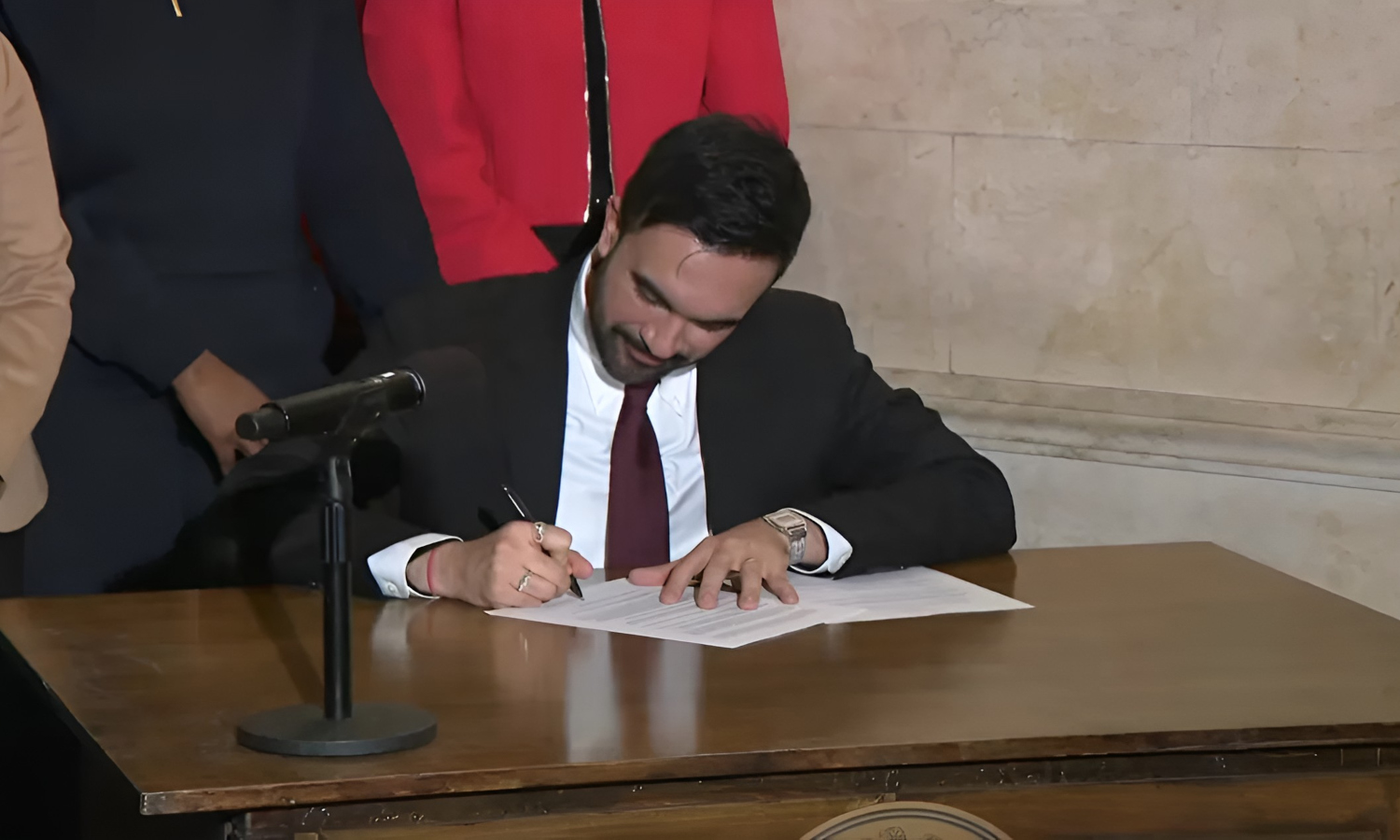
About 600,000 students — two-thirds of NYC’s public school enrollment — just lost access to generative AI, chatbots, and AI tutors for the entire coming school year. Announced September 2, days before classes resumed, the policy positions New York City’s school system among the most restrictive on student-facing AI in the country. While districts across the U.S. are quietly betting on AI tutors and auto-grading tools, NYC hit the emergency brake.
What the Ban Actually Covers
From early childhood through eighth grade, the AI tools are gone — here’s exactly what changed.
The policy is sweeping and specific:
- Generative AI — chatbots, AI tutors, companion apps — banned for all students from early childhood through eighth grade
- No individual laptops or tablets assigned to pre-K through second grade
- Grades 3–5 capped at 30 minutes of daily device time; grades 6–8 at 45 minutes
- High schoolers may use AI only in tightly restricted scenarios
- Exceptions exist for assistive technology, English language learners, and coding instruction
- Teachers may use vetted AI for lesson planning, translation, and family communications — but AI remains permanently off-limits for grading, counseling, discipline, and IEP development
None of this arrived without warning. NYC’s March 2026 guidance introduced a stoplight framework — green (encouraged), yellow (use judgment), red (forbidden) — that already banned AI for sensitive decisions. The new overhaul extends that logic to student-facing tools entirely.
How This Happened – and Who’s Watching
Six thousand public comments, a City Council revolt, and a union president calling AI “a very dangerous thing.”
The political pressure was impossible to ignore. Over 6,000 public comments flooded in after the March draft plan. A City Council majority sent a letter urging Mayor Mamdani and Chancellor Samuels to pause. UFT President Michael Mulgrew was direct: “Parents are getting very, very upset with A.I. because all they hear are these horror stories about A.I. and they’re rightfully protective of their children.” Concern over AI age laws and child safety has been growing well beyond New York.
The counter-argument deserves a fair hearing. Locking K-8 students entirely out of AI — while workplaces adopt it at a pace that makes the pandemic-era Chromebook scramble look measured — may leave students underprepared for a workforce that increasingly relies on AI-Powered Websites and digital tools. Some educators believe structured, supervised AI exposure beats informal, unsupervised use outside school. Mayor Mamdani‘s position, though, is clear: without proper safeguards, “there’s a lot of money about to be wasted and a lot of damage about to be done.”
“Parents are getting very, very upset with A.I. because all they hear are these horror stories about A.I. and they’re rightfully protective of their children.” — UFT President Michael Mulgrew
What This Means for Families and the Future of Ed-Tech
NYC just redrawn the product map for the K-12 AI market — and families are at the center of it.
Student-facing AI for K-8 is effectively frozen out of the nation’s largest school system. What NYC does, other districts study closely. Teacher-facing tools with strong privacy controls are where the viable market now sits — vendors pitching student chatbots to K-8 administrators will find a much cooler reception than those offering back-office planning and translation support. Concerns about keyboard skills and broader digital readiness only deepen the stakes. The moratorium runs one year, making 2027 a pivotal decision point for policymakers, parents, and the industry alike.
NYC is running a live experiment in restraint. The results will shape school AI policy nationally — not because New York is always right, but because it’s simply too large to ignore. The question was never whether AI eventually enters these classrooms. It’s whether a year of deliberate absence builds the case for smarter guardrails, or quietly widens the gap between students who have access and those who don’t.