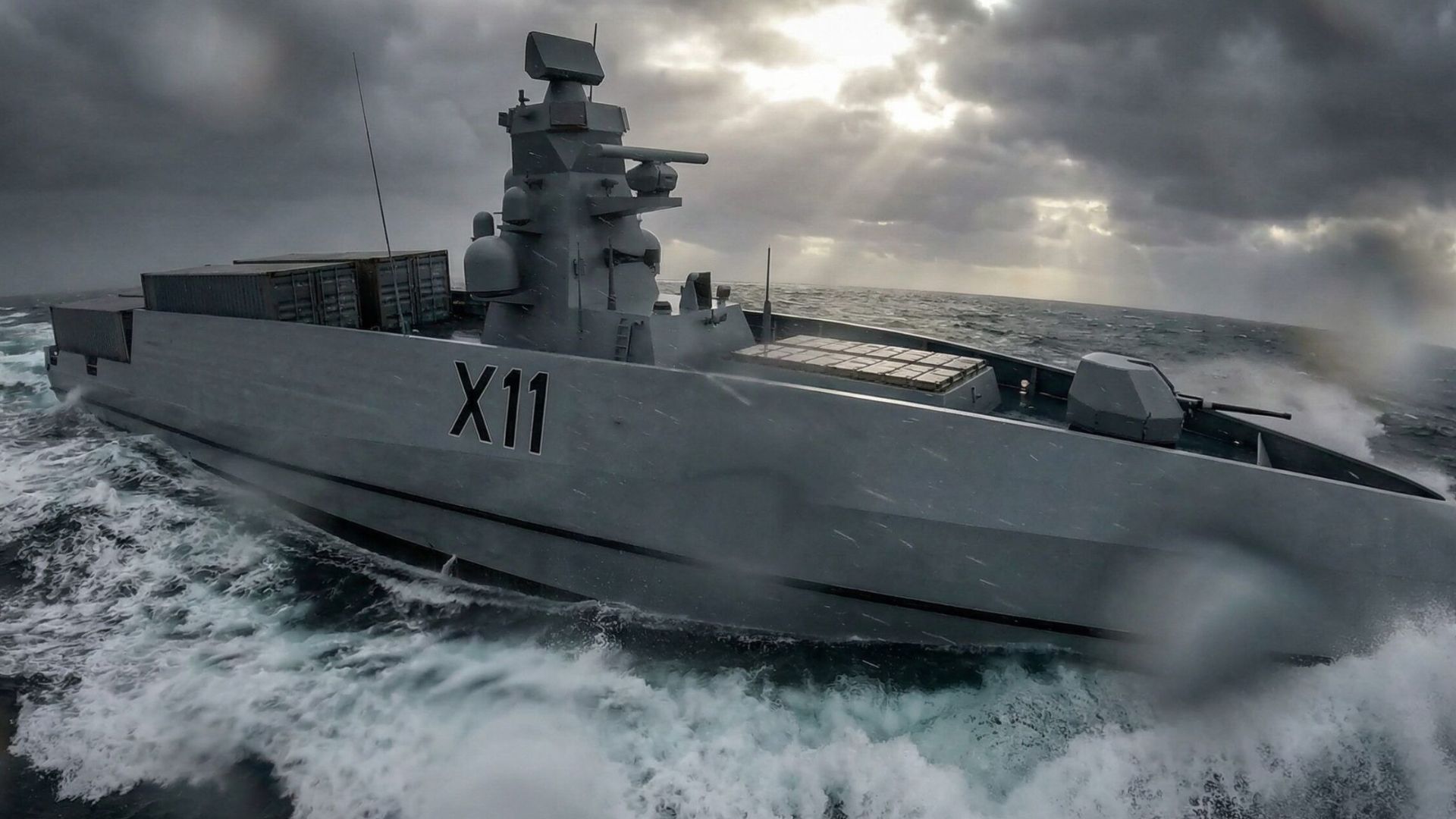
The prospect of uncrewed naval operations eliminates crew safety risks entirely while extending mission endurance. This 75-meter autonomous surface vessel displaces over 1,000 tonnes while operating without bridge, bunks, or life support systems. Though unveiled at May’s Combined Naval Event in Farnborough, the concept follows established patterns in maritime autonomy rather than breaking entirely new ground.
The design trades human habitability for extended fuel capacity and mission payloads. Navantia UK‘s Product Development Director emphasized that vessels of this scale provide credible and persistent capability in harsh environments without becoming a burden on fleet operations.
Mission-Ready Modularity
Containerized payloads let the LASV75 switch between surveillance sentinel and strike platform.
Naval task forces can configure LASV75 as pure sensor node, weapons carrier, or hybrid escort depending on mission requirements. The modular hull accepts NATO-standard containerized systems—everything from 3D air-surveillance radar to vertical launch missile systems.
This flexibility allows the platform to operate as:
- A surveillance and early warning system
- Function purely as an effector platform
- Combine both roles for complex escort duties
This plug-and-play approach enables rapid mission reconfiguration without extensive shipyard modifications.
Industrial Strategy Anchors Innovation
Navantia’s £157 million modernization creates the infrastructure for next-generation naval construction.
The LASV75 concept leverages Navantia’s extensive UK shipyard upgrades following its Harland & Wolff acquisition. Digital shipbuilding tools and advanced manufacturing at Appledore, Belfast, and other facilities reportedly promise accelerated construction timelines.
Early LASV75 production would likely happen at Appledore in Devon, which handles vessels up to 120 meters. This timing aligns with ongoing Fleet Solid Support program momentum, demonstrating how autonomous concepts integrate with broader naval procurement strategies.
The Distributed Navy Emerges
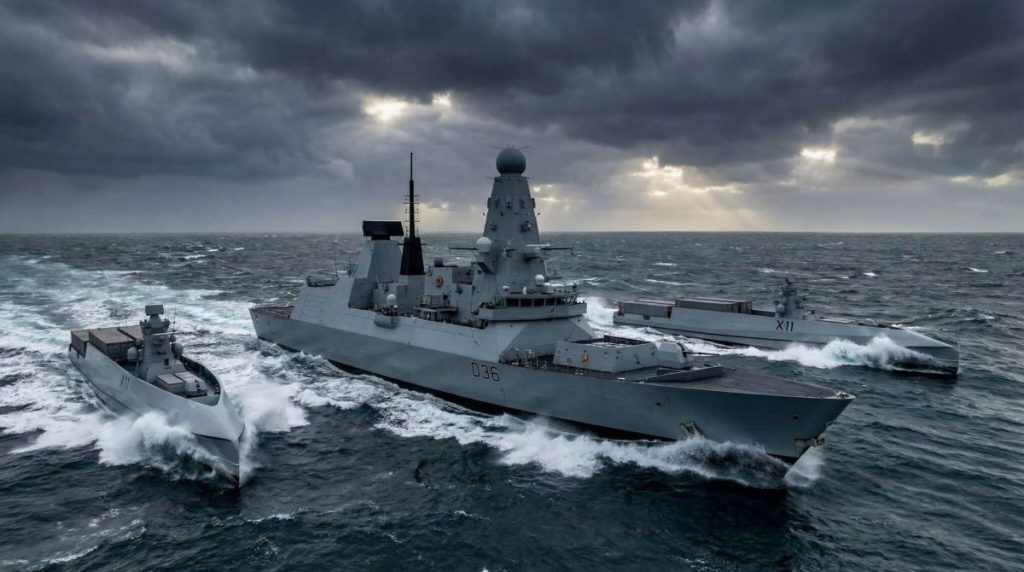
Large uncrewed vessels enable persistent coverage without proportionally increasing crew requirements.
Traditional naval doctrine concentrates sensors and weapons on crewed platforms, but LASV75 represents distributed lethality—spreading capabilities across autonomous nodes. Cost advantages emerge since uncrewed designs skip expensive habitability systems while enabling longer patrols than human-operated equivalents.
Success here influences whether navies embrace fully autonomous combatants or remain skeptical of robot warships operating independently in contested waters.