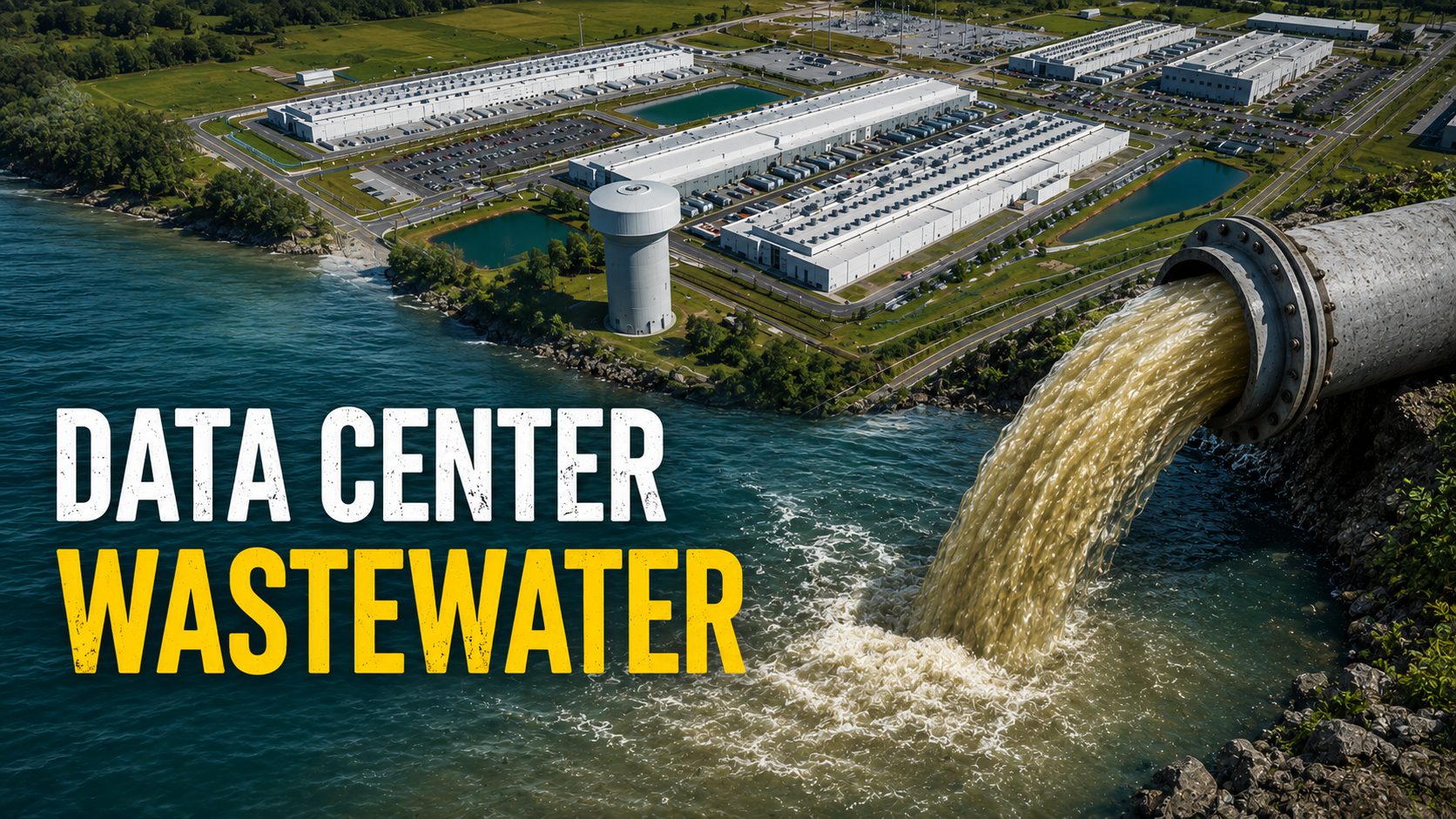
A single hyperscale data center can drink up to 5 million gallons of water per day — roughly what 12,000 people use. Now Ohio wants to make it easier for those facilities to give that water back, and not in great shape.
What the Permit Actually Allows
Ohio’s draft replaces individualized environmental reviews with a single statewide blanket permit covering an entire industry.
Under the old system, each data center needed its own discharge permit — an individualized review examining the specific river, stream depth, and watershed receiving the waste. Draft permit OHD000001 replaces that with a statewide general NPDES permit (National Pollutant Discharge Elimination System — the federal framework that keeps industrial waste out of public drinking water). One application, five years of coverage, with significantly reduced site-specific analysis. The draft’s own language anticipates a “decline in water quality” in some waters to accommodate data-center growth. Circle of Blue reporting calls this approach “without precedent” in the Great Lakes region.
Cooling-tower blowdown isn’t just warm water. Here’s what can come with it:
- Biocides and anti-scaling chemicals used to keep pipes clean
- Heavy metals leached from equipment and piping
- Concentrated salts and dissolved minerals
- Potential PFAS — “forever chemicals” reportedly used as fire suppressants — with zero specific restrictions in the current draft
- Thermal load hot enough to reduce dissolved oxygen and stress aquatic life
“Ohio EPA does not allow discharges that harm aquatic life, recreation, or human health,” the agency stated publicly. “Every permit includes strict limits and monitoring requirements to ensure water quality standards are met.”
That sounds reassuring. Then you notice the permit itself acknowledges water quality may decrease to serve “critical community or economic needs.” Ohio lawmakers and environmental groups argue a blanket permit means no one verifies whether those standards actually fit the specific conditions at each discharge point — the particular river, its depth, its flow, its existing stress load.
Lake Erie Has Been Here Before
The lake that cut off Toledo’s tap water in 2014 would receive fewer protections than smaller Ohio lakes under this draft.
Remember 2014? Harmful algal blooms shut off drinking water for 500,000 people in Toledo for three days. Lake Erie’s western basin remains nutrient-stressed today. Warm discharges accelerate exactly those blooms. Yet the draft carves Lake Erie out of protections afforded to other high-quality Ohio lakes. The Alliance for the Great Lakes says this approach “puts our waters at risk.” Critics quoted in Cleveland media warn it could let data centers “boil our rivers.”
Over the next five years, planned data-center growth in Ohio could involve withdrawals of around 150 billion gallons — comparable to the annual water use of 4.6 million households, according to the Ohio Environmental Council. Multiple facilities within the same watershed compound that impact progressively over time.
The “cloud” has never been weightless. If Ohio’s permit passes, other states competing for data-center investment may copy the playbook. Every cloud backup, every AI infrastructure query, carries a water bill — and this permit decides who pays it.