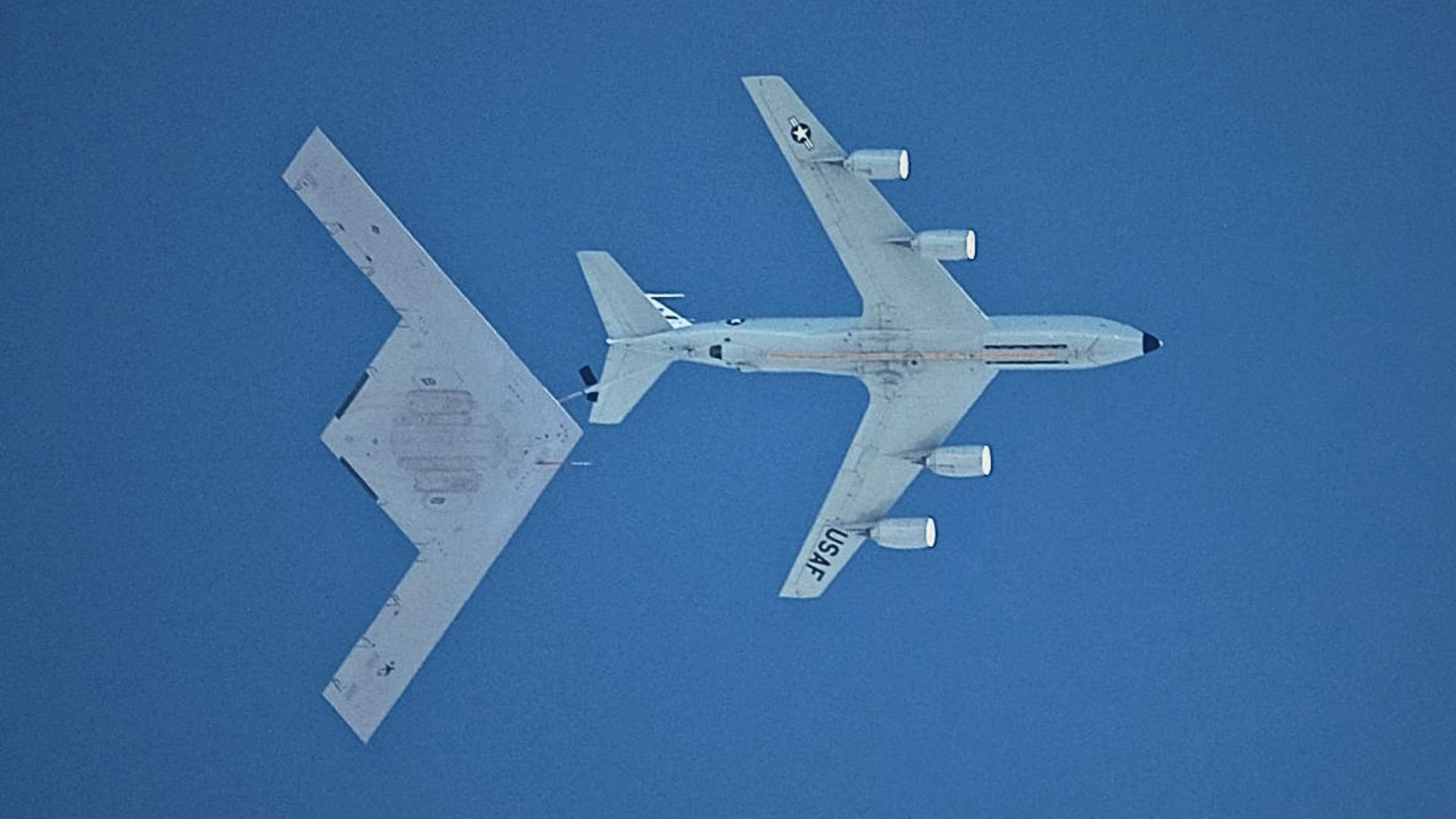
Aviation photographers captured history on March 10, 2026, when the B-21 Raider completed its first publicly documented aerial refueling over California’s Mojave Desert. The five-hour, 33-minute test flight wasn’t just another milestone—it confirmed the stealth bomber’s ability to sustain the kind of extended missions that make adversaries nervous.
The refueling operation occurred at 23,000 feet, with the B-21 prototype connecting to an NKC-135 Stratotanker (serial number 61-0320). Supporting aircraft included:
- F-16 chase plane
- Douglas NC9D test aircraft
This created a formation that aviation enthusiasts Ian Recchio and Jarod Hamilton managed to photograph near Edwards Air Force Base. The B-21 prototype featured an orange air-data probe extending from its nose—standard equipment for gathering aerodynamic data during early flight testing.
Here’s why this matters beyond cool photos: aerial refueling transforms the B-21 from a regional threat into a global one. Without tanker support, even the most advanced bomber becomes geography-dependent, limited by fuel capacity and base access. With it, the aircraft can sustain presence in contested airspace for hours, conduct intercontinental strikes without forward staging, and operate from U.S. bases while reaching targets anywhere on Earth.
The successful test accelerates the B-21’s march toward operational service, currently targeted around 2027. Northrop Grumman continues final assembly at its Palmdale facility while a second test aircraft joined the evaluation program in September 2025. Ellsworth Air Force Base in South Dakota is preparing infrastructure for the first operational squadron, marking the beginning of a fleet replacement cycle that will eventually retire aging B-1B Lancers and B-2 Spirits.
This refueling milestone validates more than technical integration—it confirms America’s commitment to maintaining global strike capabilities in an era when distance no longer equals safety. The B-21’s ability to accept fuel from existing KC-135 infrastructure ensures seamless transition into current operations while preparing for future conflicts where sustained presence, not just surprise visits, determines outcomes.