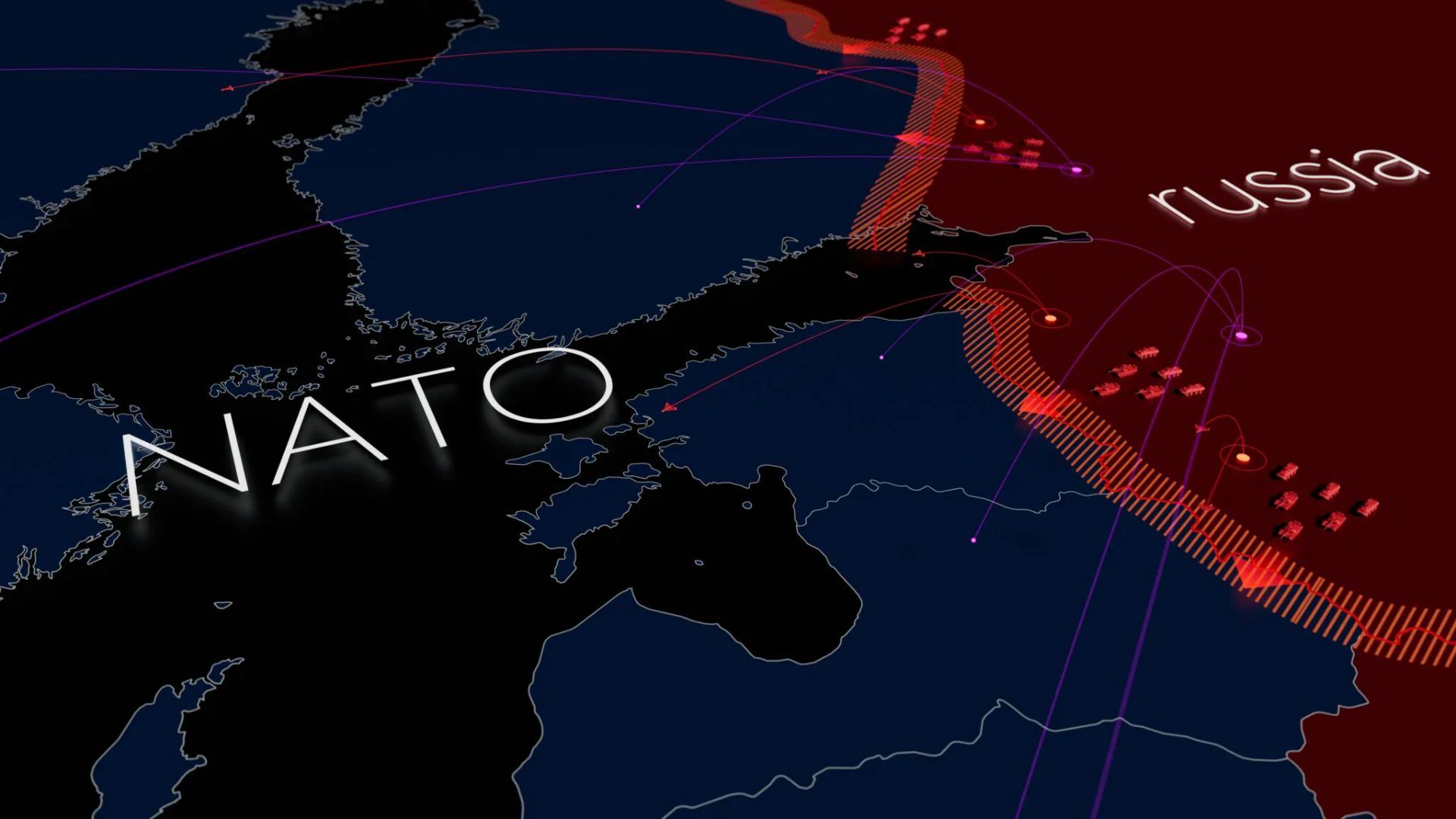
Roughly 3,500 kilometres of NATO frontier — stretching from Finland to Poland — could become a dispersed network of unmanned ground vehicles, drones, and sensors under a concept Milrem Robotics is showcasing at Eurosatory 2026. The Estonian defence firm’s proposal lands at a convenient moment: NATO reportedly aims to build out its own Eastern Flank Deterrence Line (EFDL) by around 2027, according to United24 Media reporting. Think of it less as a product launch and more as a doctrine pitch timed to land when the alliance is already asking the same questions. Alongside developments in hypersonic missiles, autonomous systems are reshaping the calculus of modern deterrence.
Robots First, Soldiers Second
Milrem envisions expendable autonomous systems absorbing first contact so human forces never have to.
The architecture works like this: Robotic and Autonomous Systems zones — unmanned vehicles, aerial drones, sensors, and counter-drone systems — sit in hardened locations along the border, activated to create localised defensive clusters when needed. Unmanned platforms make first contact, absorb losses, and buy commanders decision-making time. The robots are explicitly framed as expendable. No body bags, no political cost — a framing that echoes broader debates around the humanoid robot trend displacing human roles across sectors.
- THeMIS UGV: tracked unmanned ground vehicle with an EOS counter-drone weapon station; engages hostile drones beyond 1,000 metres
- HAVOC 8×8: hybrid-electric robotic combat vehicle; Moog’s RIwP turret adds medium cannons, missile launchers, an RF jammer, and a tethered drone
- ARCOS: Milrem’s command-and-control software linking robotic units into NATO’s broader battle management systems
- Scale: approximately 3,500 km from Finland to Poland
Ukraine taught everyone watching that mass and readiness still matter — but generating them the old way chews through people. Milrem CEO Kuldar Väärsi put it plainly: “Robotising the eastern flank allows NATO to create a persistent defensive layer where unmanned systems make first contact, absorb losses, and buy time for decision-making, without immediately putting soldiers at risk,” according to Shephard Media.
NATO’s Blueprint, Industry’s Pitch
The alliance’s own deterrence line concept aligns with Milrem’s vision, but critical distinctions remain.
German Bundeswehr Brig. Gen. Thomas Löwin has described NATO’s deterrence line as a “robotized or automated zone” designed to weaken attackers before they reach main forces — while humans retain control over lethal decisions, according to United24 Media. That distinction matters enormously. NATO policy requires meaningful human control over lethal force, and any deployed system would need to comply with international humanitarian law and alliance guidelines on autonomous weapons.
“Robot wall,” though, is a misleading frame. Analysts note real defence is layered and flexible, not an impenetrable barrier. Cyber vulnerabilities, signal spoofing, and escalation risks from autonomous misreads are genuine concerns flagged in NATO’s own parliamentary assessments — challenges not unlike those facing civilian deployments such as Waymo Robotaxis operating at scale in complex environments. This remains a proposal and demonstrator — not a contracted programme. The gap between concept and procurement is wide.
If this approach scales, it sets operational norms for how alliances deploy autonomous systems worldwide — human-control standards, interoperability requirements, investment in counter-autonomy capabilities. What Milrem is selling at Eurosatory 2026 is less hardware than a way of thinking about borders. Whether NATO buys that thinking — with all the funding, doctrine, and political will required — remains an open question.