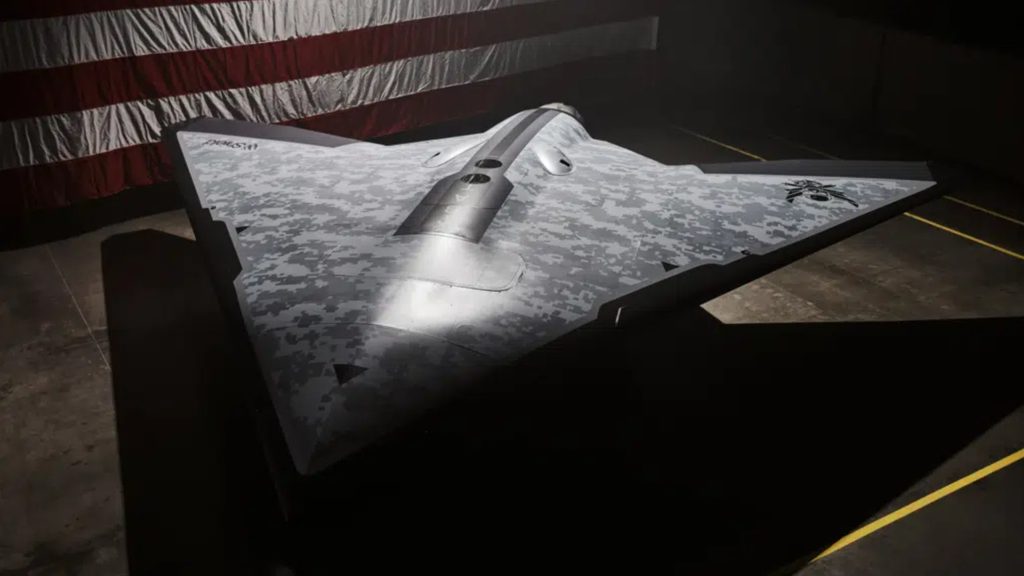
Shield AI completed the first full-scale X-BAT prototype in roughly one year and moved it from its Frisco, Texas, facility to a flight-test site near Newton, Kansas. The company is targeting a first flight before the end of 2026, according to Aviation Week. Every performance figure attached to the program remains a projection until testing begins producing measured data.
A Fighter Engine, a Trailer, and a Cobra Maneuver
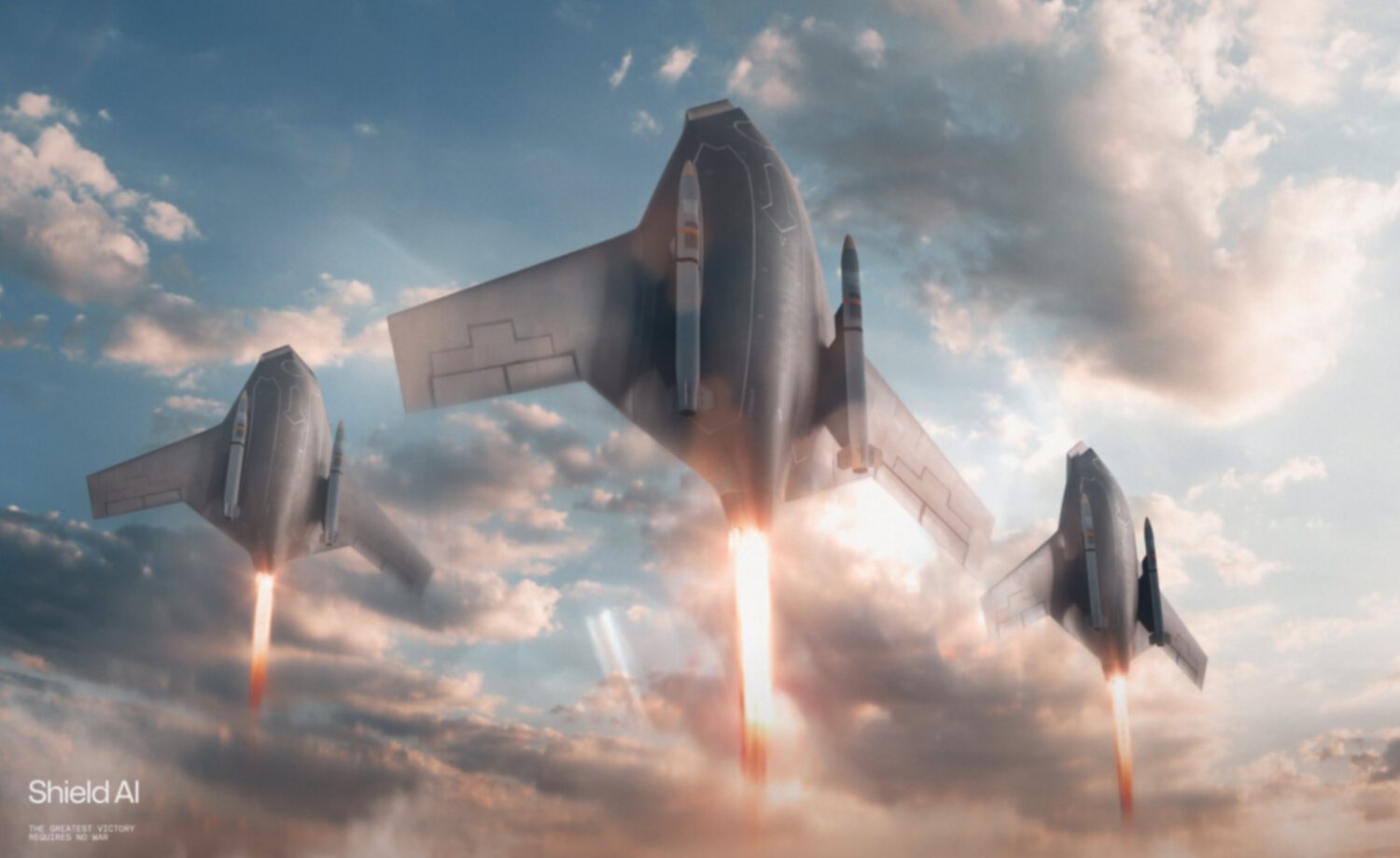
X-BAT is a tail-sitter: it launches vertically, transitions to conventional horizontal flight, then rotates back to a vertical attitude for recovery.
The aircraft lifts off from a trailer-mounted system using a General Electric F110 engine with afterburner, then transitions to horizontal flight. Recovery uses a high-angle-of-attack deceleration similar to the Cobra maneuver, with roll controls and wingtip jets assisting final positioning. Shield AI says the aircraft can operate from paved surfaces measuring approximately 50 by 50 feet and from ship decks, which could extend fixed-wing combat capability to vessels other than aircraft carriers.
Step by Step Before Untethered Flight
The test campaign is designed to be incremental, with each phase required to succeed before the next begins.
Shield AI’s published plan calls for horizontal engine runs on the launch-and-recovery vehicle, followed by vertical engine testing, then crane-supported flights that keep the aircraft tethered while engineers expand its vertical-flight envelope. Untethered flight comes last. The central question the campaign must answer is whether the tail-sitting launch, transition, and recovery sequence can be made repeatable under operational conditions, not simply demonstrated once in a controlled setting.
Three Technical Problems That Testing Must Resolve
The program is adapting a fighter-derived engine for sustained operation in an unusual vertical attitude, while also managing shipboard heat and unexplored airframe features.
Shield AI worked with GE on modifications to the F110’s oil-pump and sump systems to handle sustained vertical operation. Shipboard use creates a separate challenge: vertical thrust directs substantial exhaust heat at decks and nearby equipment. Shield AI plans to integrate a jet-blast deflector into the launch-and-recovery vehicle and says recovery will occur without afterburner, which the company says reduces thermal load. Newly released imagery of prototype N228XB showed blister-shaped fairings on the upper fuselage and two apertures along the spine; as of publication, Aviation Week reported that Shield AI had not publicly explained those features.
$400 Million Committed, Production Targeted for 2029
U.S. Navy support and matching private capital together total approximately $400 million for the planned flight-test campaign.
Government support totals $200 million: a $150 million Defense Exportability Features contract modification and a separate $50 million action through the Navy’s Runway Independent Maritime Expeditionary Strike effort, according to Janes and Aviation Week. Shield AI says it matched that figure with approximately $200 million in private capital. The company’s stated schedule targets low-rate production in 2028 and an initial operational capability in 2029. Ryan Tseng, Shield AI’s president and co-founder, said two additional prototypes are planned to follow N228XB, according to Aviation Week.
Claims That Still Need a Flight to Back Them Up
Shield AI’s projected performance figures and proposed mission set remain unvalidated until flight testing produces measured results.
Shield AI projects a payload capacity of up to 6,000 pounds on internal and external stations and a combat radius of 1,000 nautical miles. Proposed missions include strike, electronic warfare using an integrated jammer, and airborne moving-target indication, which involves tracking ground vehicles or ships from altitude. Those figures and mission claims remain Shield AI’s own until flight testing confirms range, payload, autonomy behavior, and launch-and-recovery reliability. The near-term indicators that matter most are the first untethered flight, the regularity of sorties that follow, and successful vertical recoveries.