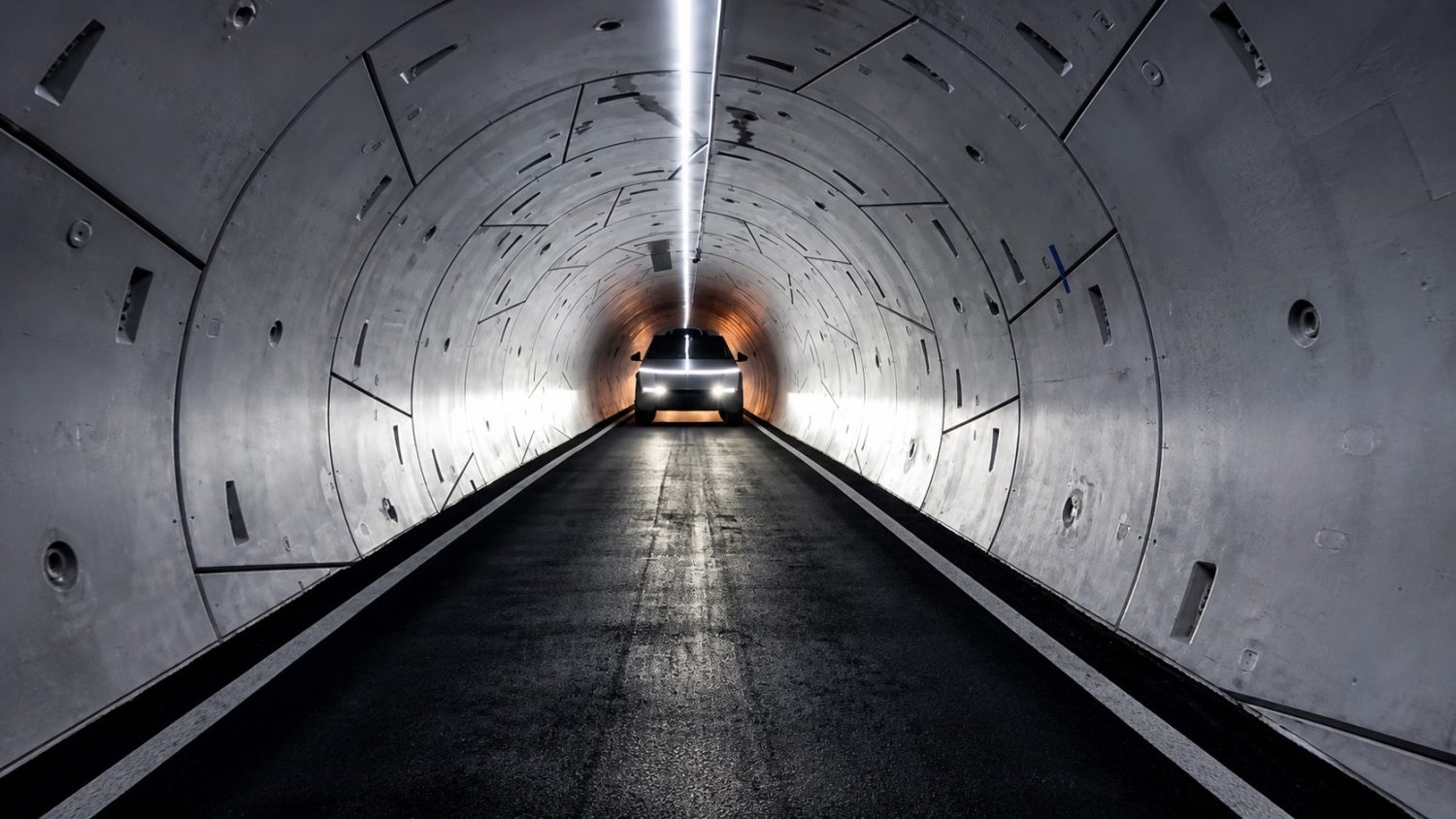
A commute that currently takes up to 2.5 hours during peak congestion on I-35 could, according to Elon Musk, one day take less than 30 minutes. On Sept. 20, 2026, Musk posted on X that The Boring Company is working on a tunnel connecting the two cities at speeds above 200 mph. The proposal discloses no route, financing, vehicle design, permits, or construction timeline.
What Musk Actually Said
The claim is specific on travel time and vague on almost everything else.
Musk wrote on X that the system would function as a “simple, precursor Hyperloop tunnel” and reduce a congestion-dependent journey to less than 30 minutes. The Boring Company’s account replied that it would be “excited and honored” to build the project, describing an express system connecting an Austin parking lot to a San Antonio destination, assuming stations exist at both ends.
The physics are not the problem. Covering approximately 80 miles in under 30 minutes at speeds above 200 mph is plausible in principle, though acceleration, deceleration, and station access would all affect the actual end-to-end time.
What Remains Unknown
The proposal does not disclose the basic elements required to build or approve an intercity tunnel.
Musk’s post states that the project is in progress. No route, tunnel alignment, station locations, construction cost, funding structure, vehicle specification, target completion date, or government partner had been publicly identified in the sources reviewed.
The project should be understood as a stated company objective, not an active infrastructure build. For scale, The Boring Company‘s existing Las Vegas Convention Center Loop covers roughly 1.7 miles of route and about 2.2 miles of tunnel infrastructure, making the proposed Austin–San Antonio connection approximately 47 times longer by route.
The Vehicle Question
Sustained high-speed tunnel operation points toward purpose-built transit vehicles, not road cars.
Tesla’s Model S Plaid reportedly reaches 200 mph only with the optional Track Package. Running production passenger cars at that speed inside a confined tunnel raises serious questions about braking distances and crash protection that go well faster than speed considerations alone can address. Ventilation, battery consumption, and emergency evacuation procedures add further unresolved complexity.
The Boring Company described a no-intermediate-stop express system. That operational model implies controlled-access stations and vehicles engineered for repeatable, predictable runs rather than ordinary road use, making a purpose-built transit vehicle the more logical inference.
Hyperloop Context and Scale
The Austin–San Antonio proposal sits well below the original Hyperloop concept in technical ambition, and that distinction carries real consequences.
Musk introduced Hyperloop in 2013 as a proposed “fifth mode of transport,” envisioning passenger capsules moving through low-pressure tubes at very high speed, a concept that shares the broader ambition of supersonic flight in rethinking travel times. This tunnel is framed as a lower-complexity precursor, though Musk did not publicly specify whether the system would be a conventional tunnel or incorporate any pressure-control technology.
An 80-mile passenger tunnel would still likely require extensive environmental review and land-access agreements. Fire and ventilation standards, emergency evacuation planning, and coordination with Texas state and local authorities add further regulatory layers. None of those approvals had been identified in the available reporting.
What Comes Next
The milestones that would convert this announcement into a project have not arrived yet.
The near-term significance is strategic. Musk has reintroduced high-speed intercity transit as a Boring Company objective, which is notable on its own terms. Converting that objective into an actual transportation project would require a defined route, secured permits, confirmed financing, a vehicle specification, and evidence of physical construction. None of those had been publicly identified in the sources reviewed.