Just imagine a company that spent years in court battles with farmers over who owns repair data now asking those same farmers to hand over their entire operational history to an AI chatbot. That’s the situation with “JD,” John Deere‘s new AI assistant, unveiled at the Farm Progress Show on September 1, 2026. The pitch is genuinely useful. The trust question is genuinely complicated.
What JD Actually Does
A chatbot that reads your farm’s history and answers in plain English — no agronomist required.
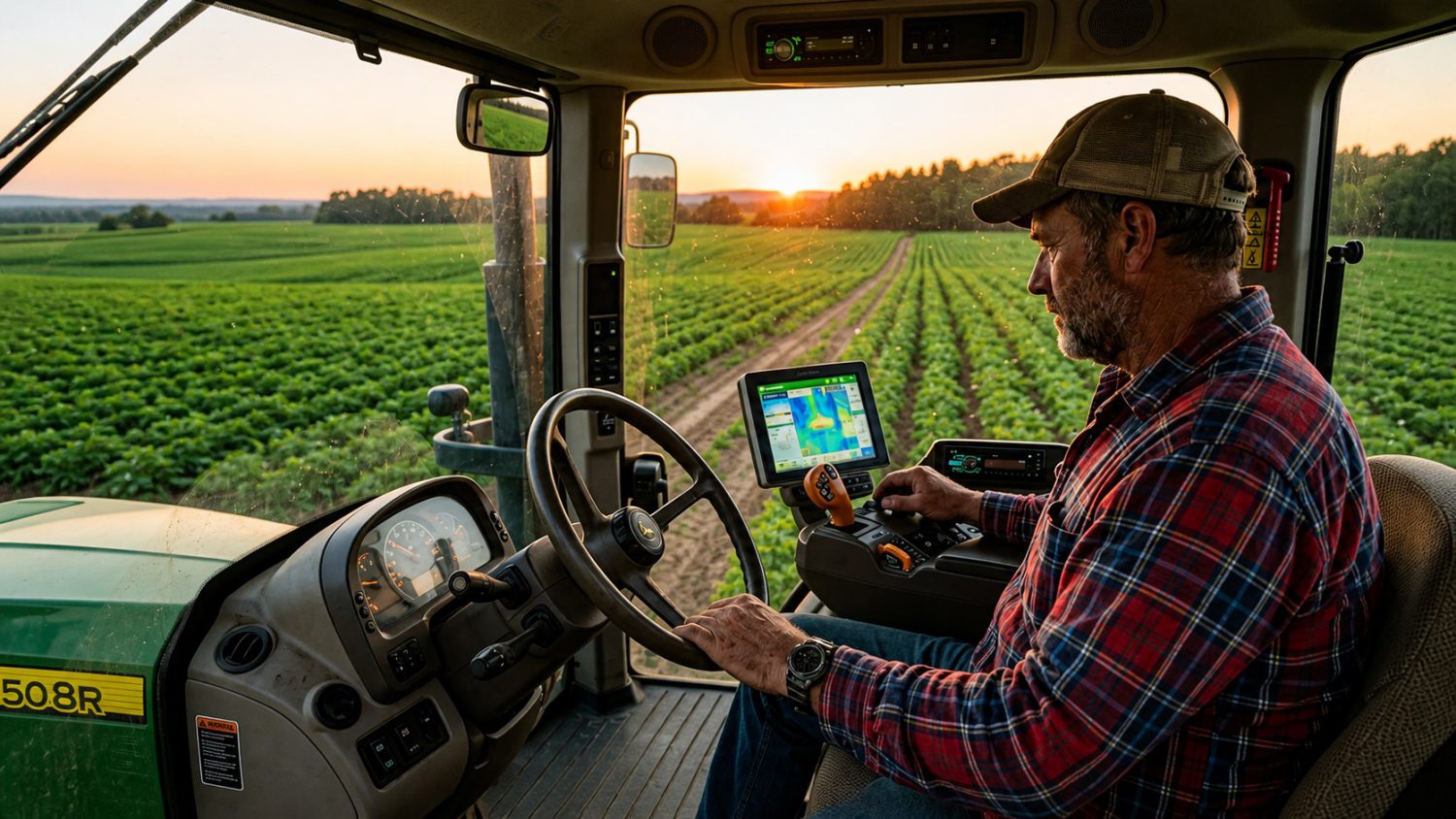
- Lives inside John Deere Operations Center, accessible via web and mobile app; planned integration with in-cab G5 displays later this year
- Pulls from your farm’s own field, machine, and operational data — not generic crop advice
- Handles queries on equipment settings, fuel consumption, harvest timing, fertilizer decisions, and fleet performance comparisons
- Analysis only at launch — JD recommends, it doesn’t touch machine controls
- Free for Operations Center users; Operations Center itself is free regardless of equipment brand or age
- Deere has not disclosed which AI vendor or model powers the assistant, according to The Verge
Think of it like having a data analyst on call who actually knows your operation. You type “which machine in my fleet is burning the most fuel per acre?” and JD surfaces an answer drawn from your own telemetry — not a textbook estimate, but your numbers, your fields, your machines. That’s the gap it fills. Ask the right question, get a farm-specific answer.
According to Bloomberg, John Deere frames JD’s core purpose as helping farmers “make more money” through sharper decisions on inputs, timing, and equipment use.
The Data Trust Problem
Ten promises from a company farmers have been arguing with for years — worth reading carefully.
Alongside the launch, Deere points to a ten-point Farmer Data Commitment. The headline terms: no selling farm data, farmers control third-party sharing and can cut it off at any time, data won’t be used for commodity trading or speculation, and your farm’s data won’t be used to train JD or other AI systems beyond your own operational context. On paper, it covers the obvious concerns.
These are policy-level commitments, not technically audited guarantees — and that distinction matters. Deere has a well-documented history of right-to-repair conflicts and FTC attention over data control. Farmers didn’t arrive at skepticism by accident; they earned it. The commitment is a meaningful signal, but signals from Deere on data are something farmers are still learning to calibrate. Adding to that friction: as The Verge notes, Deere won’t say which AI technology actually powers JD. Asking for trust while withholding details about your core infrastructure is a tension the company hasn’t resolved.
Early Access starts fall 2026. If you’re already in Operations Center, trying JD costs nothing. For farmers who’ve watched this company fight them in court over a repair manual, the smarter question was never whether the chatbot works — it’s whether the company behind it has done enough to deserve another layer of your data.