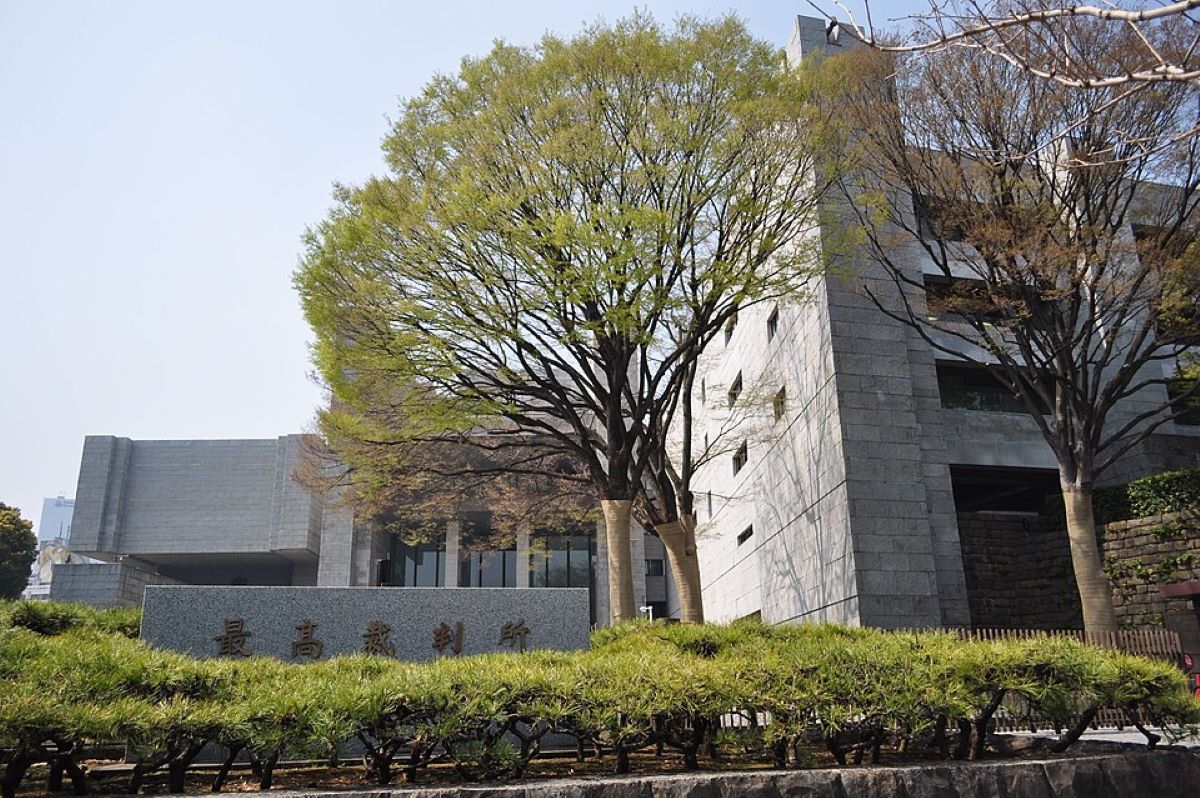
For anyone hoping a machine might someday collect patent royalties, Tokyo has delivered its answer. Japan’s Supreme Court Second Petty Bench dismissed Dr. Stephen Thaler’s final appeal, cementing what three levels of courts and the Japan Patent Office already decided: under Japanese law, only a natural person can be named as an inventor. Thaler’s AI system DABUS — listed as sole inventor on a food container patent application filed in 2020 — has been formally rejected at every possible stage. The world’s third-largest economy has spoken, and the verdict leaves no room for interpretation.
The Legal Logic: No Rights, No Inventorship
AI cannot be an inventor in Japan because it cannot hold rights — and the courts followed that logic all the way to the top.
The JPO flagged the application in 2020 and ordered Thaler to name a human inventor. He refused. The Tokyo District Court ruled against him in May 2024, citing Japan’s Intellectual Property Basic Act, which defines IP as resulting from “creative activities by human beings.” It also pointed to the Patent Act’s requirement that only a person who invents an invention may obtain a patent — and since AI holds neither natural nor legal personhood, it cannot qualify.
The IP High Court upheld that decision on January 30, 2025, reinforcing that an inventor must be capable of holding patent rights. The Supreme Court’s dismissal made it final.
“Eligibility of AI as an inventor is denied in Japan along with the US and Europe at present,” according to an IP practitioner analysis published by Shiga Patent Office Professionals (2025).
What the ruling actually covers:
- AI-assisted inventions where a human makes a creative contribution remain fully patentable in Japan.
- Fully autonomous AI inventions with no identifiable human contributor cannot be patented under current law.
- South Africa remains the lone major outlier, having granted at least one DABUS patent.
- Any change in Japan requires legislative amendment — courts explicitly called this a policy question, not a judicial one.
Your AI workflow still needs a named human at the center. Document every creative decision: who selected the training data, who interpreted the outputs, who shaped the final inventive concept.
Academic analysis of the IP High Court judgment noted that “even highly autonomous AI cannot be an inventor because it cannot be a rights holder,” according to the Oxford Journal of Intellectual Property Law and Practice.
The Global Alignment Is Now Complete
Japan, the U.S., and Europe now stand on identical legal ground — and the gap between AI’s creative capacity and legal recognition keeps widening.
Japan joins the U.S. Federal Circuit and the European Patent Office in rejecting AI inventorship on the same foundational grounds: “inventor” means a natural person. The IP High Court explicitly flagged that Japan’s Patent Act never anticipated modern generative AI, and that updating it is a job for lawmakers, not judges. As AI shoulders more of the inventive workload in labs worldwide, that gap between what machines can create and what law will credit them for is only growing.
The engineering strategy here is settled. Keep a human in the loop, name them on the application, or watch your filing come back rejected.