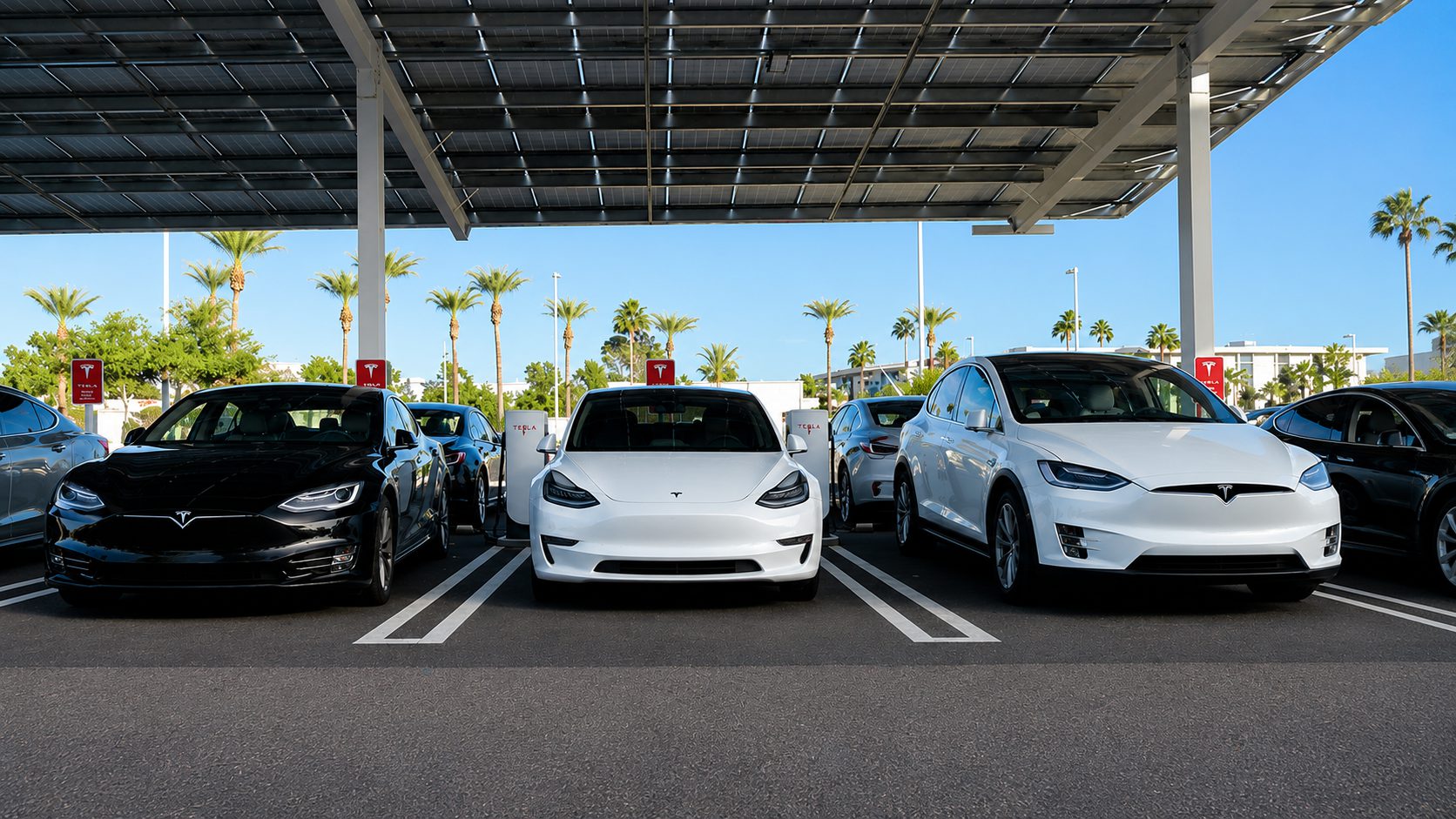
Wall Street projected roughly 406,000 deliveries — a modest recovery, a polite nod toward growth after two brutal years of declining sales. Tesla delivered 480,126 electric vehicles instead, landing 74,000 units above that forecast, a gap too large to dismiss as noise. After posting 1.636 million deliveries in 2025 — down 8.6% from 2024 — this 25% year-over-year jump demands a closer look at what’s actually happening beneath the headline.
Europe Did the Heavy Lifting
European registrations more than doubled while U.S. sales dropped roughly 20%, creating a lopsided recovery story.
Tesla doesn’t break out regional delivery numbers, but the data tells a clear story. ACEA registration figures show Tesla’s May registrations across greater Europe jumped 108% year-over-year. EU-only numbers were even more dramatic: up 152%. Battery-electric vehicles now claim 20% of EU market share.
The U.S. picture looks nothing like that. Cox Automotive estimates American Tesla sales fell approximately 20% year-over-year, squeezed by vanished federal incentives and the ongoing Musk factor.
Deutsche Bank analyst Edison Yu put it plainly: “International strength is doing the heavy lifting with Europe acting as the standout driver and China providing further support.”
Here are the numbers that matter from Q2:
- 467,762 Model 3/Y deliveries — a 25.2% YoY increase and over 97% of total volume
- 12,364 “other” vehicles, covering the now-discontinued Model S/X and Cybertruck
- 451,758 vehicles produced — roughly 30,000 fewer than sold, meaning inventory is shrinking
- 13.5 GWh of energy storage deployed, up 40% YoY and a sharp jump from Q1’s 8.8 GWh
That production-delivery reversal is worth pausing on. Tesla intentionally built fewer cars than it sold. After Q1 left approximately 50,000 vehicles sitting in inventory, the company is cleaning house — think Marie Kondo finally getting to the garage. Model S/X production is ending entirely, and Fremont capacity is being redirected toward Optimus humanoid robots. Tesla is quietly redefining what it sells.
One Quarter Isn’t a Comeback
Skeptics still model only 3–5% full-year growth, and BYD isn’t waiting around.
Some analysts remain unconvinced. Full-year 2026 projections still cluster around low-single-digit growth, according to Electrek. BYD and European incumbents are accelerating. And plenty of American buyers reportedly “hold their noses and buy anyway” — the Netflix price-hike dynamic applied to automobiles: you complain about the politics, then sign the paperwork.
The energy storage business, quietly growing at 40% annually, may ultimately matter more to Tesla’s long-term valuation than any single delivery quarter. Tesla proved demand exists when pricing and regional incentives align. Whether Europe’s momentum holds — and whether the U.S. recovers without federal credits — will determine if Q2 was a genuine turning point or simply a fortunate quarter.