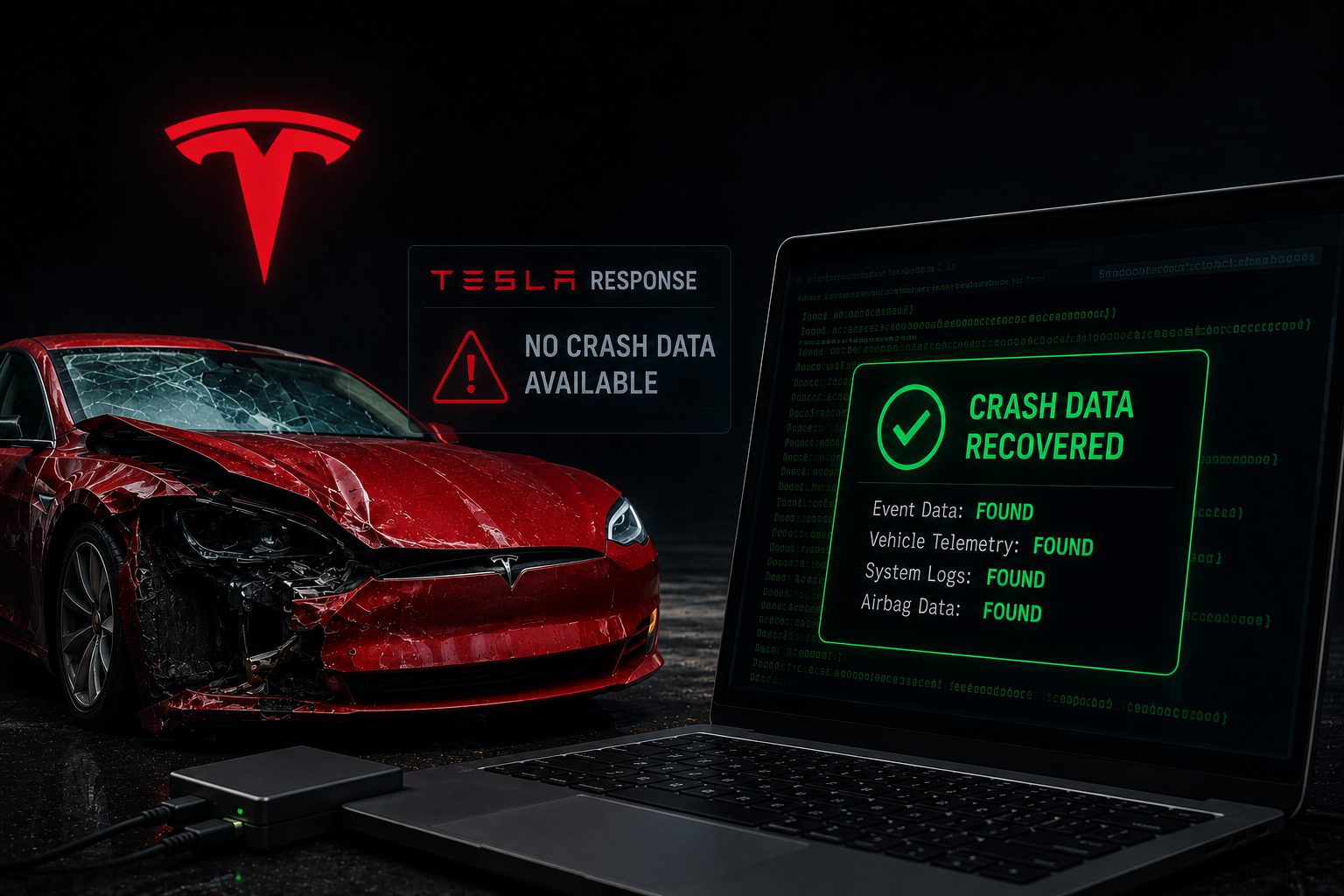
Every proprietary AI system generates data about what it sees. The question after a fatal crash becomes brutally simple: who gets to look at it? On April 25, 2019, a Tesla Model S on Autopilot slammed into a stopped SUV in Key Largo, Florida, killing Naibel Benavides and seriously injuring Dillon Angulo. Tesla told plaintiffs the critical crash data — a collision snapshot showing what Autopilot’s cameras detected in those final seconds — was missing or corrupted. In August 2025, a Miami jury handed down $243 million in damages, the largest verdict against Tesla Under Investigation at that point.
Once recovered, the data reportedly painted a damning picture. According to court proceedings, Autopilot’s cameras identified:
- lane boundaries
- the road’s end
- a stop sign
- a blinking red light
- a parked vehicle
- pedestrians ahead
The system reportedly recognized the scene. It just didn’t act on it — no meaningful forward-collision warning, no emergency braking engaged in time.
The jury accepted three core claims against Tesla:
- No technical safeguards prevented Autopilot from operating on roads where it couldn’t function safely
- Driver monitoring was insufficient to ensure human attention
- Tesla’s marketing created a misleading impression of self-driving capability
When the Manufacturer Holds the Evidence
The case turns on a question that reaches well beyond this single crash: can a manufacturer be trusted as the sole interpreter of its own fatal-incident data?
A hacker working from the vehicle’s recovered computer found the collision snapshot Tesla said didn’t exist. Worse, Tesla had reportedly received that snapshot shortly after the crash. Much like deleted phone photos that linger invisibly in the cloud, crash data from a two-ton vehicle traveling at highway speed seldom simply disappears — unless the only party that can decode it declares it unreadable.
This mirrors the gatekeeping dynamic you encounter when a platform algorithm shapes what you see but won’t explain why. The structural problem is identical. The stakes here are incomparably higher.
“The data existed. Tesla had it. The system saw everything.”
Tesla maintained the driver bore sole responsibility and argued no 2019-era technology could have prevented the crash. The company denied intentional suppression, saying it simply couldn’t locate the relevant files. The jury disagreed — emphatically, to the tune of $243 million.
Even with Tesla’s appeal pending, the structural precedent cuts deeper than one verdict. If manufacturers remain the sole interpreters of their own crash evidence, every driver relying on a Level 2 system today is trusting the company that built the software to also serve as an honest witness when that software fails — a concern that stands in sharp contrast to how Waymo Robotaxis have approached data sharing with public infrastructure.