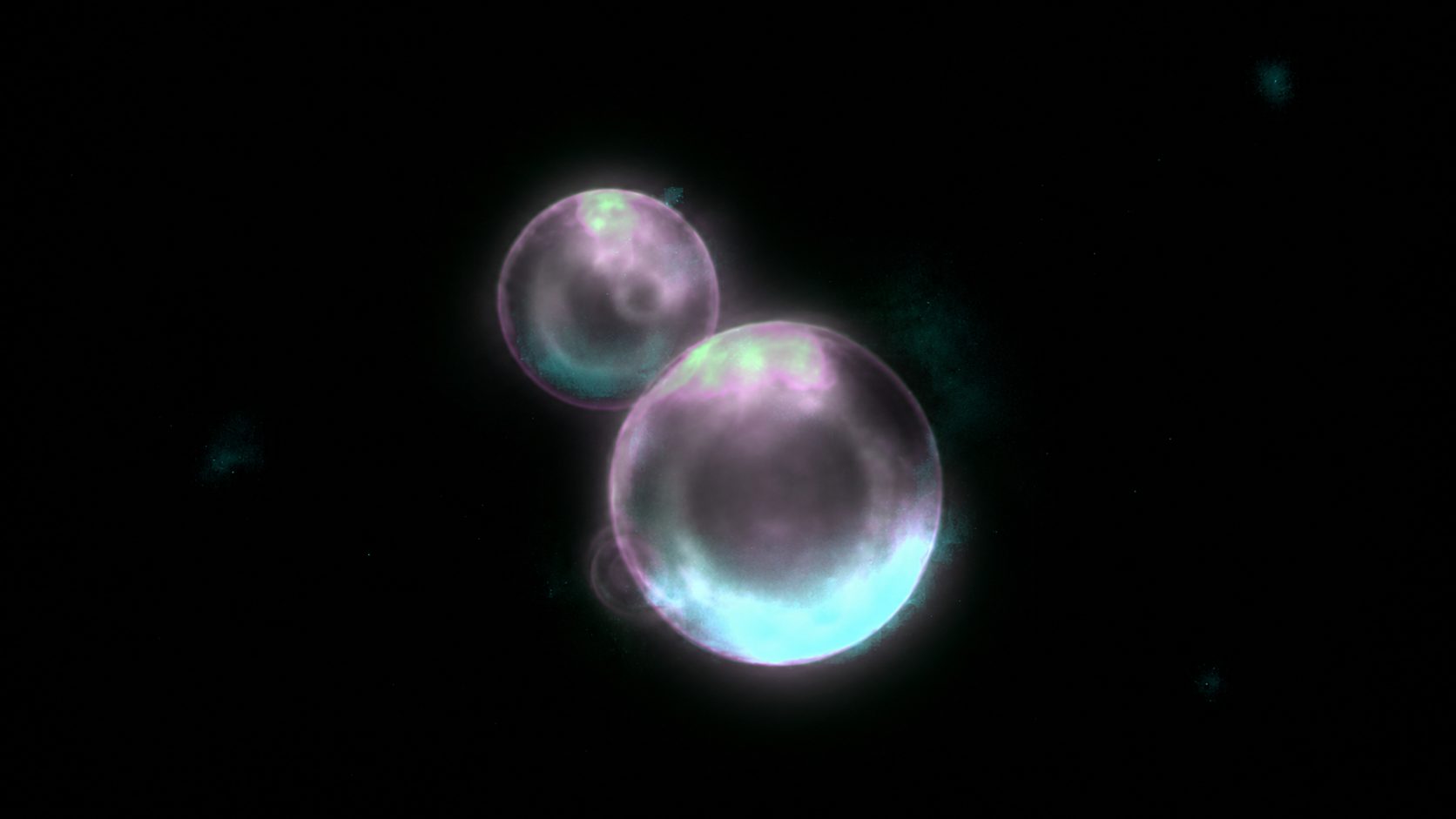
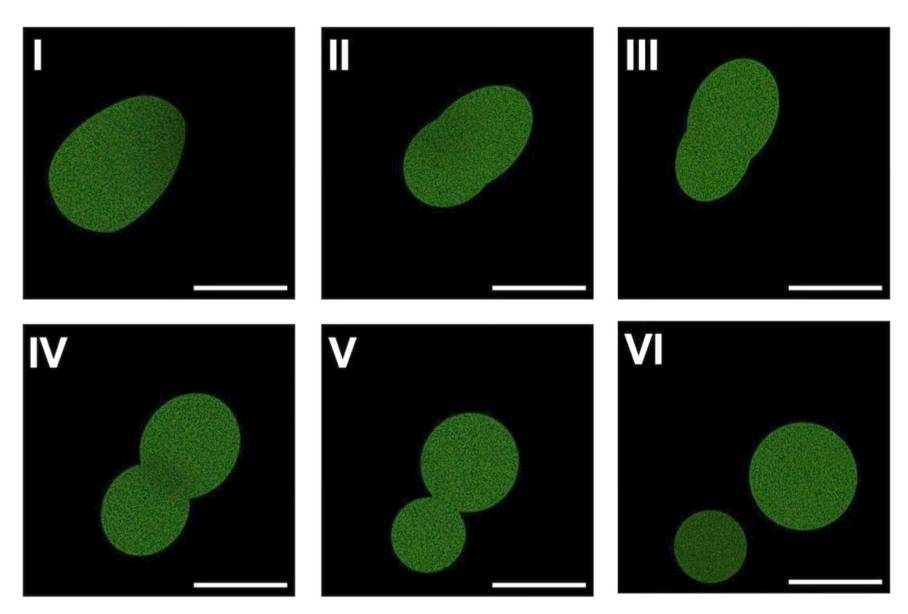
A cell that never came from a living thing just completed the full circle of life. University of Minnesota researchers assembled SpudCell entirely from known chemical components — liposomes (tiny fat bubbles), synthetic DNA, enzymes, and ribosomes — and watched it grow, copy its genome, eat, divide, and hand DNA to its offspring. No natural organism donated its guts. Chemistry did the work biology used to own exclusively.
How a Bag of Chemicals Learned to Eat and Split
Building SpudCell required rethinking every assumption about what a cell actually needs to function.
SpudCell runs on a surprisingly compact genome — just 90 kilobase pairs of genetic instructions, split across seven plasmids (small circular DNA molecules) instead of a single chromosome. Think of it less like a finished operating system and more like seven microservices duct-taped into something functional. The cells feed by fusing with feeder liposomes that deliver the molecular groceries: enzymes, ribosomes, and raw materials for making proteins. Division happens through membrane mechanics alone, skipping the internal scaffolding — called cytoskeletal machinery — that natural cells rely on.
Key technical details worth knowing:
- Genome size: 90 kilobase pairs across seven DNA plasmids
- Feeding method: fusion with nutrient-carrying feeder liposomes
- Division mechanism: membrane mechanics, no cytoskeleton required
- Research leads: Kate Adamala and Aaron Engelhart, University of Minnesota
Then something genuinely startling happened. A genetic change inside the system boosted production of a fusion protein, which meant faster feeding, faster growth, and more offspring. Within five generations, these faster-growing cells outcompeted the originals — especially when nutrients ran thin. It is worth noting the genetic change itself was introduced intentionally, though the competitive outcome it produced was not pre-programmed.
Natural selection emerged inside a system nobody designed to evolve.
That’s the part that should make you sit up straight. The selective advantage wasn’t scripted. It showed up uninvited, like a plot twist in the final season of a show you thought was completely predictable. Science journalist coverage in Science noted the result marks a significant step toward building life from scratch.
What Comes Next — and What Doesn’t Come Soon
Programmable biology is a compelling destination, but the road there still has serious potholes.
Adamala and Engelhart say future versions of SpudCell could function as programmable biofactories — manufacturing medicines, advanced materials, and fuels at biological temperatures instead of harsh industrial conditions. The team also launched Biotic, a public-benefit research organization aimed at building shared standards and infrastructure for synthetic cell engineering.
Nobody should confuse a proof of concept with a finished product, though. The researchers acknowledge that genome stability, molecular robustness, and standardized engineering methods all need serious work before anything leaves the lab. Your medicine cabinet won’t stock SpudCell products anytime soon.
The harder question lingers regardless. When chemistry evolves without being programmed to, the boundary between tool and organism becomes a question worth taking seriously.