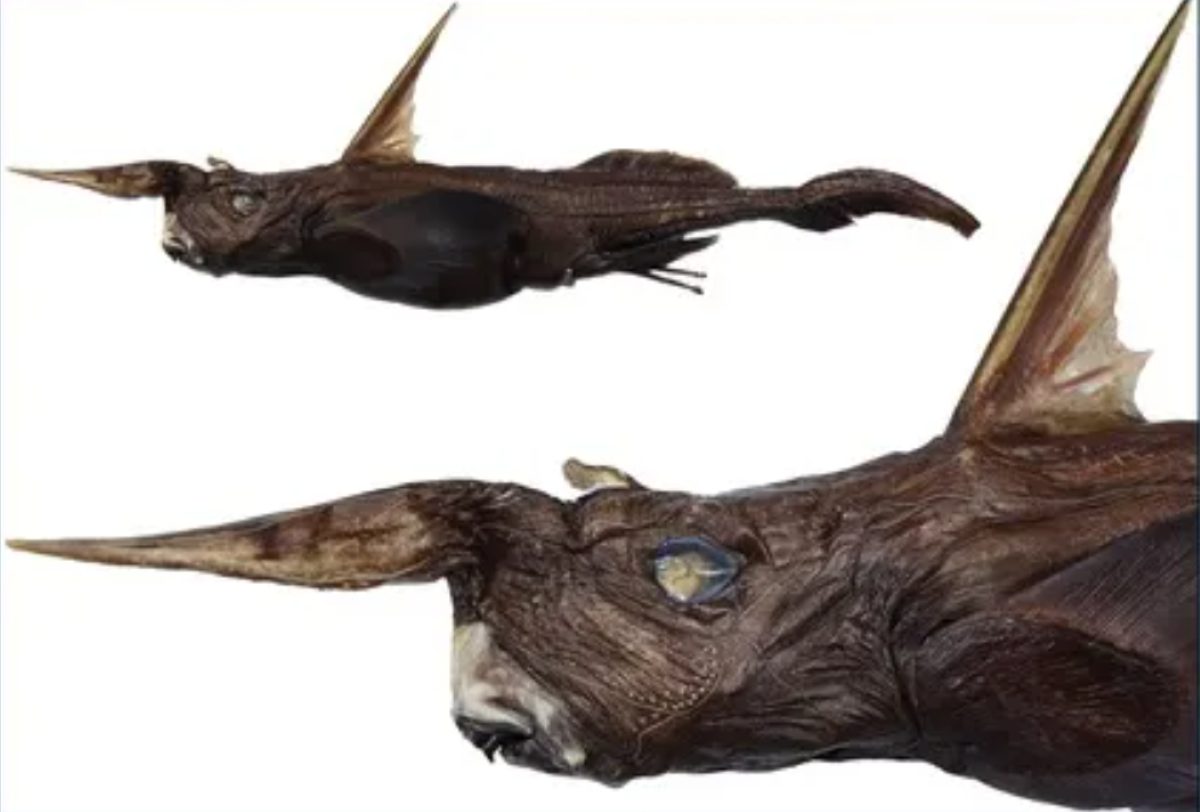
Sometimes science works like a cold case. Three specimens of an unknown deep-sea fish — pulled from nets between 2000 and 2023 off Costa Rica’s Pacific coast — sat in research collections while nobody realized they were staring at a species new to science. Formally described in June 2026 in the journal Zootaxa, Rhinochimaera costaricana is a long-nosed chimaera: part of an ancient cartilaginous lineage distantly related to sharks, commonly called ghost sharks for their pallid, deep-water existence. The creature lived at depths of 390 to 787 meters near Isla del Caño and Cabo Blanco, Puntarenas Province. Costa Rica’s deep-sea floor, it turns out, is scientifically speaking among the least charted ecosystems on Earth.
What Makes This Ghost Shark Different
Four key traits and a genetic fingerprint set this species apart from every other member of its genus.
- First Rhinochimaera species ever described from the Eastern Pacific Ocean — only the fourth recognized worldwide.
- Three male specimens, 775–830 mm long, collected as bycatch during fisheries surveys between 2000 and 2023.
- Identified through 49 body measurements compared against more than 90 individuals from three known species, plus COI gene sequencing — DNA barcoding, essentially a genetic fingerprint scan.
- Genetic divergence of 3.9–4.7% from its closest relatives, clearing the threshold taxonomists use to confirm a distinct species.
- Distinguishing traits: shorter snout, taller first dorsal fin, wider gap between dorsal fins, fewer bony tubercles along the tail, and a dark brown body with near-black fins.
DNA barcoding cracked this open. Affordable and increasingly standard, COI sequencing is turning scattered bycatch records into legitimate taxonomic discoveries at a pace that would have seemed far-fetched a decade ago. The description was published by researchers from INCOPESCA, the University of Costa Rica, and Brazil’s Federal University of Pará (Rodríguez-Arrieta et al., Zootaxa, June 2026). Study authors warn that the striking gap in knowledge about Costa Rica’s deep-sea life means species may vanish before anyone records them.
Costa Rica built its global reputation on conservation — rainforests, coastal marine reserves, the whole eco-tourism brand. Yet its deep Pacific waters remain among the least explored ecosystems in the region. Ghost sharks belong to a lineage hundreds of millions of years old. They grow slowly, reproduce slowly, and fall through nearly every existing protection framework. Rhinochimaera costaricana has no IUCN status. Its population size is completely unknown.
Why This Should Change How Costa Rica Manages Its Waters
The same fishing gear that threatens this species is what brought it to science’s attention.
The nets that revealed R. costaricana also represent its primary threat. Deep-water trawling and longline fishing are the main risks to a fish with no documented population baseline. Researchers are pushing for expanded deep-sea surveys pairing traditional sampling with genetic tools — an approach that could map hidden biodiversity before it disappears. The species name costaricana is deliberate, planting a flag of national ownership over an ecosystem most citizens will never glimpse firsthand.
The real question isn’t whether more species are hiding down there. It’s whether anyone looks before the nets arrive first.