More than 213 million Americans live inside a zone where federal agents can stop your car and demand proof of immigration status. No international border crossing required. The zone stretches 100 miles inward from every land and coastal boundary, swallowing ten entire states and cities like New York, Los Angeles, and Chicago. The 2013 indie game Papers, Please turned Cold War document checks into an uncomfortable simulation of bureaucratic control — a premise explored in controversial video games that push players into morally fraught bureaucratic roles. That premise feels less like fiction every year.
The 100-Mile Zone: More Than a Border Problem
A 1953 federal regulation gave CBP sweeping authority that now reaches most major American cities.
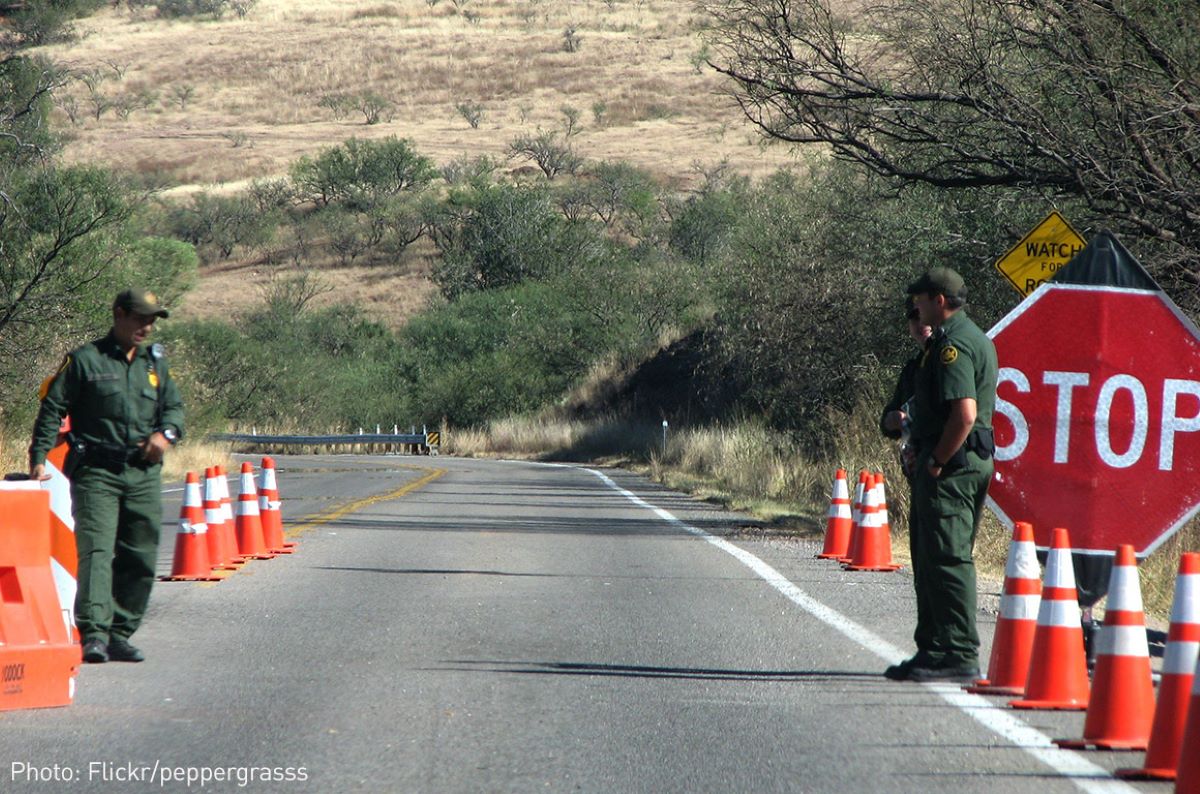
If you live in Florida, Connecticut, or Maine, your entire state sits inside this enforcement perimeter. Border Patrol operates an estimated 170 checkpoints nationwide — including 33 permanent installations near the Mexican border, according to public data compiled by the ACLU-SDIC. The ACLU characterizes the arrangement plainly: the government claims “extraordinary authority to stop and search people” across a zone encompassing nearly two-thirds of the population.
What the Supreme Court authorized in 1976 and what reportedly happens at these stops are two different things. The Martinez-Fuerte decision permitted “brief detention” — a question or two about citizenship, nothing more. No routine vehicle searches. No fishing expeditions. Yet the Cato Institute’s “Checkpoint America” project documents a pattern of extended stops, questioning unrelated to immigration, racial profiling, and K-9 deployments without articulable suspicion. The American Immigration Council has separately flagged growing Border Patrol visibility in interior metro areas like Charlotte and Atlanta — places most people would never associate with a border checkpoint.
Your Rights at a Checkpoint — and the Limits That Actually Matter
The law draws clear lines at these stops — but knowing them in advance is entirely your responsibility.
Agents may ask about your citizenship or immigration status. You have a right to remain silent, though exercising it may extend the stop while agents verify your status another way. What they cannot do is pivot to investigating unrelated crimes — drugs, for instance — or summon a K-9 unit without specific suspicion that goes beyond immigration concerns. Turning around at a clearly marked checkpoint is a federal felony under 18 U.S.C. § 758. The rules are narrow. They also matter enormously.
Layered on top of highway stops, REAL ID enforcement adds another checkpoint to your life — the airport security line you already dread. TSA finalized new rules in late 2024 creating agency-specific enforcement plans, meaning ID requirements may vary depending on location and which agency is running the screening. Foreign passports and USCIS Employment Authorization Cards remain accepted for domestic flights. What happens after May 7, 2025 for travelers carrying secretly tracking users noncompliant state IDs remains genuinely unclear.
Papers, Please made players uncomfortable by design. The discomfort was the point. Whether routine document checks on American highways and in airport queues represent necessary security or something else entirely depends on who’s answering — and, increasingly, on who’s being asked.