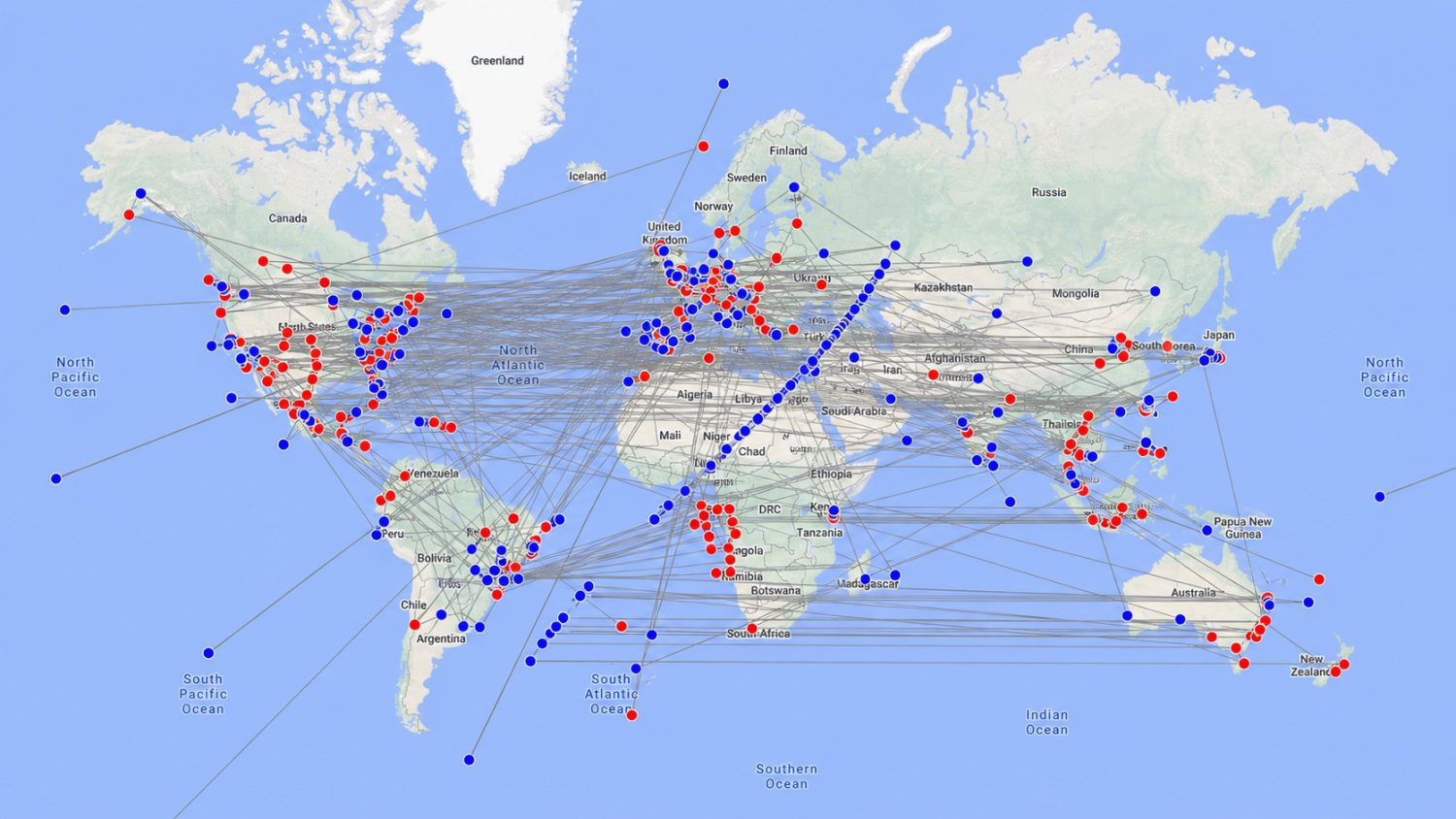
You’re double-clicking down a street in Mexico. One more click, and you’re staring at a road in China. No transition. No warning. Just a silent, instantaneous warp across the planet. It sounds like a glitch in the Matrix — and technically, that’s exactly what it is. A map shared on r/MapPorn in August 2026 plots what the creator calls every portal in Google Street View, and Unilad Tech covered it on August 17. The internet, predictably, lost its mind.
Not Magic. Just Broken Metadata.
The culprit isn’t sorcery — it’s corrupted GPS data quietly misfiling distant panoramas as next-door neighbors.
Street View stitches together adjacent 360° panoramas, using an algorithm to create smooth navigation between them. When GPS coordinates attached to user-submitted or third-party imagery are wrong, that algorithm can accidentally treat two distant panoramas as neighbors. One click forward, and you’ve crossed an ocean.
The map creator explained it plainly in the r/MapPorn post: “Sometimes the metadata about where an image on Google Street View is gets messed up (usually happens with unofficial coverage), creating a portal. If you enter one end, you will be teleported to the other. They are one-way, with the red points being entrances and blue points being exits.”
Think of it like a corrupted save file in an open-world game — the map looks completely normal until you walk through a door that shouldn’t exist.
A few things worth knowing:
- The viral map only shows portals longer than 5,000 km; the creator notes there are “FAR more” shorter ones
- Unofficial and user-contributed imagery is most vulnerable to coordinate errors
- Google’s own Street View Help Center explicitly lists “Invalid GPS points” as a known publishing error
- A separate r/GoogleEarthFinds post documented a specific portal connecting China and Australia via a mis-tagged stock-photo segment
- These glitches go back at least a decade — a 2013 r/WTF thread documented a New Jersey mall parking lot that teleported users mid-click, confirmed by locals at the time
Why Competitive Players Feel the Pain Most
For GeoGuessr players, a random teleport isn’t a curiosity — it’s a round-ending disaster that exposes a real platform reliability gap.
Casual users might shrug off a portal as a weird five-second moment. GeoGuessr players, who rely entirely on Street View to identify locations competitively, describe hitting one as “ultimate ragebait.” One Reddit thread cited a Google ticket acknowledging “bad metadata” in Vietnam coverage that broke navigation entirely. These aren’t isolated edge cases — they point to a systemic gap in how third-party panoramas get validated before entering the platform.
Other corners of Reddit are already framing these portals as Backrooms-style digital liminal spaces: uncanny, untethered zones that feel cosmically wrong. The Null Island jokes are already writing themselves — that’s the internet’s nickname for coordinates 0°N, 0°E, the accidental destination of many a mis-tagged photo.
Google has made no public statement about the viral map or these specific portals.
As user-contributed Street View imagery expands globally, metadata validation needs to keep pace. Until then, that innocent double-click carries a small but real chance of dropping you somewhere completely unexpected — whether you’re checking a route or deep into a competitive GeoGuessr match where knowing exactly which country you’re standing in is the entire point.