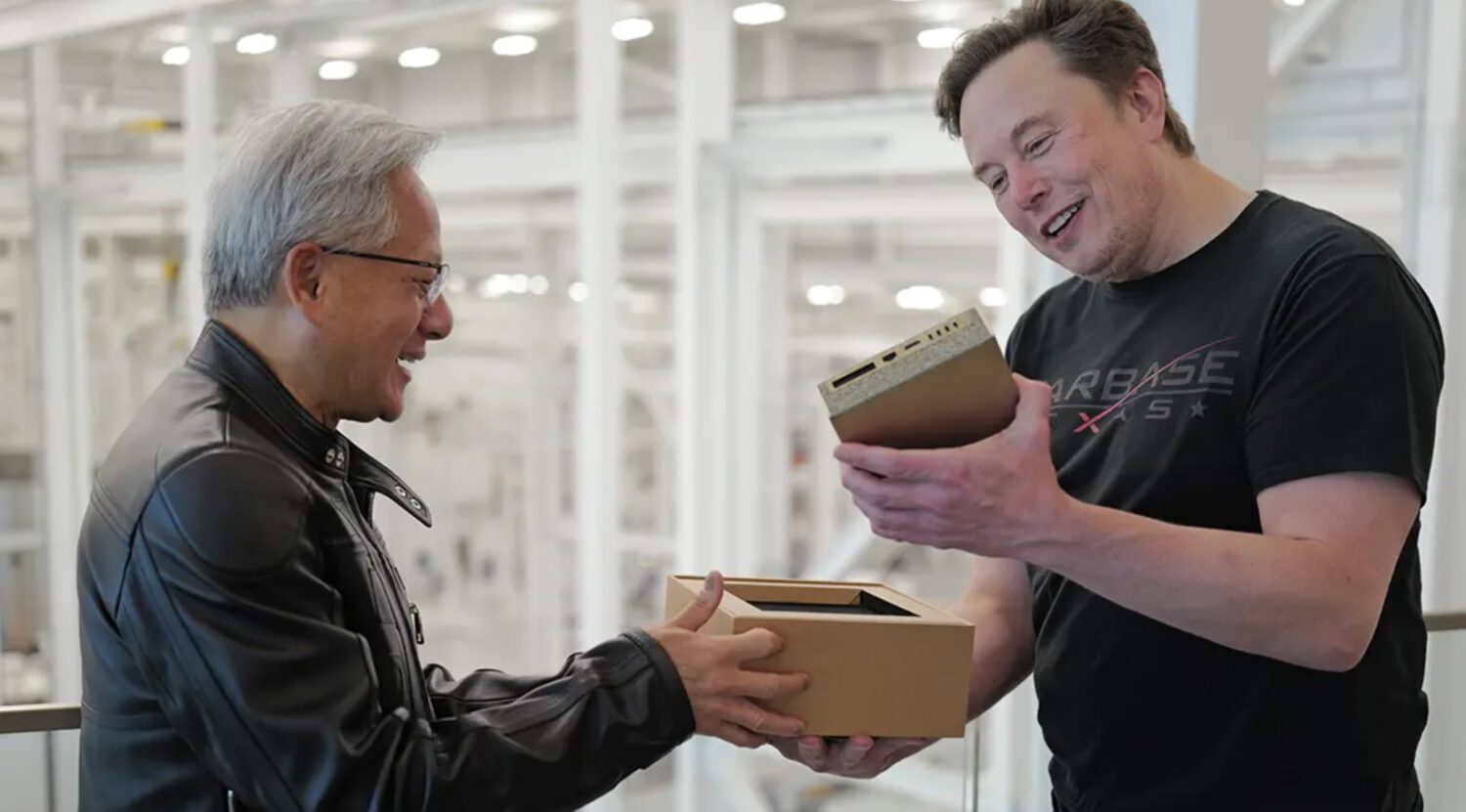
“I think it’s like kicking Michael Jordan off your team when you’re on a winning streak, and it just doesn’t seem like a good thing for shareholders.” That was Musk at The New York Times DealBook Summit, arguing directly against Nvidia’s decision not to bring Huang back.
Nvidia is a dominant supplier of AI accelerator chips, and Huang co-founded and led the company for more than three decades. His exit, under circumstances the board has not fully detailed publicly, leaves the company without its founder at a critical moment for the AI hardware market.
What the Board Has Confirmed
Nvidia has confirmed Huang’s resignation and appointed an interim CEO, though the board has not publicly stated it will never reinstate him.
Huang resigned as president, CEO and director, according to Nvidia’s announcement. Reporting from CNBC and Reuters links the resignation to disclosures about extramarital relationships, though Nvidia’s official announcement does not state that reason. One reported allegation involves a woman reportedly suspected by U.S. intelligence agencies of ties to China; that allegation remains unproven and unconfirmed.
CFO Colette Kress is serving as interim CEO while the company evaluates internal and external candidates for a permanent successor. Nvidia’s primary announcement confirms the search is underway but does not include a timeline for naming a permanent CEO.
Musk’s Argument: Founders Are Not Fungible
Musk’s case at DealBook rested on the idea that Huang’s most valuable assets cannot be transferred to any successor.
Musk described Huang as one of the most talented entrepreneurs in history and argued that his customer relationships, technical knowledge and employee loyalty are not assets a successor can simply inherit. He added that he saw no obvious candidate who could replace what Huang brought to Nvidia, according to CNBC.
On the national-security question, Musk was direct: “I don’t think he’s disloyal to the United States,” he said, responding to questions about the reported intelligence allegation. Those remarks were attributed to his DealBook appearance by CNBC.
Musk had already signaled his position before the summit. He posted on X that hiring Huang would be “an honor,” according to CNBC. He also signed a reinstatement letter that CBS News reported had drawn more than 180,000 signatures at the time of that coverage; signature counts on such documents shift over time.
A Different Reading From Nadella
Microsoft CEO Satya Nadella offered a more optimistic view of Nvidia’s ability to manage the transition.
Nadella expressed confidence that Nvidia could continue operating effectively and singled out Kress, telling attendees he had worked with her during her time at Microsoft and calling her a “tremendous executive,” according to CNBC. That is his assessment, not an independent performance forecast.
Anduril CEO Palmer Luckey sided with Musk, arguing Nvidia was making the wrong call. Luckey also suggested China would benefit from Huang’s departure, though that claim reflects his opinion rather than an established geopolitical consequence. Luckey referenced a reported decline in Nvidia’s market value; that figure requires separate financial verification and is not confirmed here.
The AI World Is Watching
The question of whether Nvidia’s institutional strength can substitute for its founder’s leadership remains unanswered.
Sam Altman and Greg Brockman of OpenAI reportedly contacted Huang following his departure, according to CNBC. The nature and purpose of those conversations have not been disclosed.
Whether Nvidia’s institutional depth is sufficient to hold together the customer trust and strategic momentum Huang personally cultivated is the central question the board has not publicly addressed. Musk and Luckey argue it is not; Nadella argues it is. The permanent-CEO search is ongoing, and the board has not announced a timeline for naming Huang’s successor.