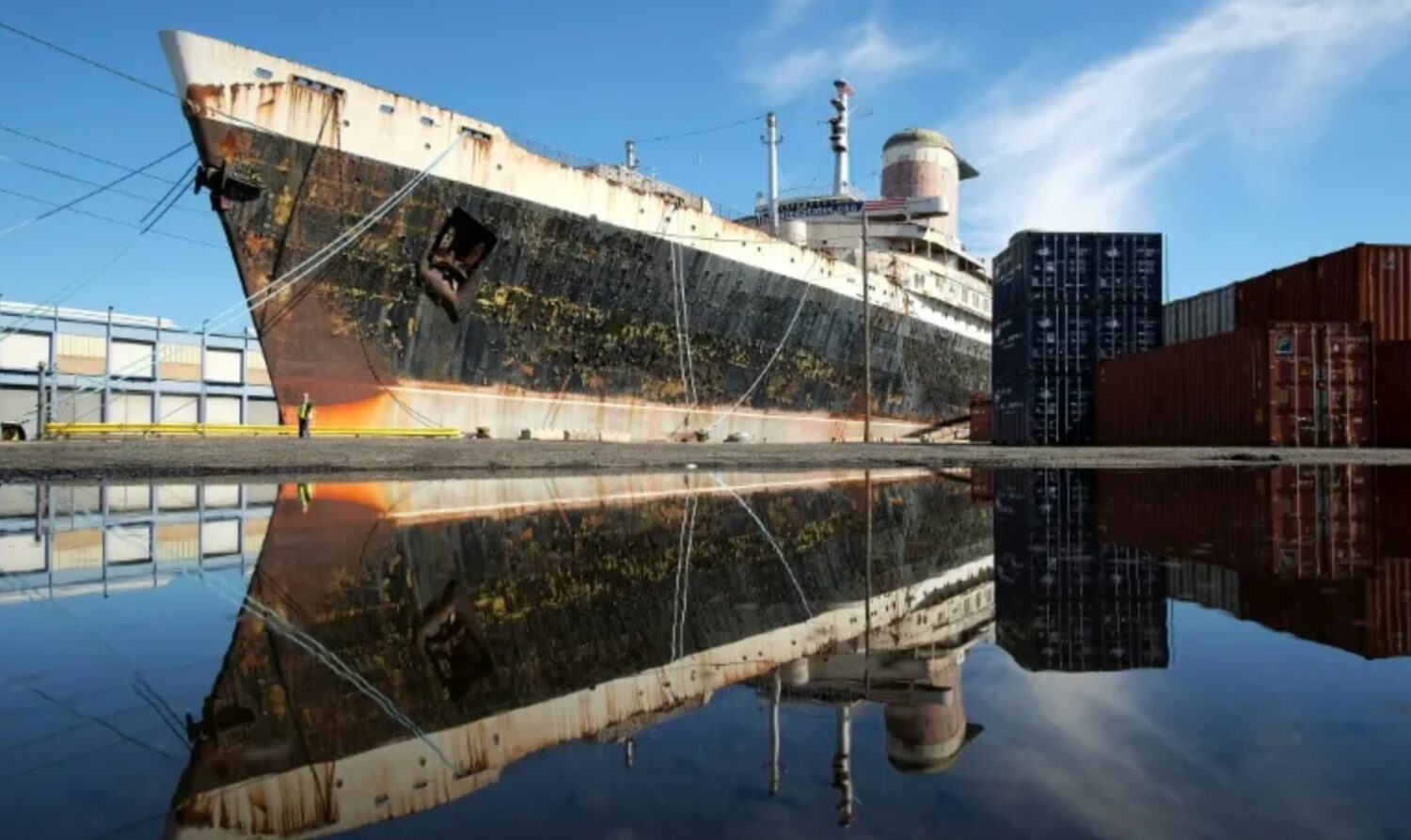
Nine hundred ninety feet of steel and history sank quietly on Wednesday night, 22 nautical miles southwest of Destin-Fort Walton Beach, Florida. Crews flooded 128 fuel and lubricant tanks over roughly seven hours, and the SS United States settled upright on the Gulf floor at approximately 9:59 p.m. Eastern time. No explosives. Just water, weight, and patience.
According to AP News, the ship is now regarded as the world’s largest artificial reef, displacing a Florida aircraft carrier that previously held that distinction.
What This Ship Was
Few ocean liners matched the SS United States for speed, scale, or the sheer variety of history it carried across the Atlantic.
Launched in 1951 and placed into service the following year, the SS United States still holds the record as the fastest ocean liner ever constructed. It was longer than the Titanic and completed more than 800 transatlantic crossings. Passengers included John F. Kennedy, Grace Kelly, Elizabeth Taylor, and Salvador Dalí. The ship also transported Leonardo da Vinci’s Mona Lisa.
That career ended within two decades as transatlantic air travel expanded and ocean liners lost their commercial footing.
Three Decades Docked, Then a New Owner
After its commercial retirement, the ship spent nearly 30 years tied to a Philadelphia dock before Okaloosa County, Florida, intervened.
Okaloosa County eventually acquired the vessel and set a different course for it. The county spent more than a year preparing the ship in Mobile, Alabama. That work included environmental remediation to remove fuel, lubricants, and hazardous materials before the ship touched Gulf water.
According to AP News, the full project cost approximately $13.5 million, covering the tow, remediation, safety preparations, and the controlled sinking.
What Divers and Anglers Will Find
The wreck’s depth range is broad enough to serve both experienced technical divers and relative newcomers to the sport.
The vessel rests with its seafloor depth at approximately 180 feet, while its upper decks sit between 55 and 60 feet below the surface. That shallower depth makes portions of the ship potentially accessible to relatively inexperienced divers, subject to local safety rules and conditions.
Okaloosa County designed the project to attract divers and fishing enthusiasts to the Destin-Fort Walton Beach area. Target species include tuna, marlin, and swordfish. The SS United States joins an existing county reef network that includes World War II vessels, tugboats, and a former casino boat.
What Remains Unverified
The county’s projections for marine colonization and tourism revenue are stated aims, not yet measured outcomes.
No independently verified post-sinking ecological data was available at the time of publication. Long-term outcomes remain to be reported. These include the pace of marine colonization, fishing and diving activity levels, and whether visitor numbers and revenue meet county projections. The ship’s transformation into a reef is complete; whether it delivers on its ecological and economic promise is a question that monitoring data, not opening-day optimism, will eventually answer.