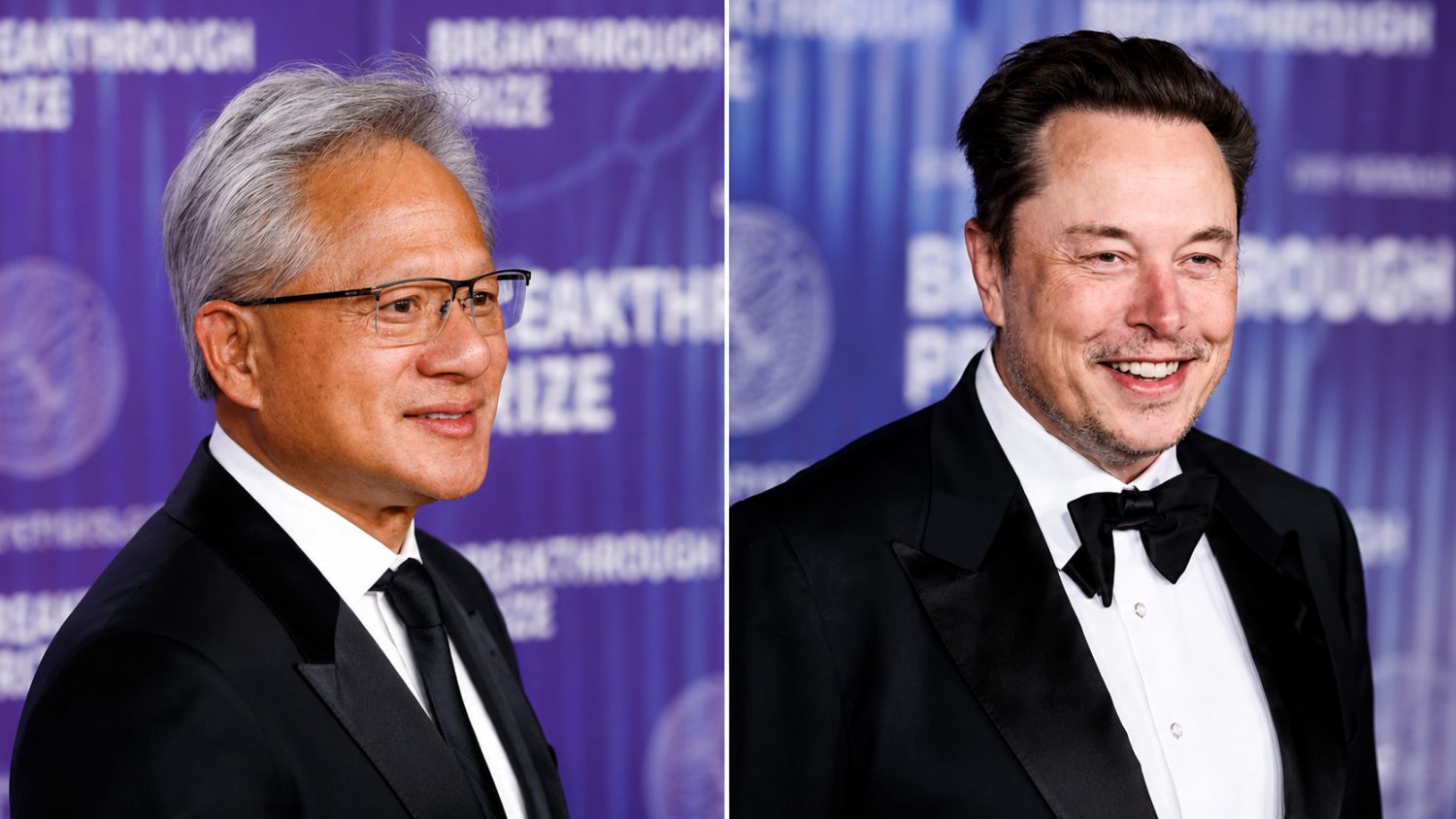
A $10 billion bet on Elon Musk’s AI lab turned into a $21 billion SpaceX position. That’s not luck — that’s strategy. When SpaceX acquired xAI in an all-stock deal valued at roughly $1.25 trillion, Nvidia’s xAI shares converted into SpaceX Class A stock. An August 14 SEC filing made it official: Nvidia holds approximately 122.8 million SpaceX Class A shares. The world’s leading AI chipmakers is now simultaneously the chip supplier, equity investor, and financing backstop for AI’s biggest players. This isn’t passive portfolio management. It’s vertical integration dressed as a diversified investment strategy.
From Chip Supplier to Power Broker
Nvidia’s balance sheet has quietly become as consequential as its silicon.
Nvidia’s SpaceX stake was worth roughly $21B at June 30; a share price decline from approximately $170.86 to around $140 has pushed that figure closer to $17.2B. SpaceX ranks as Nvidia’s second-largest disclosed equity holding, sitting behind a ~$30B Intel stake — together, those two positions represent roughly 80% of Nvidia’s disclosed equity portfolio, according to Yahoo Finance. The SpaceX position originated from Nvidia’s $10B investment in xAI during a $20B funding round in January 2026, per CNBC. Over the past two years, Nvidia has committed more than $100B to AI companies, including:
- CoreWeave
- Thinking Machines
- Safe Superintelligence
It has also backed Cursor, a code-editing startup that SpaceX reportedly acquired, though that deal’s valuation remains unconfirmed by top-tier financial sources and should be treated as rumored rather than settled fact.
Beyond equity, Nvidia is assembling a $500B financing consortium — Apollo, Blackstone, BlackRock, Brookfield Asset Management, Goldman Sachs, and KKR — to lend AI customers money to buy its hardware, reminiscent of the Stargate Project and broader AI infrastructure investment trends. Nvidia is partially backstopping those arrangements, effectively tying loan structures to the value of its own chips, though the precise guarantee mechanics are described in official materials as infrastructure financing platforms rather than explicit collateral guarantees.
The circular logic here is almost elegant in its audacity. Nvidia funds the customer. The customer buys Nvidia hardware. The hardware underpins the financing. The financing enables more hardware. Telecom equipment vendors ran a version of this playbook in the late 1990s — Cisco extended customer credit to accelerate adoption, and when demand collapsed, the collateral followed. Nvidia is running a structurally similar arrangement at AI-era scale, with trillion-dollar valuations as the backstop. No regulatory action has been announced, but the architecture invites scrutiny.
“We’ve decided to build exclusively on Nvidia because we think the Vera Rubin architecture is the best architecture… We greatly value our close cooperation and partnership on many levels with Nvidia.” — Elon Musk, SpaceX earnings call, edited for length (via Barchart)
SpaceX as Nvidia’s Biggest Guaranteed Customer
An exclusive hardware commitment from a company targeting 10 gigawatts of AI compute is not a small win.
Musk’s pledge to deploy Nvidia’s Vera Rubin NVL72 rack-scale supercomputers — across both ground-based AI data centers and Starmind AI-1 orbital compute payloads — locks in a customer targeting 2 gigawatts of compute capacity by end of 2026 and “closer to 10GW than 5GW” by end of 2027, per his remarks on SpaceX’s first public earnings call after the IPO. That kind of exclusive commitment is the hardware equivalent of a decade-long stadium naming deal, except the stadium is also in orbit.
For context on what long-term bets in the Musk ecosystem can yield: Alphabet’s $900 million SpaceX investment from 2015 is now worth roughly $94 billion, according to Livemint — a return of more than 100x. Nvidia entered later and at far greater cost. But it secured something Alphabet didn’t: an exclusive hardware contract that no equity position alone could buy.
If SpaceX reaches 10 gigawatts with Vera Rubin as its sole compute backbone, Nvidia doesn’t just win a customer. It becomes the infrastructure layer for AI at planetary — and potentially orbital — scale. Whether that reads as visionary vertical integration or as the most concentrated single-supplier risk anyone has ever strapped to a rocket depends entirely on what happens next. Possibly it’s both, and that tension is exactly what makes this worth watching.