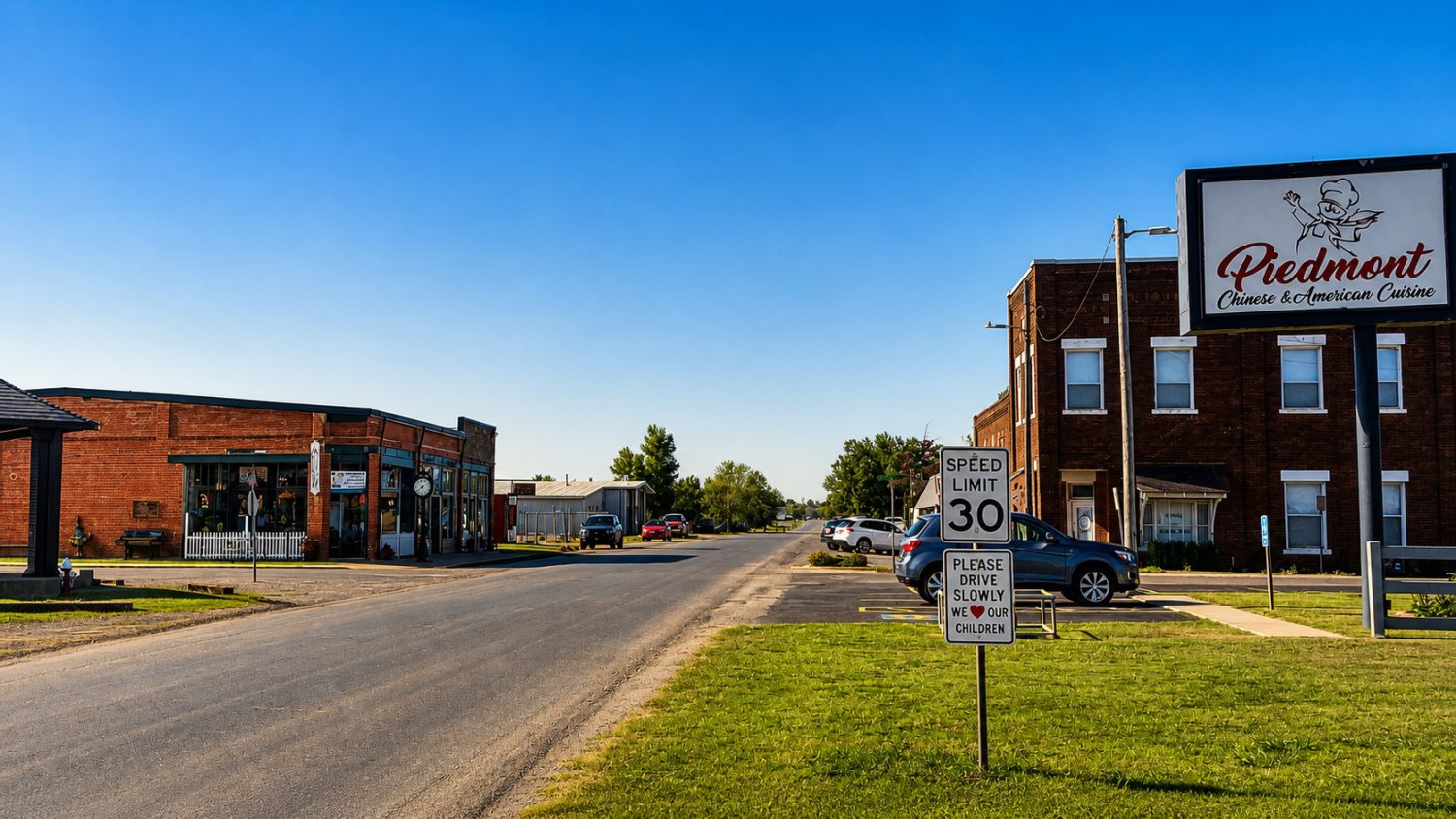
A resident confronts a developer directly: your company knows this community doesn’t want you here, so why stay? The answer comes without hesitation. “We look for strong spots on the grid… The power infrastructure is very good.” Not tax policy. Not workforce. The grid.
That exchange — caught on hidden camera during the ongoing fight over massive AI data centers proposals near Piedmont, Oklahoma — cuts through every press release and planning commission presentation. The grid brought them here. The grid is keeping them here.
Two projects are circling this small town:
- Houston-based Cloverleaf Infrastructure wants to rezone 630 acres for “Project Open Sky,” a hyperscale campus requiring up to 1.5 gigawatts of electricity at full build-out. City staff compared that load to the demand of a major metropolitan area.
- Beltline Energy is separately seeking to rezone 321 acres nearby.
Cloverleaf has publicly stated its site was selected due to proximity to the Matheson substation.
Residents packing council meetings have made their concerns specific and loud. They cite:
- Water system strain
- Grid reliability risks for existing customers
- Truck traffic
- Property value erosion
At a July council meeting, one resident played an audio recording of a data center’s constant hum — a preview of the proposed new neighborhood soundtrack. Testimony described the current landscape as alive with “bullfrogs bullfrogging” and “quail quailing.” It sounds quaint until you consider what replaces it.
Cloverleaf’s official position emphasizes tax revenue and closed-loop cooling that, according to company representatives, “does not use any water for cooling on an ongoing basis.” Responsible corporate citizenship, on paper. Then comes the recording, and the pivot is immediate: substation proximity, grid capacity, infrastructure quality. Both narratives exist. Only one explains why Piedmont specifically.
What the Planning Commission Decided
Regulators have pumped the brakes — but the developer already has a backup plan.
Piedmont’s planning commission recommended denying the 630-acre rezoning. Beltline’s proposal was tabled for further study. The city council delayed a final vote and sent local officials to tour a comparable hyperscale facility in Atlanta, where staff reported a draw of approximately 1.2 gigawatts — again, metropolitan scale. Meanwhile, Cloverleaf has already secured an alternate site in Kingfisher County, framing Piedmont as the “preferred” location but signaling the project moves forward either way.
Zoom out and Piedmont stops looking like a local zoning dispute. A Gallup poll found roughly 7 in 10 Americans oppose an AI data center being built near them — with nearly half strongly opposed. Oklahoma officials have begun describing the situation as “literally an invasion of data centers” and pushing for statewide water-recycling and environmental standards. Piedmont isn’t an outlier. It’s patient zero for a conflict heading toward every town near a strong substation.
The cloud has always had an address. It hums. It draws water. It sits on what used to be farmland. The question Piedmont is being forced to answer — does community opposition matter when the grid is right? — is about to become your question too.