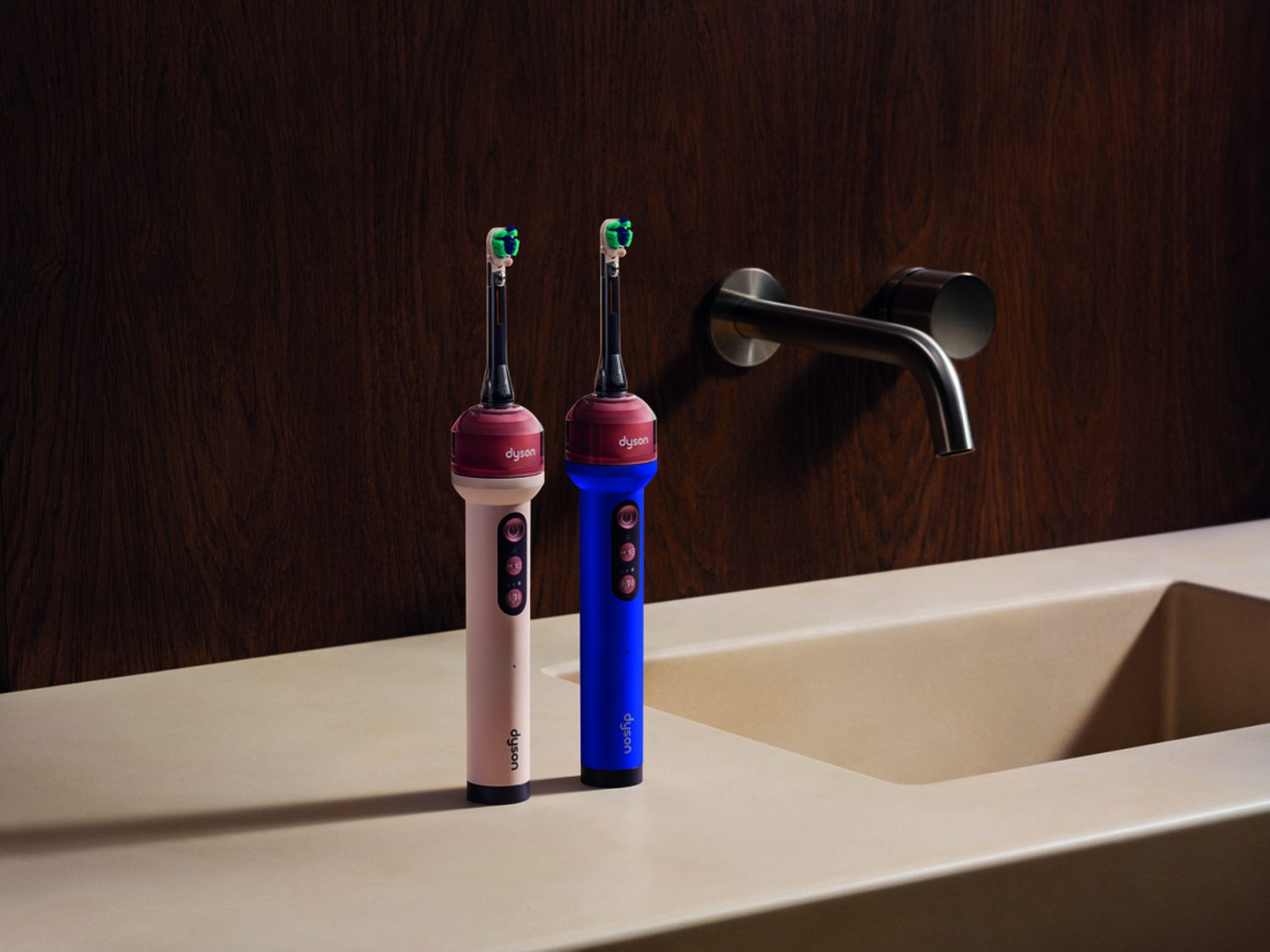
Most people don’t floss. Dyson’s answer to that problem is a $499 toothbrush with a camera inside it. Unveiled by James Dyson in Paris on September 1, 2026 — after six years of R&D — the CameraJet is reportedly the first electric toothbrush to pack an intraoral macro camera, an AI targeting system, and a precision mouthrinse jet into a single handle. The central question isn’t whether the engineering is impressive. It clearly is. The question is whether this is genuine dental innovation or a very expensive solution to a problem that a $4 pack of floss picks already solves — or whether it belongs alongside other smart gadgets designed to streamline daily routines.
A Tiny Camera Is Watching Your Teeth
Here’s exactly what 16 million lines of code and a pencil-tip camera are doing in your mouth.
The business end of the CameraJet houses a 100k-pixel macro lens shooting 28 frames per second from inside your mouth. Dyson’s Gap Optical Targeting AI — trained on approximately 470,000 dental images and built on roughly 16 million lines of code — analyzes that feed in real time using AI targeting to identify the gaps between your teeth, and fires a conical burst of mouthrinse at them within 100 milliseconds of detection. That’s faster than a human blink.
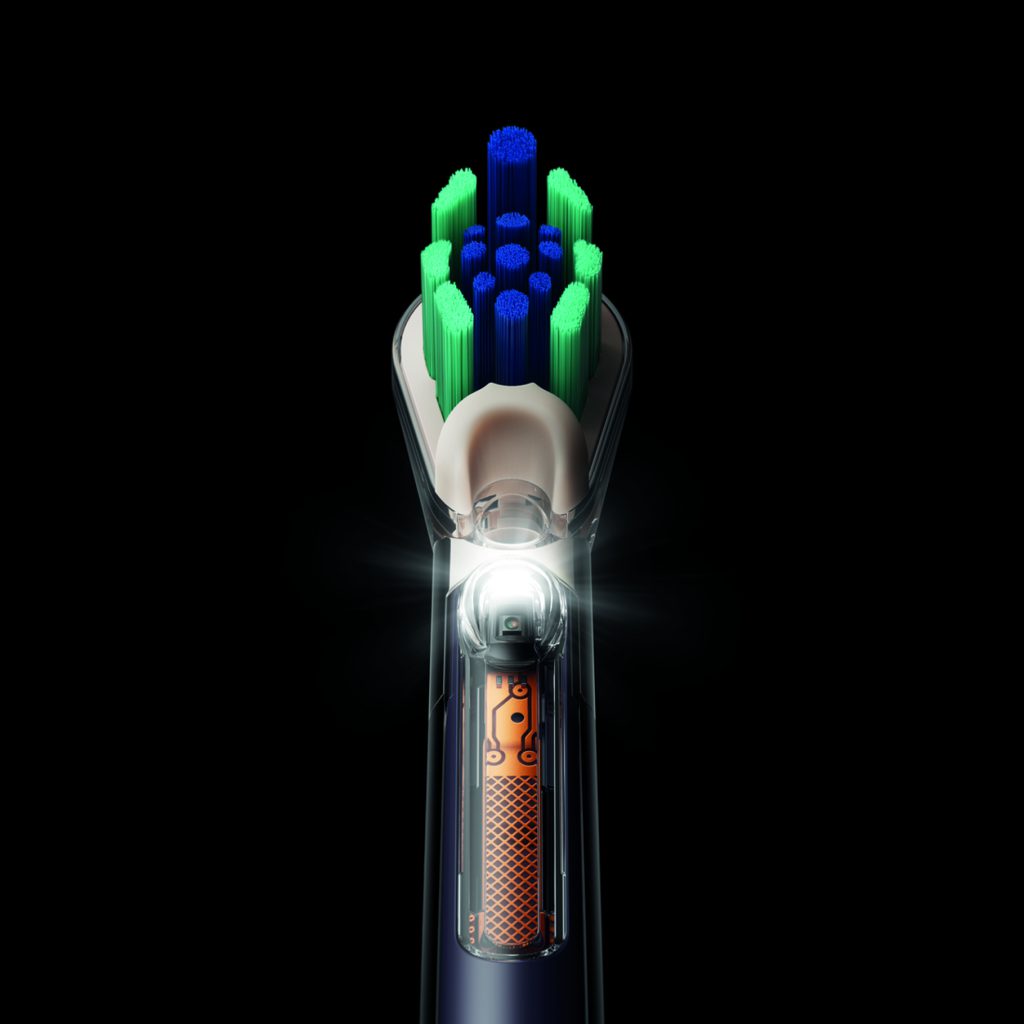
Key specs worth knowing:
- 100k-pixel intraoral camera, 28 fps live feed to the MyDyson app
- AI jet fires within 100 ms of detecting an interdental gap
- Anti-gravity tank (12.5 ml) maintains jet pressure at any angle
- Sonic motor runs at ~245 oscillations per second
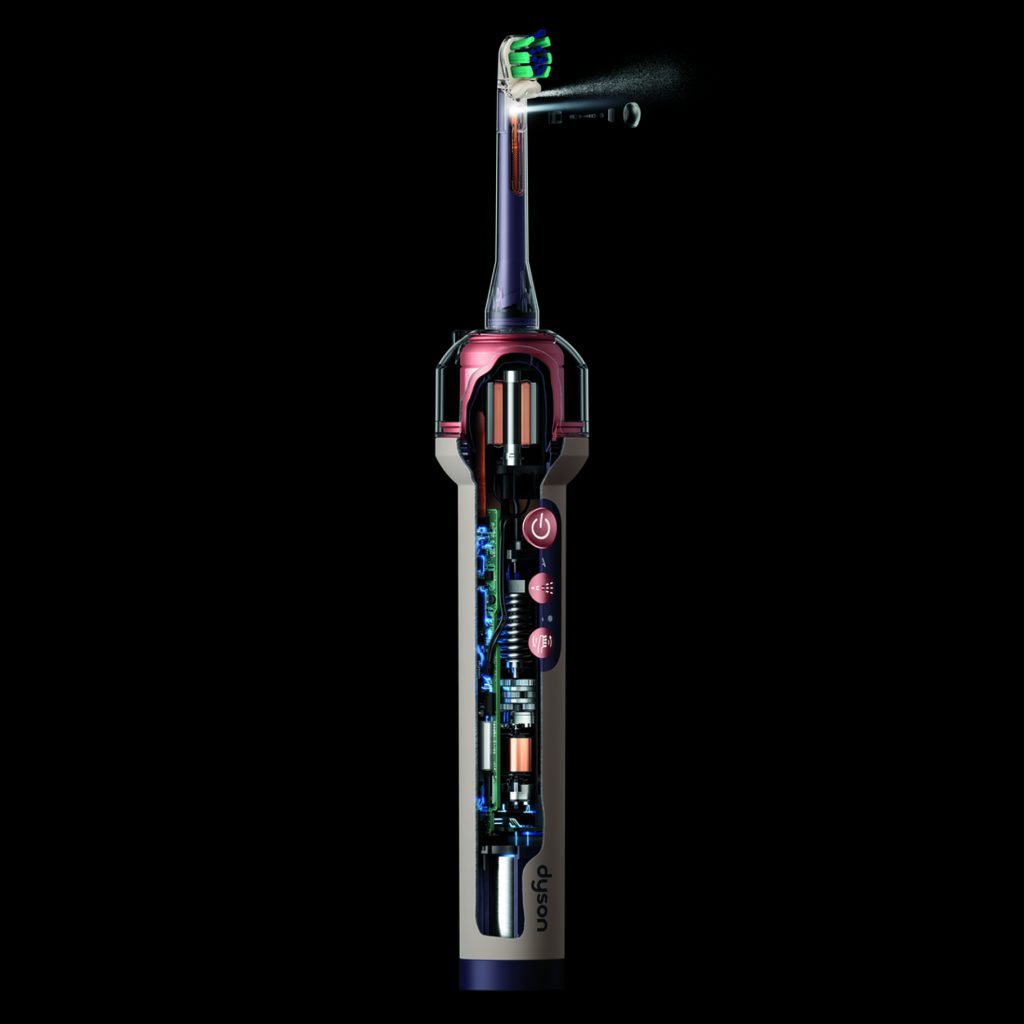
In practice, this collapses brushing, flossing, and rinsing into roughly three minutes. Think of the AI targeting like a GPS rerouting around traffic: it doesn’t ask for your opinion, it just acts. Early reviewers describe a “just-left-the-hygienist” sensation — that specific post-cleaning smoothness you normally only get after someone scrapes your teeth with metal tools. Worth noting: Dyson confirms the camera feed is live-only, with no footage stored and no company access to your mouth imagery — a meaningful privacy commitment for a device this intimate.
The Price Is the Real Stress Test
At $499, the CameraJet needs to outperform a much cheaper combination, not just impress in a showroom.
A premium Oral-B iO Series 9 paired with a Waterpik water flosser runs well under $300 combined. The CameraJet costs:
| Region | Price |
|---|---|
| US | $499 |
| UK | £419 |
| Canada | ~C$700 |
Without long-term clinical data, however, the full verdict remains open — current assessments are short-term and subjective, and whether AI-targeted jets meaningfully outperform consistent manual flossing over months isn’t answered yet.
What you’re paying for beyond that baseline is visual feedback, automation, and ecosystem consolidation — plus Dyson brand confidence. For people who already spent $600 on a Dyson air purifier without hesitation, that calculation feels familiar. For everyone else, it’s a harder sell — and worth asking whether you’re paying too much for features you may not need.
CameraJet makes the most sense for people who genuinely don’t floss and want a system that removes the friction entirely. For everyone else, the honest verdict arrives later — when the dental data does.