Every few months, “artificial Sun” headlines land like clockwork. Most deserve skepticism. This one deserves attention. On June 27, China’s Institute of Plasma Physics completed full testing of a 582-tonne superconducting magnet in Hefei — the largest ever built for a fusion reactor. It stores roughly three times the energy of ITER’s equivalent magnets, according to Newsweek’s summary of Chinese data. That’s real hardware progress in a race that has run for 70 years. Commercial fusion power, however, remains decades away.
What China Actually Built
The numbers behind the world’s biggest superconducting fusion magnet are staggering — and the full picture is still emerging.
- The toroidal field coil measures 21 meters long by 12 meters wide, weighing 582 metric tonnes, according to ASIPP data reported by Newsweek
- Stable current: 60 kA. Stored energy: 6.03 megajoules, per Bastille Post
- Field strength hits approximately 6.5 tesla — roughly two to four times stronger than a hospital MRI scanner
- Volume is 1.3 times larger than ITER’s equivalent magnets, with approximately triple the stored energy
- Every material and component was manufactured domestically: 47 patents, six years of engineering, according to CGTN
- A companion high-temperature superconducting central solenoid was also completed — described by one ASIPP researcher as “the spark plug of a car engine,” according to Global Times
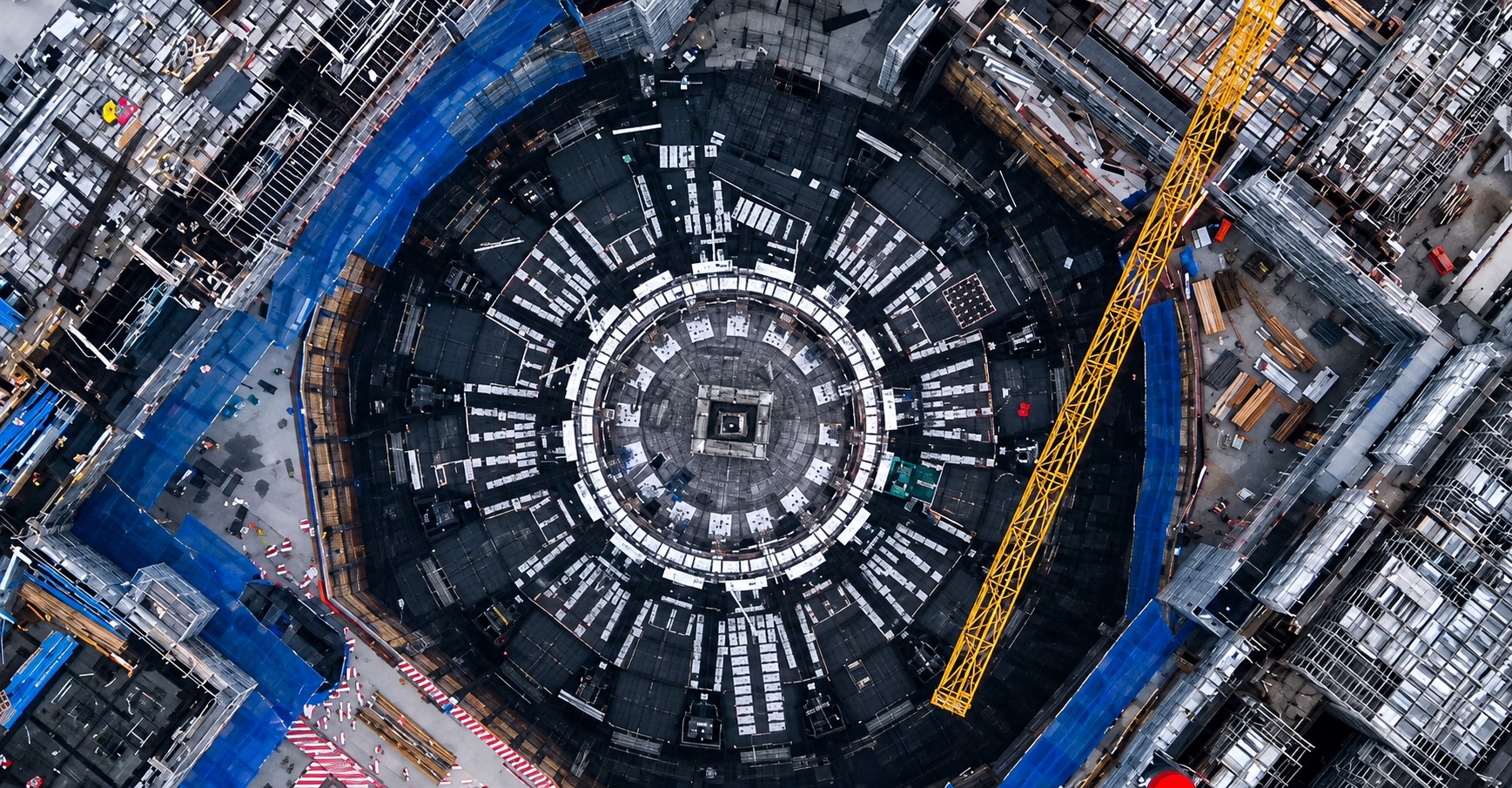
This magnet is one of 16 identical coils designed to form the doughnut-shaped magnetic cage trapping plasma above 100 million degrees Celsius — far hotter than the Sun’s core at around 15 million degrees. The Sun uses gravity to confine plasma; tokamaks use magnets instead. This coil’s destination is BEST, the Burning Plasma Experimental Superconducting Tokamak, targeted for completion around 2027 inside China’s CRAFT engineering platform in Hefei. That same ASIPP researcher noted these tests represent “about 80 percent of the task,” according to Global Times. Whole-device assembly still lies ahead.
Worth noting: detailed performance data comes primarily from Chinese institute releases and state media, summarized by outlets including Newsweek and People’s Daily. Newsweek explicitly flags that independent Western verification remains unavailable. China’s EAST tokamak has posted verifiable world records — over 1,000 seconds of stable plasma at 100 million degrees Celsius, per BGR — so credibility exists. Treat this as credible, self-reported engineering progress, not a peer-reviewed slam dunk.
What This Means for Your Energy Future
Fusion’s promise is real, but the timeline stretches well past anything on your current radar.
Fusion fuel comes from seawater. No CO₂ at point of generation. No runaway chain reaction — if plasma cools, the reaction simply stops, unlike fission. For anyone watching AI data centers and electrified transport strain existing grids, high-density clean baseload power matters enormously. China’s strategy here mirrors its solar panel playbook: build the hardware domestically, scale ruthlessly, own the supply chain — and potentially the export market.
Chinese timelines target experimental fusion electricity “around 2030” — pilot-scale, not your power bill. Commercial fusion grids are realistically a 2040s–2050s story. What happened in Hefei is the equivalent of successfully casting a jet engine turbine blade: essential, impressive, and still a long way from boarding the plane.