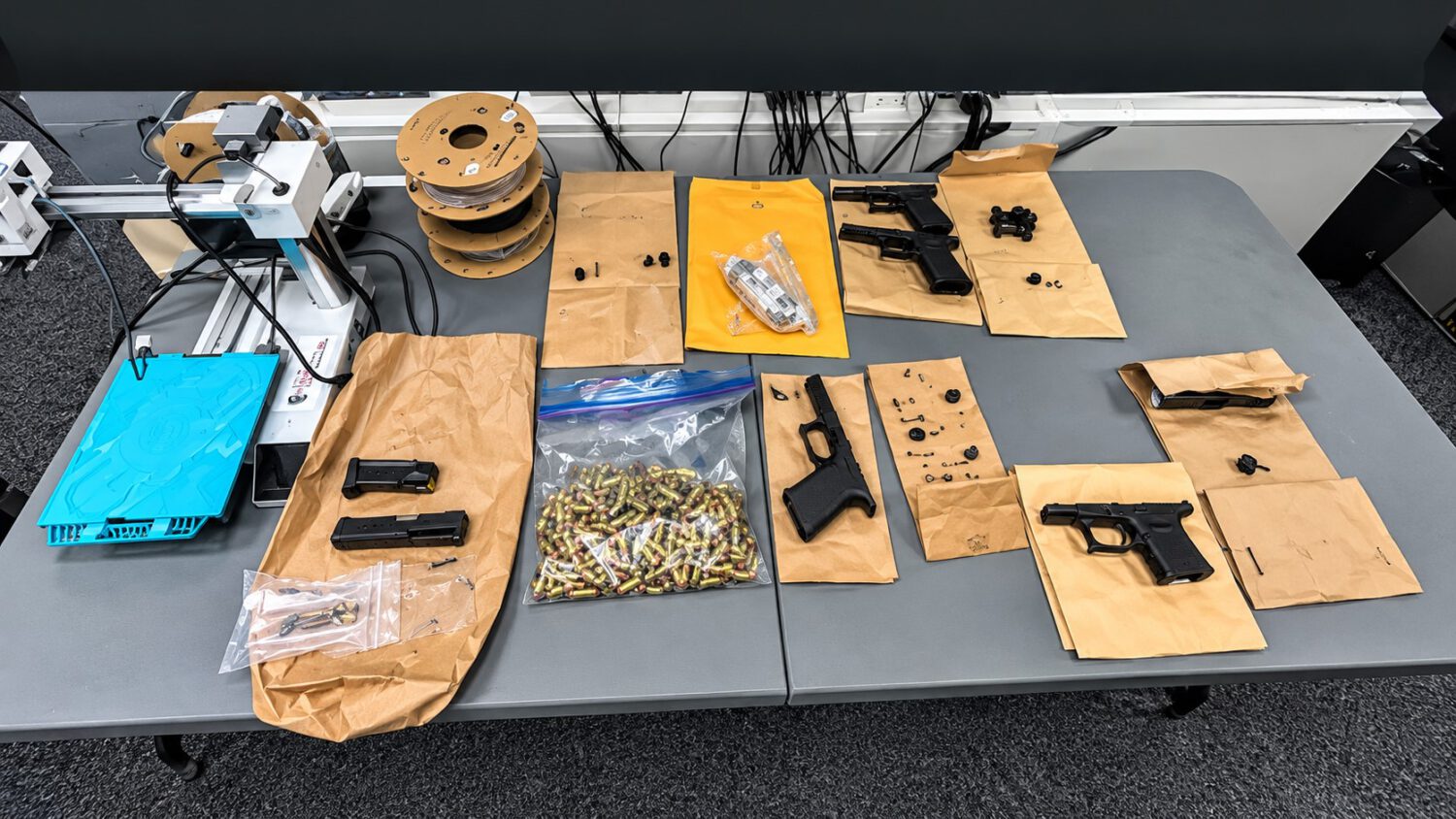
Ordinary PLA filament has broad lawful uses across hobbyist, industrial and educational settings. San Diego County‘s lawsuit against Polymaker LLC is not about restricting those uses.
Filed October 5, 2026, in San Diego Superior Court, the civil action asks a narrower question. The county alleges Polymaker’s marketing strategy transformed a general-purpose material into a regulated firearm precursor part under California law.
San Diego County brought the case through its Consumer Fairness and Public Protection Division, with assistance from the Giffords Law Center.
The Legal Theory
Marketing intent, not material composition, is the county’s basis for claiming Polymaker crossed into regulated territory.
California’s firearm precursor definition covers printings, extrusions, machined bodies, and similar articles marketed or sold to become or be used as a firearm frame or receiver once completed, assembled, or converted. The county argues that language can reach raw materials when a seller promotes them for that specific application.
The complaint draws an analogy to a solid aluminum block: perfectly lawful as industrial stock, but potentially regulated the moment a seller markets it for firearm manufacture. According to the county, the same logic applies to Polymaker’s filament.
Remedies sought include civil penalties of up to $2,500 per violation and repayment of profits. The county filed all claims under California’s Unfair Competition Law and is also seeking an injunction barring the alleged marketing practices.
“Rather, the People bring this lawsuit to hold Polymaker liable for its strategic business choice to design and market its filaments in order to profit from the illegal manufacture of 3D printed ghost guns in California.” San Diego County, as quoted from the complaint by 3D Printing Journal (verify exact wording against the filed complaint before publication)
Cumulative marketing allegations, not a single act, form the county’s case. Those allegations include:
- Firearm-themed branded products developed by Polymaker
- Sponsorship of creator Sean Aranda (“The 3D Print General”), who the complaint alleges was banned from YouTube in 2023 for firearm-policy violations
- A special-edition khaki PLA Pro spool reportedly developed for Aranda’s channel
- Aranda’s subsequent hiring as Head of Customer Experience, then to a Senior Technical Account Manager role
- An affiliate program open to YouTube, TikTok and niche-blog creators that reportedly did not screen applicants by content type
The Creator Relationship at the Center
The complaint’s focus on one influencer reveals how heavily the county’s narrative rests on Polymaker’s alleged personnel and sponsorship decisions.
Aranda is named 65 times across the complaint’s 39 pages, according to secondary reporting. That volume signals how central the relationship is to the county’s theory. (Verify the page and mention counts against the filed complaint before publication.)
The county’s position is that Aranda’s value to Polymaker was not general printing expertise. According to the complaint, it was his audience’s specific interest in 3D-printed firearms.
“Aranda, acting within his agency relationship with Polymaker, directs his followers to purchase Polymaker filaments to 3D print ghost guns and generates profits for Polymaker,” the complaint states, as quoted by Legal News Line. (Verify exact wording against the primary filing before publication.)
What Remains Unresolved
No court has ruled on the county’s claims, and Polymaker’s formal response has not surfaced in available reporting.
The lawsuit contains allegations only. No court ruling, settlement, damages award or injunction has been issued.
Polymaker’s verified response to the complaint is not available in current reporting. Available sources identify Polymaker LLC as a Delaware company with its principal place of business in Missouri City, Texas; its precise corporate structure and any affiliated international operations require separate verification.
Broader Stakes
A county win could pressure manufacturers, affiliate networks and creators to examine how they promote multipurpose products.
Manufacturers, affiliate networks and online creators could face new expectations around screening sponsorships and partnerships for regulated-use promotion. That pressure would extend to filament makers, slicer-software developers, affiliate platforms and the broader maker community using 3D printing for entirely lawful projects.
The case may ultimately clarify whether California’s precursor-part definition can reach a raw material through a cumulative pattern of advertising, sponsorships, affiliates, technical assistance and employment decisions. For any manufacturer selling a multipurpose product through creator channels, that answer matters regardless of what the product actually is.