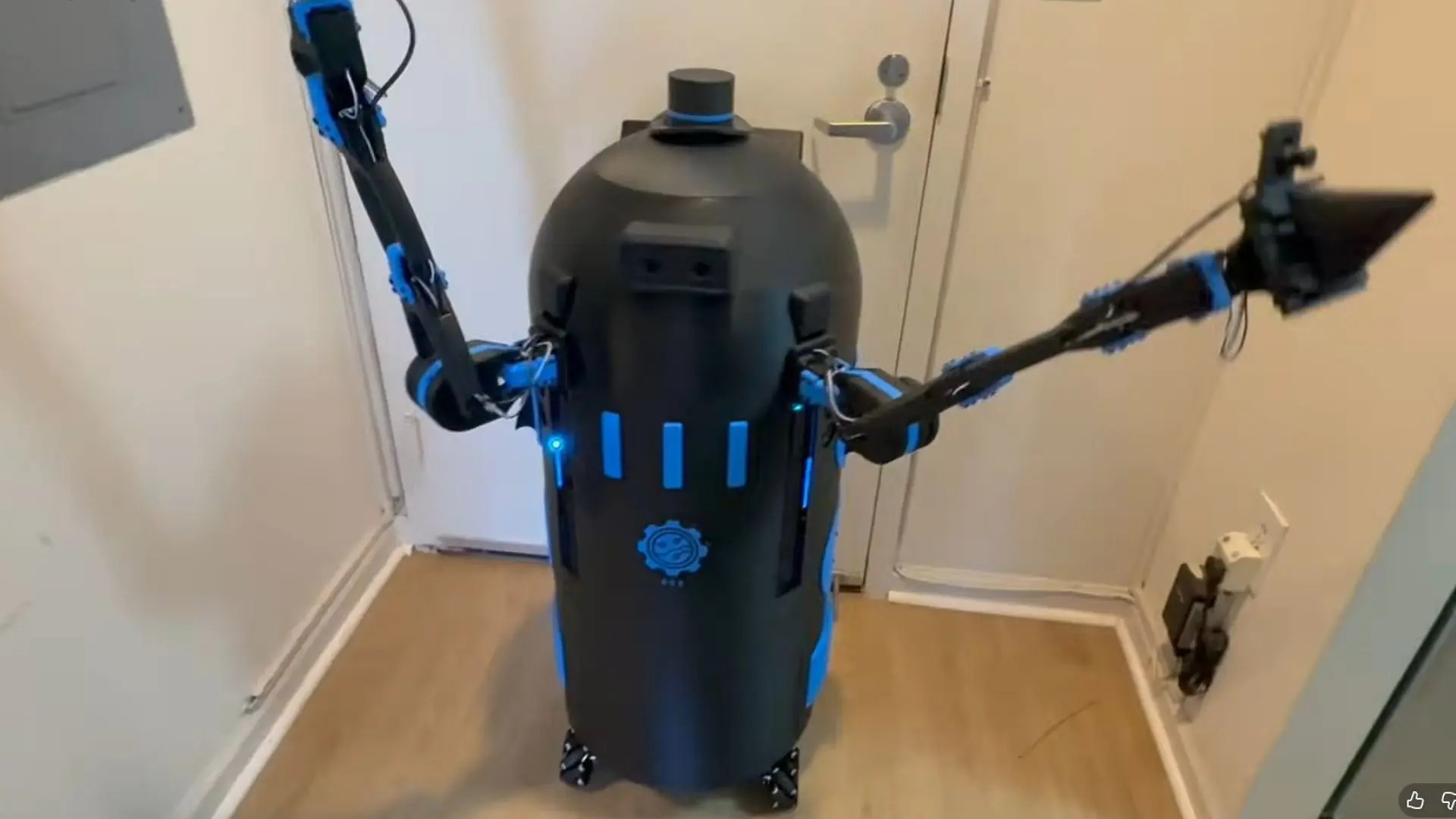
Building functional household robots used to require months of engineering and enterprise budgets—until Nick Maselli proved you can do it in a day. The Sourccey laundry robot shouldn’t exist. Most weekend maker projects end with a drawer full of half-assembled electronics and promises to “finish it next month.” Yet Maselli and his team delivered a working prototype with dual articulated arms, computer vision, and AI-powered fabric handling in under 24 hours. The client-driven deadline created the kind of pressure that either breaks projects or forces breakthroughs.
When Speed Trumps Polish
Tight deadlines forced creative solutions and rapid iteration strategies.
The build succeeded because Maselli embraced functional over beautiful. Most structural components were 3D-printed in PLA filament, allowing instant redesigns when parts failed. Missing motor clips and defective prints didn’t stop progress—they just meant firing up the printer again.
This throwaway mentality toward hardware feels almost wasteful until you realize the alternative: months of perfectionist paralysis that kills most ambitious maker projects. The team split responsibilities like a startup sprint:
- Hardware assembly dominated daylight hours
- AI training happened overnight on GPUs
By morning, the Raspberry Pi 5 brain was processing four camera feeds, controlling servo motors, and running trained models that actually folded towels.
Consumer Components, Professional Results
Off-the-shelf parts delivered capabilities once limited to research labs.
Sourccey’s mobile cylindrical chassis houses surprisingly sophisticated tech. The Raspberry Pi 5 orchestrates everything—vision processing, motor control, display management, even voice interactions. Four cameras provide the multi-angle perception needed for soft fabric manipulation, while servo motors deliver the precise grip control that prevents expensive cotton casualties.
The 12V 10Ah LiFePO4 battery choice reveals Maselli’s practical wisdom. Unlike lithium-ion alternatives, LiFePO4 offers safety margins that matter when your robot operates unsupervised around laundry. Custom power distribution PCBs and structured wiring suggest this isn’t amateur hour, despite the breakneck timeline.
AI That Learns Like Humans Do
Imitation learning transforms human demonstrations into robot capabilities overnight.
Here’s where the magic happens: instead of programming complex folding algorithms, humans simply demonstrate the task while cameras record everything. That demonstration data trains on GPUs overnight, creating models deployable on the Pi for adaptive real-world performance.
The robot learns to detect fabric types, analyze shapes, and adjust grip pressure through visual feedback—like watching your technique and practicing until perfect. This imitation learning approach democratizes robotics AI. You don’t need machine learning PhDs or massive datasets. Just show the robot what you want, let the training run, and upload new capabilities like smartphone apps.
The Bedroom Builder Revolution
Accessible tools are transforming household robotics from corporate labs to maker communities.
Maselli’s YouTube channel “Nick Builds” and Discord community represent something bigger than individual projects. They’re proof that the barrier between “impossible” and “weekend build” has collapsed entirely. Previous project Esghati—a browser-controlled robot with Wi-Fi and face recognition built from salvaged parts—established his rapid-build credibility.
The real breakthrough isn’t one robot folding laundry. It’s demonstrating that functional household automation now fits within maker budgets and maker timelines. Your next home assistant might not come from Silicon Valley—it might come from someone’s garage, built in a single determined day.